Stock Analysis · Accor SA Ltd (ACCYY)
Overview
Accor is a global hotel group based in France. It operates, manages, and franchises a wide range of brands across the economy, midscale, upscale, and luxury segments. Its portfolio includes well-known names such as ibis, Novotel, Mercure, Sofitel, Fairmont, Raffles, and Ennismore lifestyle brands. In simple terms, Accor makes money by helping travelers find places to stay under brands it owns or controls, while increasingly relying on fee-based models rather than owning large amounts of hotel real estate directly.
The business is organized around two main divisions. The larger one is the Premium, Midscale and Economy division, which includes brands such as ibis, Novotel, Mercure, Pullman, and Swissôtel. The second is the Luxury & Lifestyle division, which includes brands such as Fairmont, Sofitel, Raffles, MGallery, and Ennismore. Based on recent annual reporting, the revenue mix is approximately:
- Premium, Midscale and Economy: about 75% to 80% of revenue. This includes management and franchise fees, services to hotel owners, and activity tied to a broad network of business and leisure hotels.
- Luxury & Lifestyle: about 20% to 25% of revenue. This includes higher-end hotel operations, management and franchise fees, and lifestyle hospitality platforms with stronger exposure to premium travel demand.
Underneath those segments, Accor’s economic engine is increasingly driven by recurring fees rather than property ownership. Management and franchise fees are especially important because they usually require less capital and can produce attractive cash generation when hotel demand is healthy. The company also earns revenue from owned or leased hotel operations, loyalty activities, and services provided to partners.
One notable trend over the past several years is the sharp recovery in revenue and operating profit after the pandemic disruption. Sales climbed strongly from 2021 through 2024, and operating income improved from losses to solid profitability. The structure also appears more favorable today, with a larger contribution from higher-margin fee streams and tighter operating discipline than during the recovery phase.
Key Figures
| Metric | Value | Sector ⓘ |
|---|---|---|
| Date | Sep 12, 2026 | |
| Context | ||
| Sector | Consumer Cyclical | |
| Industry | Lodging | |
| Market Cap ⓘ | $12.25B | |
| Beta ⓘ | 0.86 | |
Value (Cheapness) | ||
| P/E Ratio ⓘ | 41.08 | 17.10 |
| FCF Yield ⓘ | 9.92% | 8.53% |
| EBIT / EV ⓘ | N/A | 6.46% |
| PEG ⓘ | 1.07 | |
Growth (Business expansion) | ||
| Revenue Growth ⓘ | 0.50% | 5.75% |
| RPS Growth (5Y CAGR) ⓘ | 24.47% | 9.14% |
| EPS Growth (5Y CAGR) ⓘ | N/A | -18.21% |
| Margin Growth (5Y Trend) ⓘ | 25.12% | -0.23% |
| FCF Growth (5Y CAGR) ⓘ | N/A | 4.91% |
Quality (Business durability) | ||
| ROIC (Latest) ⓘ | 17.37% | 12.61% |
| ROIC (5Y Median) ⓘ | 8.12% | 10.72% |
| Net Debt / EBIT (Latest) ⓘ | 1.92 | 2.10 |
| Net Debt / EBIT (5Y Median) ⓘ | 3.29 | 2.32 |
| Operating Margin (Latest) ⓘ | 16.27% | 9.25% |
| Operating Margin (5Y Median) ⓘ | 14.32% | 9.64% |
| Debt to Equity (Latest) ⓘ | 118.42% | 75.78% |
| Profit Margin (Latest) ⓘ | 5.84% | 5.33% |
| Free Cash Flow (Latest) ⓘ | $1.22B | |
Momentum (Price trend) | ||
| 3Y Return ⓘ | +59.58% | +14.53% |
| 12M Return (excl. last month) ⓘ | +6.09% | +3.08% |
| 6M Return ⓘ | +16.47% | +0.55% |
| Price vs. 200-Day MA ⓘ | +2.02% | -0.54% |
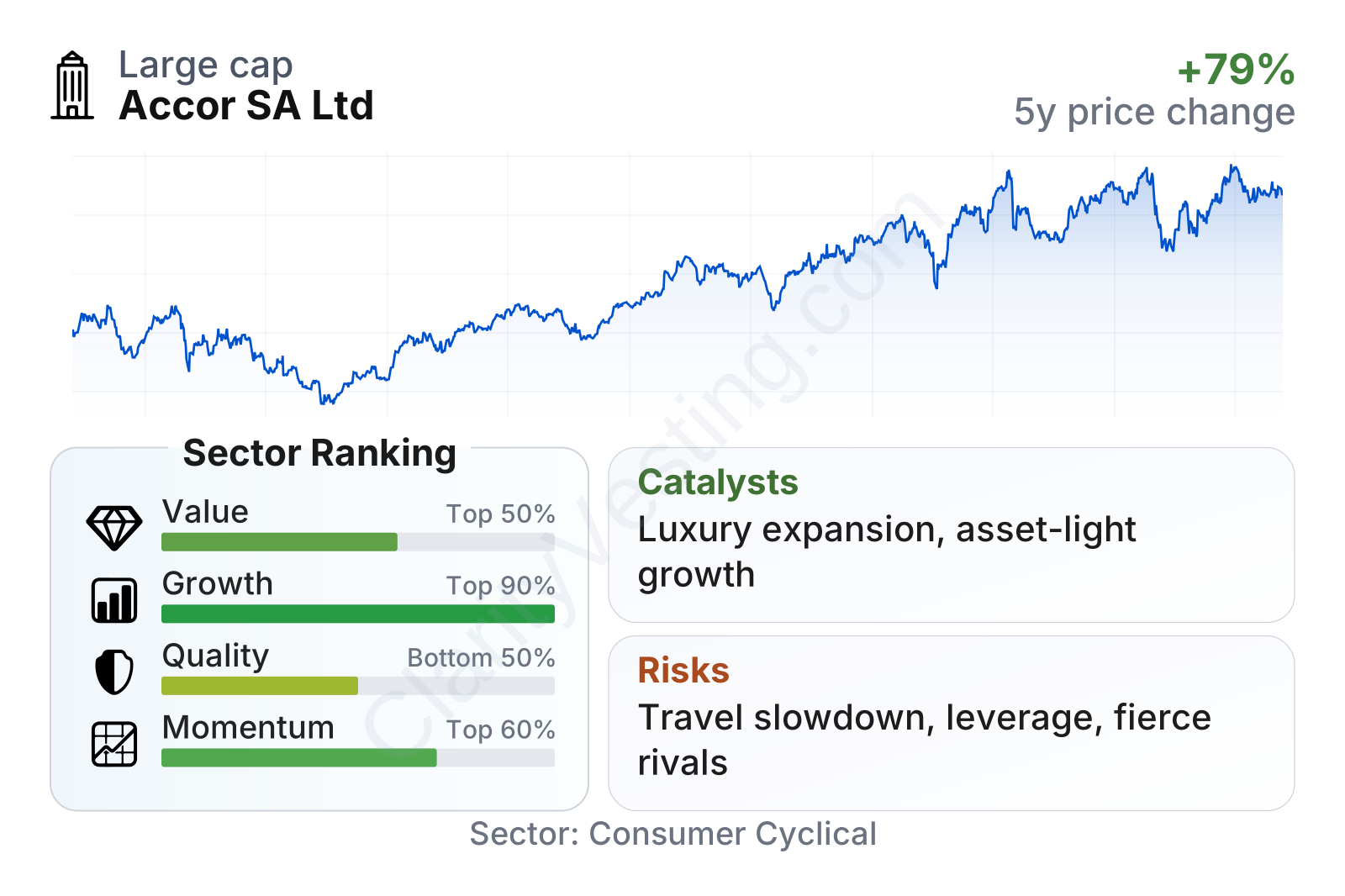
Accor is a large lodging company, but still much smaller than the biggest U.S.-listed global hotel groups by market value. Its share price trend has been constructive over the last three years, with performance clearly ahead of the median stock in its sector. Volatility has been moderate, with a beta below 1, suggesting the stock has generally moved less sharply than the broader market.
The factor profile is mixed but informative. Value metrics are around the better half of the sector because free cash flow yield is solid, even though the earnings multiple is much higher than the sector median. Growth metrics rank very strongly thanks to the multi-year recovery in revenue per share and improving margins. Quality is more uneven: operating profitability and return on invested capital are healthy, but leverage remains somewhat elevated. Momentum is also favorable, reflecting the strong stock performance since travel demand normalized.
Growth
The lodging industry remains supported by long-term drivers such as rising international travel, urbanization, large events, and continued demand for branded accommodation. Accor is particularly exposed to Europe, the Middle East, Asia-Pacific, and emerging markets, giving it a different geographic profile from some U.S.-centered peers. That can be useful when travel demand is broad-based rather than dependent on one country.
Its strategy for future growth is coherent. Accor has been expanding through management and franchise agreements, which usually require less capital than owning hotels. This model can support faster network growth, stronger returns on capital, and better cash conversion when execution is disciplined. The company has also been building luxury and lifestyle brands, where room rates, customer loyalty, and owner interest can be attractive. Lifestyle is especially important because it gives Accor exposure to higher-spending travelers and mixed-use hospitality concepts that can extend beyond standard hotel rooms.
The recent growth pattern shows two phases. First came the post-pandemic rebound, with exceptionally strong year-over-year gains in 2021 and 2022. More recently, growth has normalized into low-to-moderate territory, with the latest annual comparison close to flat to low single digits. That slowdown does not necessarily mean the business is stalling; it reflects a company that is now comparing against a much healthier base after a powerful recovery.
Cash generation is an important part of the Accor case. Free cash flow was deeply negative during the recovery period but has since turned strongly positive, reaching well above $1 billion on a trailing basis. That matters because a fee-heavy hotel platform can create substantial cash even when revenue growth cools, as long as occupancy, pricing, and cost control remain supportive.
Several catalysts stand out. Accor continues to develop its brand network, especially in premium, luxury, and lifestyle categories. Large international events and ongoing recovery in cross-border travel can help room demand in major gateway cities. The group has also been reshaping its portfolio over recent years to focus more on asset-light operations, which can improve resilience and returns if the travel cycle remains favorable.
Recent company updates have also highlighted ongoing room pipeline growth and continued strength in revenue per available room in several regions. For a hotel group, that combination matters: development expands future earning power, while pricing and occupancy support current fee income.
Risks
This article is for informational purposes only and does not constitute financial advice. Some content is AI-generated. See Disclaimer