Stock Analysis · AAC Technologies Holdings Inc (AACAF)
Overview
AAC Technologies Holdings is a components maker best known for supplying miniature parts used in smartphones and other consumer electronics. The company designs and manufactures acoustic components such as speakers and microphones, haptics products that create vibration and tactile feedback, optical modules and precision mechanics used in camera systems, as well as metal and structural parts. In simple terms, it helps device brands improve sound, imaging, and user experience inside compact products.
The business is closely tied to large consumer electronics customers, especially smartphone makers. Over time, AAC has tried to move beyond being only an audio parts supplier by expanding into optics, precision manufacturing, and automotive-related applications. That matters for long-term analysis because it can reduce dependence on any single product category if execution remains solid.
Based on the company’s recent annual reporting structure, revenue is mainly generated from hardware components sold to device manufacturers. The mix can shift from year to year, but the main sources of revenue are broadly:
- Acoustics and related audio solutions — historically the largest segment, including speakers, receivers, and microphones for smartphones and other electronics.
- Electromagnetic drives and precision mechanics — vibration motors, haptics, and mechanical parts used in mobile devices and other electronics.
- Optics — camera-related components and optical modules, an area the company has invested in to capture more value per device.
- Precision structural parts and other components — metal, casing, and specialized manufacturing solutions, with some exposure to non-handset products.
Because AAC’s public disclosures often emphasize product families rather than giving a simple global percentage split every time, a practical way to think about the business is that audio and haptics remain core profit drivers, while optics and precision manufacturing are the main expansion areas.
The multi-year picture shows a meaningful rebound in scale and profitability after a softer period. Revenue has climbed strongly since 2023, while gross profit and net income improved even faster, suggesting better operating leverage and a healthier product mix. Research and development spending also remains substantial, which fits a company that competes on miniaturization, performance, and engineering rather than on commodity production alone.
Key Figures
| Metric | Value | Sector ⓘ |
|---|---|---|
| Date | Jul 18, 2026 | |
| Context | ||
| Sector | Technology | |
| Industry | Communication Equipment | |
| Market Cap ⓘ | $5.81B | |
| Beta ⓘ | 1.38 | |
Value (Cheapness) | ||
| P/E Ratio ⓘ | 16.03 | 31.76 |
| FCF Yield ⓘ | 101.52% | 4.18% |
| EBIT / EV ⓘ | N/A | 2.56% |
| PEG ⓘ | 0.63 | |
Growth (Business expansion) | ||
| Revenue Growth ⓘ | 15.00% | 13.50% |
| RPS Growth (5Y CAGR) ⓘ | 17.11% | 8.57% |
| EPS Growth (5Y CAGR) ⓘ | N/A | -21.87% |
| Margin Growth (5Y Trend) ⓘ | -0.48% | 0.41% |
| FCF Growth (5Y CAGR) ⓘ | N/A | 9.76% |
Quality (Business durability) | ||
| ROIC (Latest) ⓘ | N/A | 8.54% |
| ROIC (5Y Median) ⓘ | 4.44% | 8.12% |
| Net Debt / EBIT (Latest) ⓘ | 0.50 | 0.38 |
| Net Debt / EBIT (5Y Median) ⓘ | 2.27 | 0.38 |
| Operating Margin (Latest) ⓘ | 8.14% | 9.58% |
| Operating Margin (5Y Median) ⓘ | 7.93% | 8.25% |
| Debt to Equity (Latest) ⓘ | 44.47% | 33.52% |
| Profit Margin (Latest) ⓘ | 7.90% | 6.96% |
| Free Cash Flow (Latest) ⓘ | $5.90B | |
Momentum (Price trend) | ||
| 3Y Return ⓘ | +135.34% | +30.91% |
| 12M Return (excl. last month) ⓘ | -1.03% | +28.90% |
| 6M Return ⓘ | -1.08% | +5.38% |
| Price vs. 200-Day MA ⓘ | +15.78% | +7.61% |
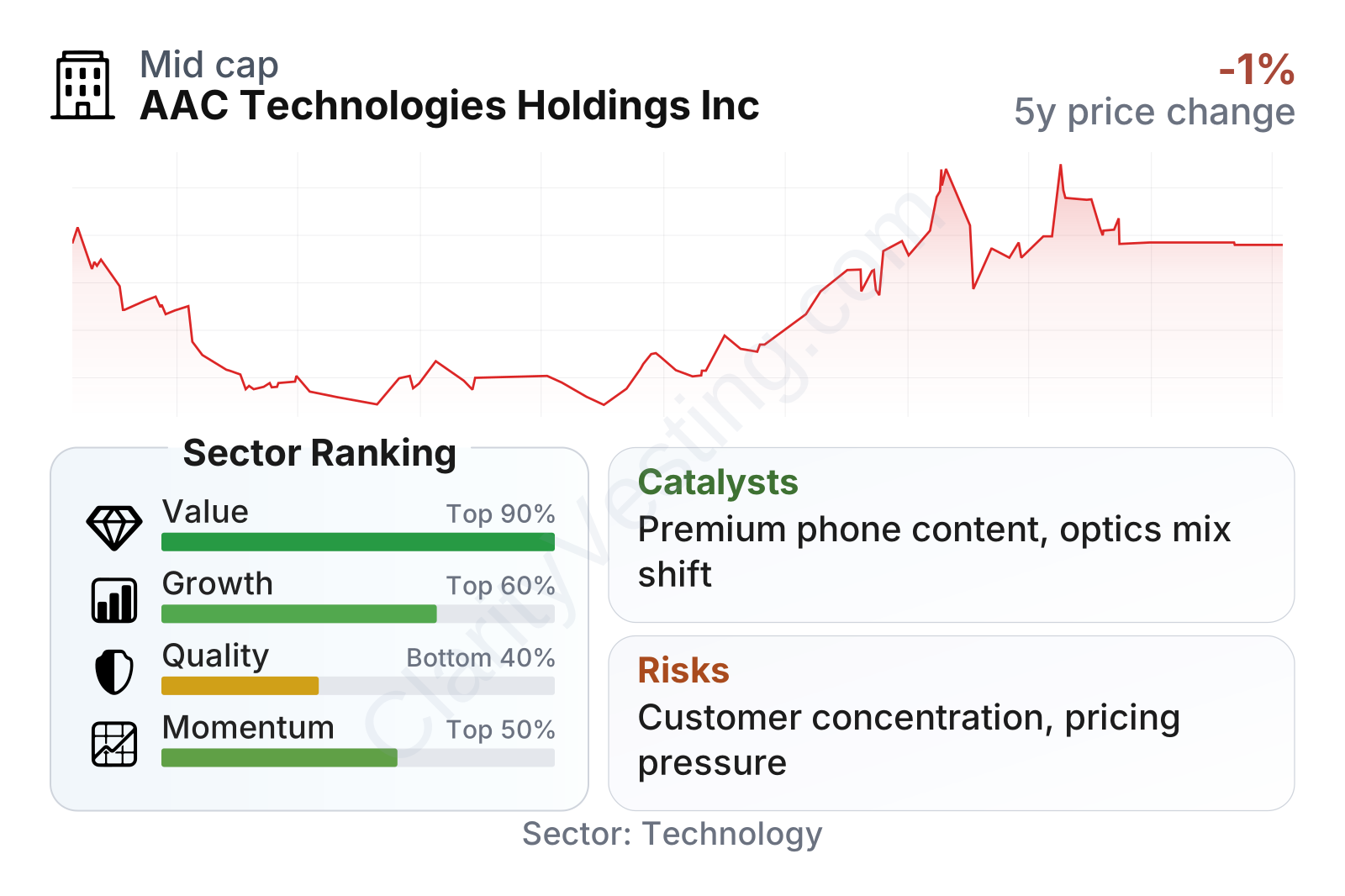
AAC sits around the mid-cap range for the sector and shows a mixed but interesting profile. On valuation measures, it screens better than much of the technology peer group, with a lower earnings multiple and a PEG ratio that points to growth not being fully reflected in the multiple. Growth indicators are decent rather than exceptional, helped by stronger revenue expansion and a solid five-year trend in revenue per share. Quality is less convincing: profitability is positive, but returns on capital and leverage metrics still look weaker than many sector peers. Price performance has recovered strongly over a multi-year view, although recent momentum has been less impressive than the broader sector.
Growth
AAC operates in a sector that still offers structural growth, but not in a straight line. Smartphones are a mature market in unit terms, yet the content value inside each device can continue to rise as brands push for better cameras, premium sound, stronger haptics, thinner form factors, and more AI-enabled features. That plays directly into AAC’s specialty: making compact components that improve the experience of a device without taking up much space.
The company’s strategy broadly makes sense for future growth. Its move from a narrower acoustics identity toward a broader precision components platform gives it more ways to increase revenue per device. Optics is especially important because camera hardware remains one of the most visible upgrade areas in premium phones. Haptics also remains relevant as brands try to differentiate user interaction. In addition, AAC has discussed expanding into automotive and other new-use cases, which could gradually diversify the business if the programs scale well.
The revenue trend has improved meaningfully from the weaker period earlier in the cycle. That suggests AAC has benefited from product upgrades, customer demand recovery, or both. The broader five-year growth profile also appears stronger than the sector median, which is a useful sign because it shows the recent rebound is not only a one-quarter effect.
Cash generation is another constructive element. Free cash flow is firmly positive, which matters for a manufacturer that needs to keep investing in tooling, engineering, and process improvement. Stronger cash conversion gives AAC more flexibility to fund research, support customer programs, and manage cyclicality without depending too heavily on outside capital.
A meaningful catalyst is the rising component content in premium smartphones and other smart devices. If AAC keeps winning slots in flagship models, even modest industry unit growth can still translate into better revenue. Another catalyst is product mix: higher-end optics, haptics, and specialized mechanical components typically support better margins than lower-value commodity parts. The recent improvement in revenue and earnings trajectory supports the idea that this mix shift may already be helping.
Risks
The biggest risk is customer and end-market concentration. AAC sells into supply chains where a small number of very large electronics brands have major purchasing power. If one important customer changes supplier, delays a launch, cuts orders, or pushes for lower pricing, the effect on revenue and margins can be significant. This is a common issue in smartphone component manufacturing, and AAC is not immune to it.
Another risk is intense competition. The company has technical capabilities, manufacturing scale, and long experience in miniaturized components, but it is not operating in a field with wide-open economics. In acoustics and haptics, AAC competes with specialist component makers and integrated electronics suppliers. In optics and camera-related parts, competition can be especially tough because product performance, yield, and cost discipline all matter at once. Major peer groups include Goertek, Luxshare, Sunny Optical, OFILM in certain categories, and other Asian precision component manufacturers serving mobile devices.
AAC’s competitive advantage is real but moderate rather than overwhelming. Its strengths include engineering know-how, long customer relationships, and the ability to combine several component technologies under one roof. That can make it useful to large OEMs that prefer suppliers able to scale complex parts reliably. Still, the company does not appear to hold an uncontested leadership position across all of its categories, and that limits pricing power.
Leverage does not look excessive in absolute terms, but it is somewhat higher than the sector median. That means the balance sheet deserves monitoring, especially in a cyclical hardware business where demand can turn quickly. The better news is that net debt relative to EBIT appears manageable on the latest numbers, helped by the earnings recovery.
Profitability is also a mixed area. Net margin is slightly above the sector median, which shows AAC can still convert sales into earnings at a respectable rate. But operating margin remains below the peer median, and the longer-term trend has not been especially strong. In practice, that means the company is still exposed to pricing pressure, mix changes, and manufacturing efficiency swings.
On recent risk events, there is no widely known public-domain indication here of a major scandal or corporate breakdown that would overshadow the investment case. The more relevant risk is operational: whether the recent recovery can be sustained in a market where product cycles, customer concentration, and competitive pricing often drive results more than broad industry growth alone.
Valuation
The valuation picture leans favorable compared with many technology names. AAC trades on an earnings multiple that is materially below the sector median, while its recent growth and earnings recovery are better than what such a discount usually implies. The PEG ratio also points in the same direction, suggesting the market is not assigning an aggressive premium to expected growth.
That said, the discount is not hard to understand. The market is likely weighing the company’s weaker quality indicators, dependence on consumer electronics cycles, and the lack of a dominant competitive moat. In other words, AAC does not look priced like a high-confidence compounder; it looks priced like a cyclical technology manufacturer that has improved but still needs to prove the durability of that improvement.
Viewed in context, the current price appears easier to justify on fundamentals than many richer-valued hardware and component peers. The combination of recovering earnings, positive free cash flow, and a still-moderate multiple creates a more grounded valuation profile. The main question is not whether the multiple is high, but whether margins, customer programs, and product mix can keep supporting the recent upswing.
Conclusion
AAC Technologies stands out as a specialized electronics components manufacturer that has rebuilt momentum through stronger revenue, improving earnings, and continued investment in engineering-heavy products. Its business is understandable at a high level: it supplies the small but critical parts that help premium devices sound better, feel better, and capture better images. That is a useful place to operate as consumer electronics brands continue to compete on performance inside limited physical space.
The company’s current positioning looks better than it did a few years ago. Growth has returned, cash generation is positive, and the valuation remains restrained compared with much of the sector. Those are meaningful positives. The counterweight is that AAC still operates in a demanding part of the technology supply chain, where customer concentration, price pressure, and uneven profitability can quickly change sentiment.
Overall, the profile is more compelling on recovery, scale, and valuation than on business quality alone. The long-term appeal depends less on a dominant moat and more on whether AAC can keep moving toward higher-value components while preserving the earnings rebound already underway.
Sources:
- AAC Technologies Holdings Inc. — Annual Report 2025
- AAC Technologies Holdings Inc. — Investor Relations presentations and results announcements
- AAC Technologies Holdings Inc. — Company website product and business overview pages
- Wikipedia — AAC Technologies
This article is for informational purposes only and does not constitute financial advice. Some content is AI-generated. See Disclaimer