Stock Analysis · Newegg Commerce Inc (NEGG)
Overview
Newegg Commerce Inc. (NEGG) operates an online retail marketplace best known for consumer electronics and computer hardware. The company sells products directly to customers (first-party retail) and also runs a third-party marketplace where other sellers list items on Newegg’s platform. Alongside product sales, Newegg offers services that support online commerce, such as logistics/fulfillment and advertising/marketing programs tied to the marketplace.
In practice, Newegg’s business is closely linked to demand cycles in PCs, components, and consumer electronics. When shoppers and small businesses upgrade systems and buy peripherals, sales can improve; when demand softens, revenue and margins can come under pressure. The company has also emphasized cost control in recent periods, which can reduce operating expenses but does not automatically solve profitability if gross profit dollars (revenue minus product costs) keep shrinking.
Main revenue streams (broadly):
- Product sales (first-party retail) from electronics, computer components, and related categories
- Marketplace (third-party seller) revenue such as commissions and seller services
- Advertising and other services linked to driving traffic and conversion on the platform
The company’s filings are the right place to confirm the exact mix and percentages by segment; this simplified breakdown reflects how e-commerce platforms like Newegg typically generate revenue.
From 2021 to 2024, total revenue declined materially (from about $2.38B to about $1.24B), while gross profit also fell (about $326M to about $121M). Operating expenses decreased over the same period, but operating income and net income remained negative in 2022–2024, indicating that cost reductions have not fully offset the drop in gross profit dollars.
Key Figures
| Metric | Value | Industry ⓘ |
|---|---|---|
| Date | Apr 27, 2026 | |
| Context | ||
| Sector | Consumer Cyclical | |
| Industry | Internet Retail | |
| Market Cap ⓘ | $814.65M | |
| Beta ⓘ | 4.29 | |
| Fundamental | ||
| P/E Ratio ⓘ | N/A | 33.90 |
| Profit Margin ⓘ | -1.72% | 6.26% |
| Revenue Growth ⓘ | 12.50% | 12.30% |
| Debt to Equity ⓘ | 66.13% | 26.59% |
| PEG ⓘ | N/A | |
| Free Cash Flow ⓘ | -$53.42M | |
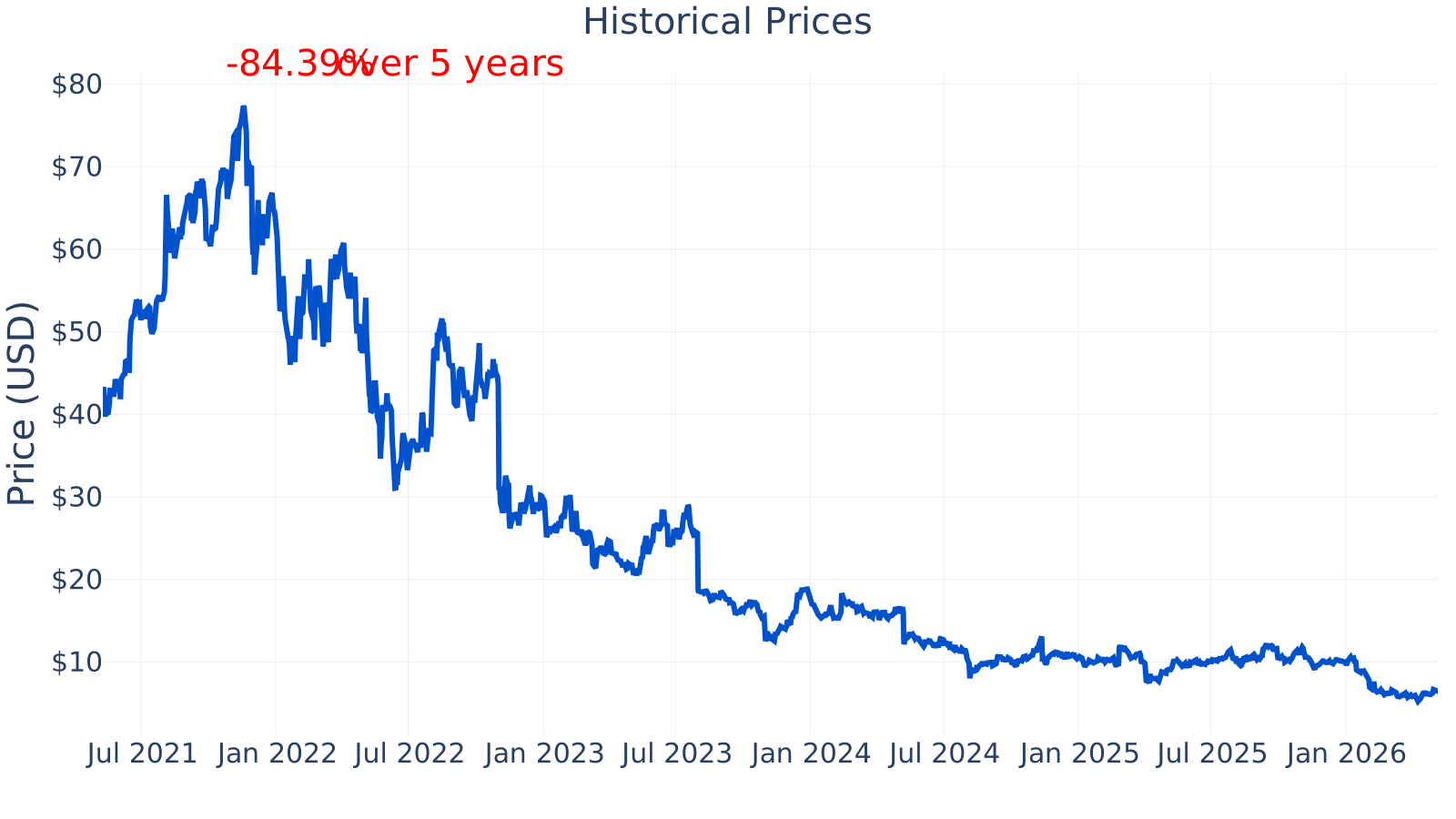
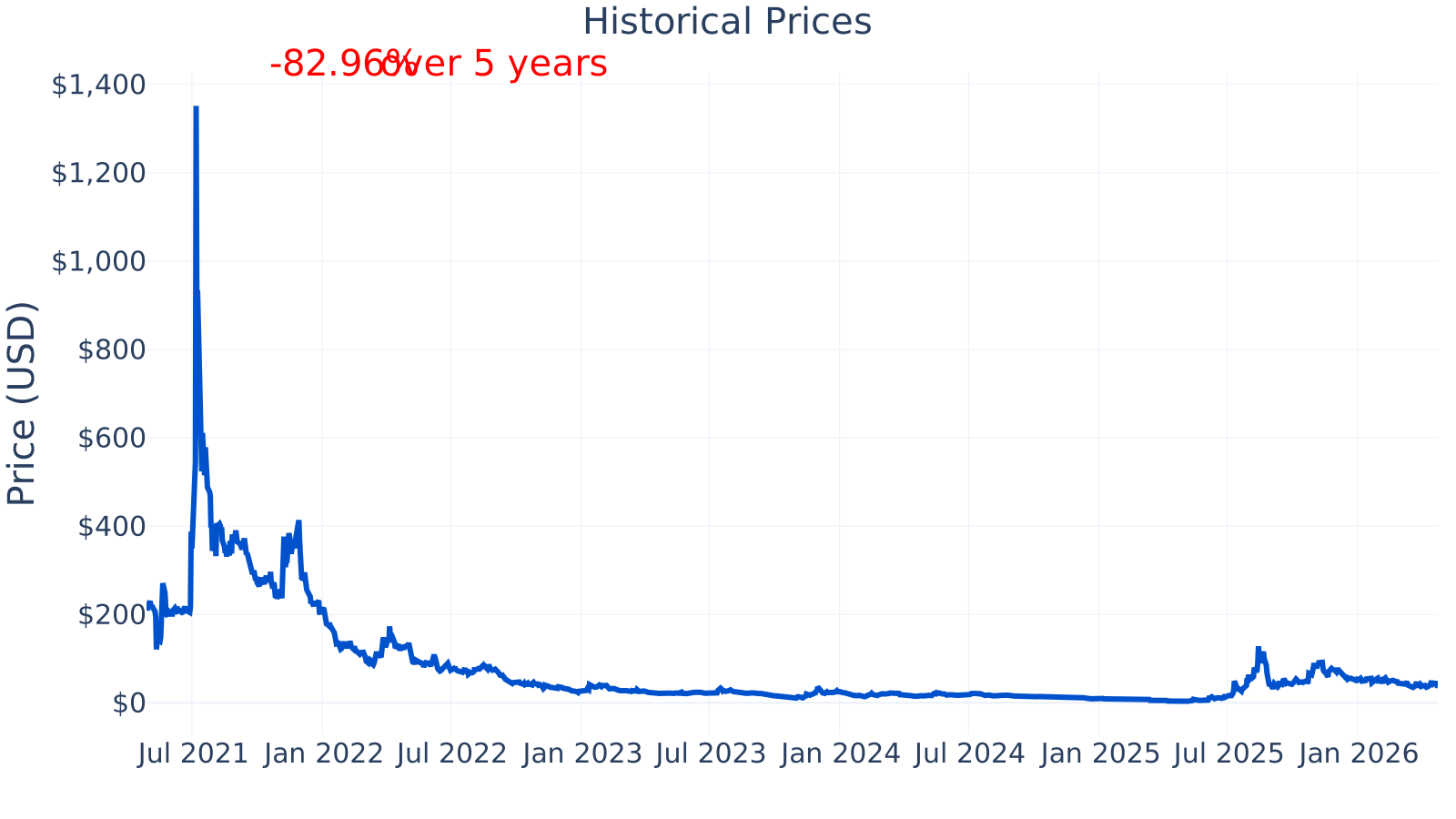
Newegg’s market capitalization is about $815M. The stock shows a high beta (4.29), which is a common signal of above-average price volatility versus the overall market. Profitability is currently negative, with a profit margin of about -1.72% versus an industry median near +6.26%. Recent revenue growth is positive, with year-over-year revenue growth around +12.5%, roughly in line with the industry median (~+12.3%). Leverage is higher than the industry median, with debt-to-equity around 66% versus an industry median around 27%. Free cash flow over the trailing twelve months is about -$53.4M, meaning cash outflows exceeded cash inflows over that period.
Growth (Medium)
Newegg operates in online retail, a large category that has grown structurally over the past decade as shopping continues to move online. However, Newegg’s core categories (PC hardware and consumer electronics) can be cyclical, with demand influenced by product refresh cycles, pricing, and consumer spending. In other words, the “online retail” channel can grow while a specialized electronics retailer still faces uneven demand depending on the hardware cycle.
Revenue growth has been volatile over time: several quarters show negative year-over-year performance through much of 2021–2024, followed by a return to positive growth around +12.5% in 2025. This shift suggests stabilization or an easier comparison period, but it is not, by itself, confirmation of a durable multi-year growth trend—especially given the multi-year decline in annual revenue shown in the overview financial flow.
A key question for long-term business expansion is whether Newegg can grow higher-margin lines (such as marketplace services and advertising) faster than lower-margin first-party product sales. That mix shift is often a major catalyst for e-commerce platforms, but the pace and success of that transition must be confirmed in the company’s filings and results over time.
Free cash flow has been negative across the periods shown (for example, around -$60.0M as of 2025-03-31 and -$53.4M in the latest metric snapshot). Persistent negative free cash flow can limit flexibility to invest for growth without relying on additional financing, working-capital improvements, or asset sales.
Risks (High)
Newegg’s biggest fundamental risk is profitability. The company’s profit margin has been negative for an extended period, which means the business has not recently converted revenue into bottom-line profit. In retail, where competition is intense and products can be price-sensitive, consistent profitability often depends on scale advantages, high-margin services, or strong differentiation.
The profit margin trend shows a move from small positive margins in 2021 to sustained negatives thereafter, with improvement more recently (about -1.97% by mid-2025) but still below zero. The industry median in the chart is positive in many periods, which highlights the gap Newegg would need to close to resemble a more typical profitable peer group.
Another key risk is financial leverage and funding needs, especially when free cash flow is negative. Higher leverage can increase sensitivity to interest costs and reduce room for error if operating results weaken.
Debt-to-equity is currently around 66%, above the industry median (about 27% in the latest table). The historical pattern also shows meaningful swings quarter to quarter, which can happen when equity levels and working-capital financing change. In a low-margin retail model, a higher leverage profile can increase overall business risk.
Competition is also a central challenge. Newegg participates in highly competitive online retail segments where customers can easily compare prices and delivery times. Large, diversified platforms and major retailers compete aggressively on selection, fulfillment speed, and pricing. Newegg’s brand recognition in PC enthusiast categories is a potential differentiator, but the company is not generally considered the overall leader in broad online retail, where the largest platforms have substantial scale advantages in logistics, customer acquisition, and vendor terms.
Finally, the stock’s high volatility (as suggested by the high beta) is a practical risk for long-term shareholders, because large price swings can occur even when business fundamentals change slowly.
Valuation
For many companies, a price-to-earnings (P/E) ratio helps compare the stock price to profits. For Newegg, profitability has been pressured in recent years, and the P/E values shown are frequently not meaningful (the chart contains many periods displayed as 0 due to negative earnings or extreme values). When earnings are negative, P/E-based valuation is usually not a reliable tool, and comparisons to an industry median P/E (around 33.9 in the latest table) become less informative.
In situations like this, valuation discussions often lean more on operational realities visible in filings—such as revenue direction, gross profit, cash generation, and balance-sheet strength—because those factors influence how a retailer can fund operations and potentially return to sustained profitability.
Conclusion
Newegg is a specialized e-commerce company with a recognizable presence in PC hardware and electronics. The business operates in a large online retail channel, but its results have reflected significant industry cyclicality and competitive pressure, including a multi-year decline in annual revenue from 2021 through 2024 and sustained net losses over that period.
Recent year-over-year revenue growth has turned positive, which can be a constructive operational signal, but key long-term questions remain centered on whether the company can consistently improve margins, generate positive free cash flow, and strengthen its financial profile while competing against much larger platforms. Given the combination of negative margins, negative free cash flow, above-median leverage, and high stock volatility, the overall fact pattern points to a business with elevated uncertainty until profitability and cash generation become more consistent.
Sources:
- U.S. SEC EDGAR — Newegg Commerce, Inc. filings (Form 10-K, Form 10-Q, Form 8-K)
- Newegg Commerce, Inc. — Investor Relations: SEC Filings
- Wikipedia — “Newegg” (company background and history)
This article is for informational purposes only and does not constitute financial advice. Some content is AI-generated. See Disclaimer