Stock Analysis · Capri Holdings Ltd (CPRI)
Overview
Capri Holdings Ltd is a global fashion company focused on luxury and premium accessories and apparel. It operates a portfolio of well-known brands (Versace, Jimmy Choo, and Michael Kors) and sells products through a mix of directly operated retail stores, wholesale partners (such as department stores and specialty retailers), and online channels. The company’s financial results are therefore shaped by consumer demand for discretionary items like handbags, footwear, and ready-to-wear, as well as brand positioning, pricing power, and the health of key regions and distribution partners.
In its reporting, Capri typically organizes revenue by brand. The largest contributor has historically been the Michael Kors business, followed by Versace and then Jimmy Choo (exact percentages vary by fiscal year and can be found in the company’s annual report segment disclosures).
Common revenue streams include:
- Retail (company-operated stores)
- Wholesale (sales to third-party retailers/distributors)
- E-commerce (direct-to-consumer online sales)
- Licensing (select categories licensed to partners, depending on brand and period)
The company’s recent income statement mix shows how sensitive overall results can be to operating costs. In the last few fiscal years shown below, total revenue declined from about $5.65B (FY2021–FY2022) to about $4.44B (FY2024–FY2025). Over the same span, selling, general and administrative expenses remained a large portion of revenue, which contributed to a sharp drop in operating income and a swing to net losses in FY2024–FY2025.
Key Figures
| Metric | Value | Industry ⓘ |
|---|---|---|
| Date | Feb 16, 2026 | |
| Context | ||
| Sector | Consumer Cyclical | |
| Industry | Luxury Goods | |
| Market Cap ⓘ | $2.43B | |
| Beta ⓘ | 1.43 | |
| Fundamental | ||
| P/E Ratio ⓘ | N/A | |
| Profit Margin ⓘ | -11.65% | -4.19% |
| Revenue Growth ⓘ | -4.00% | 3.80% |
| Debt to Equity ⓘ | 2041.90% | 66.96% |
| PEG ⓘ | 0.83 | |
| Free Cash Flow ⓘ | $491.00M | |
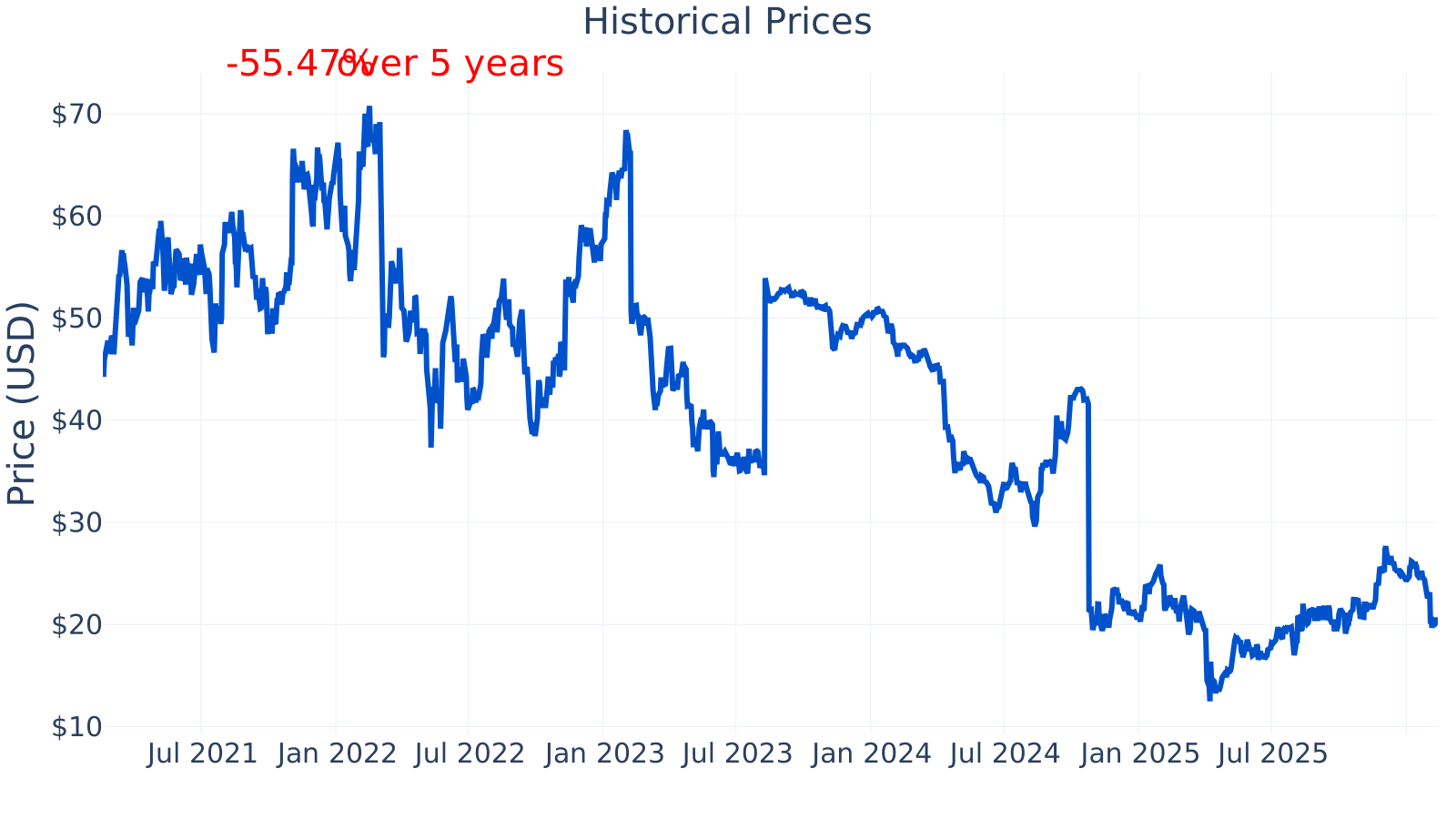
Capri’s market capitalization is about $2.43B, and the stock’s beta of ~1.43 indicates it has tended to move more than the broader market. Recent profitability is negative: the latest profit margin shown is about -11.65%, which is below the luxury goods industry median in the table (about -4.19%).
Growth has been weak in the most recent year-over-year view: the latest revenue growth shown is about -4% versus an industry median of about +3.8%. A notable positive is that trailing twelve-month free cash flow is about $491M, meaning the company has recently generated cash after operating costs and capital spending, even while accounting earnings were negative.
The most striking balance-sheet signal in the table is debt-to-equity of ~2042% (versus an industry median of ~67%). This ratio can rise sharply when equity becomes small due to losses, charges, or other accounting effects, so it is best interpreted together with the company’s filings (for details on debt, lease obligations, covenants, and equity changes).
Growth (medium)
The broader luxury goods market is driven by brand strength, global tourism trends, product innovation, and long-term demand for premium accessories and fashion. That said, luxury demand can fluctuate meaningfully with consumer confidence, currency movements, and regional spending cycles. For a multi-brand group like Capri, sustainable growth typically depends on maintaining brand relevance while managing distribution carefully (for example, balancing full-price selling in directly operated channels versus broader wholesale exposure).
Recent revenue growth has been inconsistent, with several quarters showing declines. The pattern below reflects a shift from strong post-pandemic rebounds (very high year-over-year growth in parts of 2021) to a more challenging period with multiple negative comparisons, plus a few temporary rebounds.
A potential stabilizer has been cash generation. Free cash flow over the periods shown remained positive overall, although it dropped sharply around FY2024 before improving again.
In terms of catalysts, company-driven items that can matter over a multi-year horizon typically include brand repositioning, product pipeline success, expansion (or rationalization) of store fleets, improvements in wholesale quality, and execution in digital/direct-to-consumer. Any specific forward-looking targets and strategic priorities should be taken from the company’s latest annual report and investor presentations, as these can change with leadership decisions and market conditions.
Risks (high)
Capri operates in a category where results can change quickly when demand softens or when promotions increase. A key risk sign is the move from positive profit margins earlier in the period shown to materially negative margins more recently. This suggests the business has faced a combination of weaker sales, elevated costs, and/or one-time charges that have reduced earnings.
Balance-sheet risk also appears elevated based on leverage relative to equity. Debt-to-equity rose from roughly 106%–234% in earlier periods shown to much higher levels recently, reaching about 2042%. This can happen when losses or accounting adjustments reduce equity, even if total debt has not increased proportionally. Still, such a reading highlights the importance of reviewing liquidity (cash), maturity schedules, and borrowing terms in the company’s filings.
Competition is intense. Capri’s brands compete with large, well-capitalized global luxury groups and premium accessories peers that invest heavily in marketing, real estate, and product development. Competitive positioning varies by brand and category:
- Michael Kors competes broadly in premium/luxury accessories and lifestyle against brands owned by global groups and other standalone labels.
- Versace competes in high-end luxury fashion with heritage luxury houses and designer brands.
- Jimmy Choo competes in luxury footwear and accessories against specialized luxury shoemakers and broader luxury groups.
Competitive advantages in this industry usually come from brand equity, iconic products, control of distribution, and marketing effectiveness. Capri does have recognizable global brands, but the recent margin deterioration indicates the company has faced meaningful execution and/or market headwinds. Additional risks include reliance on key wholesale partners, fashion trend shifts, currency effects, counterfeit activity, and the operational complexity of managing three distinct brands across many countries.
Valuation
Traditional valuation tools like the price-to-earnings (P/E) ratio become less informative when earnings are negative or unusually volatile. In the P/E history shown, earlier periods displayed moderate P/E levels, while more recent periods show 0 (not meaningful) after earnings moved into loss territory, and one period shows an unusually high P/E level that can occur when earnings are temporarily very small.
In this context, valuation discussions often shift toward a combination of (1) the durability of brand demand, (2) the path back to sustained operating profits, (3) cash generation consistency, and (4) financial flexibility given leverage and fixed cost structure. The company’s market capitalization (about $2.43B) and positive free cash flow (about $491M TTM) can look very different depending on whether recent losses are viewed as temporary versus structural. The filings are the best place to understand what management attributes the profit decline to (for example, demand softness, channel mix, inventory actions, impairment or restructuring charges, or other items).
Conclusion
Capri Holdings is a multi-brand fashion group with globally recognized names and diversified distribution across retail, wholesale, and online channels. Over the last few years shown, the company experienced a clear downturn in profitability, with profit margins turning significantly negative, alongside weaker year-over-year revenue trends.
At the same time, the company has recently produced positive free cash flow, which can provide operational breathing room. The main issues that stand out for a long-term assessment are (1) the ability to restore consistent operating profitability, (2) whether revenue can stabilize and return to sustained growth, and (3) the level of balance-sheet risk implied by a very high debt-to-equity ratio.
Sources:
- U.S. SEC EDGAR — Capri Holdings Ltd filings (Form 10-K, Form 10-Q)
- Capri Holdings — Investor Relations materials (Annual Report and SEC filings section)
- Wikipedia — “Capri Holdings” (basic company background)
This article is for informational purposes only and does not constitute financial advice. Some content is AI-generated. See Disclaimer


