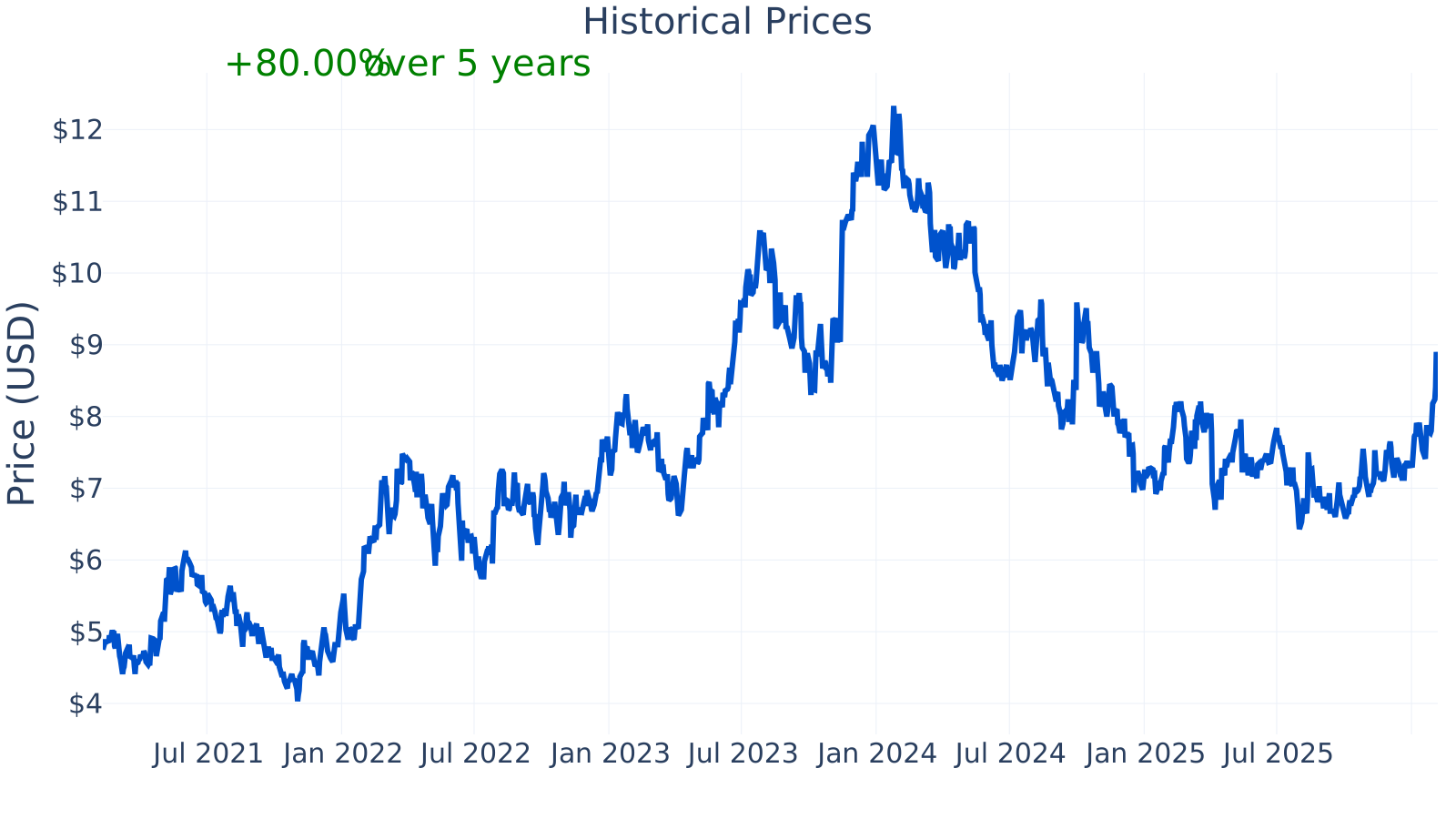
Stock Analysis · Arcos Dorados Holdings Inc (ARCO)
Overview
Arcos Dorados Holdings Inc. is the largest McDonald’s franchisee in the world by number of restaurants, operating the McDonald’s brand across Latin America and the Caribbean. In practical terms, the company runs and markets McDonald’s restaurants in its territories, manages day-to-day operations (staffing, sourcing, pricing within guidelines, local marketing), and invests in store openings, remodels, and digital/delivery capabilities. Because it operates in many countries, results are influenced not only by restaurant demand but also by currency moves, inflation, and local economic conditions.
Its revenue mainly comes from selling food and beverages in company-operated restaurants. Additional revenue can come from franchised restaurants (royalties and fees) and real-estate related income in some cases, but the core driver is customer transactions across its restaurant network.
Main revenue sources (typical for a McDonald’s franchise operator):
- Company-operated restaurant sales (food and beverages sold to customers)
- Franchise-related revenue (royalties, fees, and rent where applicable)
- Other income (limited, can include miscellaneous and ancillary items)
From 2021 to 2024, total revenue increased meaningfully (about $2.66B to about $4.47B). Over the same period, costs and operating expenses also grew, and net income rose from about $45M (2021) to about $149M (2024), with a peak around $181M in 2023. This pattern is consistent with a business that benefits from higher sales but remains sensitive to food, labor, and financing costs.
Key Figures
| Metric | Value | Industry ⓘ |
|---|---|---|
| Date | Feb 08, 2026 | |
| Context | ||
| Sector | Consumer Cyclical | |
| Industry | Restaurants | |
| Market Cap ⓘ | $1.80B | |
| Beta ⓘ | 0.46 | |
| Fundamental | ||
| P/E Ratio ⓘ | 7.31 | 29.16 |
| Profit Margin ⓘ | 5.39% | 7.98% |
| Revenue Growth ⓘ | 5.20% | 6.90% |
| Debt to Equity ⓘ | 276.89% | 69.29% |
| PEG ⓘ | 2.15 | |
| Free Cash Flow ⓘ | $2.58M | |
Arcos Dorados has a market capitalization of about $1.80B and a relatively low reported beta of ~0.46, which indicates the stock has historically moved less than the broader market (though company-specific and country-specific risks can still be significant). The company’s P/E ratio is ~7.3, well below the industry median of ~29.2, while its profit margin is ~5.4% versus an industry median of ~8.0%. Year-over-year revenue growth is about 5.2% compared with an industry median of ~6.9%. A key balance-sheet item is leverage: debt-to-equity is ~277%, substantially above the industry median of ~69%. The table also shows free cash flow (TTM) of about $2.6M, which is low in absolute terms and can be volatile in restaurant businesses due to ongoing capital spending.
Growth (Medium)
Quick-service restaurants are a long-standing category with steady demand, and in many markets it tends to be supported by convenience, value-focused menus, and high brand recognition. For Arcos Dorados, the growth question is less about inventing a new product category and more about execution across a diverse region: opening and modernizing restaurants, expanding drive-thru and delivery, improving digital ordering, and maintaining strong operations while managing inflation and currency swings.
The company’s year-over-year revenue growth has been positive for much of the period shown, with very high growth rates in 2021–2023 (partly reflecting recovery dynamics), followed by a clear slowdown in 2024 and mixed results into 2025, ending around +5.2% most recently. This shift suggests that after a strong rebound phase, growth has been normalizing, making future progress more dependent on operational improvements, pricing power versus inflation, and unit expansion rather than broad-based recovery.
Free cash flow has fluctuated significantly over time, moving from positive levels earlier in the period to negative territory more recently (around -$52M at one point shown) and near break-even on a trailing basis in the latest table (~$2.6M). In restaurants, this can happen when the company increases capital expenditures (new stores, remodels, equipment, technology) or faces working-capital pressure. For long-term business momentum, sustained positive free cash flow generally makes growth easier to fund without increasing leverage.
Potential catalysts in this type of business typically include: (1) successful pricing and menu strategy that protects traffic and margins during inflation, (2) productivity improvements (labor scheduling, supply chain efficiency), (3) store modernization and throughput gains (faster service), and (4) continued growth in digital ordering and delivery where unit economics remain attractive. The company’s McDonald’s brand association is a major advantage for demand generation, but results still depend on disciplined execution and cost control.
Risks (High)
This article is for informational purposes only and does not constitute financial advice. Some content is AI-generated. See Disclaimer