Stock Analysis · Wix.Com Ltd (WIX)
Overview
Wix.com Ltd (WIX) is a software company that helps individuals, entrepreneurs, and small-to-medium businesses create and manage an online presence. Its platform is designed to let customers build websites and online stores, connect a custom domain, manage bookings or services, run marketing campaigns, and track performance—mostly through a subscription-based model with add-on services.
From a business model perspective, Wix aims to turn free users into paying subscribers over time, then increase revenue per customer by adding higher-tier plans and commerce/marketing features. This “land and expand” approach is common among subscription software companies, but it depends heavily on product quality, customer retention, and ongoing feature innovation.
Wix reports revenue primarily through subscriptions and related services. In general terms (based on how the company describes its revenue in filings), the main sources typically include:
- Subscriptions (premium plans for websites and businesses)
- Partners / commerce-related services (for example, payments, business solutions, and other services enabled through partners)
- Other services tied to running and growing an online business on the Wix platform
Percentages by line item can vary by reporting period and disclosure detail, but the overall mix is centered on recurring subscriptions, with additional contribution from commerce and business services described in the company’s filings.
Over 2021–2024, revenue increased from about $1.27B to about $1.76B, while profitability improved markedly: operating income moved from a loss in 2021–2022 to positive in 2023 and higher in 2024. The cost structure also shows substantial ongoing investment in research and development, which is typical for a software platform competing on features and ease of use.
Key Figures
| Metric | Value | Industry ⓘ |
|---|---|---|
| Date | Feb 08, 2026 | |
| Context | ||
| Sector | Technology | |
| Industry | Software - Infrastructure | |
| Market Cap ⓘ | $4.20B | |
| Beta ⓘ | 1.37 | |
| Fundamental | ||
| P/E Ratio ⓘ | 31.96 | 25.66 |
| Profit Margin ⓘ | 7.20% | 6.68% |
| Revenue Growth ⓘ | 13.60% | 15.20% |
| Debt to Equity ⓘ | -563.56% | 19.82% |
| PEG ⓘ | 0.45 | |
| Free Cash Flow ⓘ | $567.13M | |
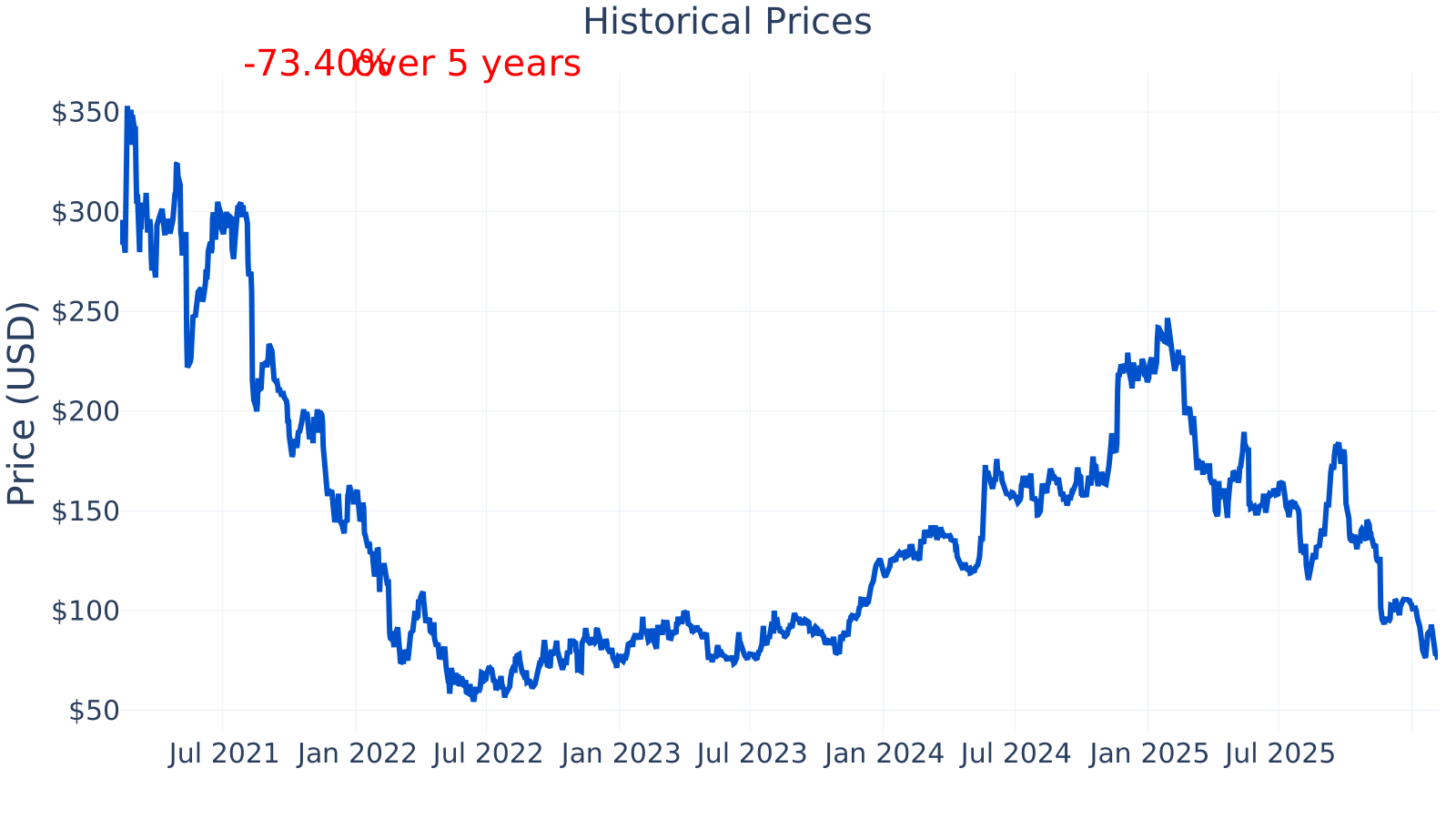
Wix’s market capitalization is about $4.20B, and its beta of 1.37 indicates the stock has historically moved more than the broader market on average. The latest profit margin is about 7.2%, slightly above the industry median of 6.7%, reflecting improved profitability versus earlier periods. Year-over-year revenue growth is about 13.6% versus an industry median around 15.2%. Trailing twelve-month free cash flow is about $567M, which suggests meaningful cash generation. The reported debt-to-equity ratio is negative, which often happens when accounting equity is negative; in those cases, this metric can be less intuitive to interpret than it is for companies with positive equity.
Growth (Medium)
Wix operates in the broader website creation, e-commerce enablement, and small-business software markets. These areas are supported by long-term trends such as more commerce moving online, more service businesses relying on online booking and customer communication, and continued demand for tools that reduce the need for custom development.
Strategically, Wix’s growth logic is straightforward: keep improving the core builder experience, then sell more business features (commerce, marketing, scheduling, customer management) to increase revenue per paying user while maintaining retention. This strategy can work well in subscription software if customers remain on the platform as their needs become more complex.
Revenue growth moderated from very high rates in 2021 (above 40% early in the year) to mid–single digits in parts of 2022–early 2023, then re-accelerated into the low-to-mid teens through 2024–2025 (around 12–14% recently). That pattern is consistent with a company moving from a rapid expansion phase into a more mature growth profile, with periodic re-acceleration tied to product improvements, pricing, and customer mix.
Free cash flow improved substantially over time, moving from around -$20M (TTM) in 2022 to about $515M by March 2025 and roughly $567M most recently. For long-term business durability, this matters because cash generation can help fund product development and operations without relying as heavily on external financing.
Potential catalysts are typically operational rather than one-off events: improved conversion from free to paid users, stronger retention, increased adoption of commerce and business features, and continued efficiency gains that convert revenue into profit and cash flow.
Risks (Medium)
This article is for informational purposes only and does not constitute financial advice. Some content is AI-generated. See Disclaimer


