Stock Analysis · Check Point Software Technologies Ltd (CHKP)
Overview
Check Point Software Technologies Ltd (CHKP) is a cybersecurity company. In simple terms, it sells tools that help organizations protect their networks, devices, and cloud systems from attacks, data theft, and other digital threats. Its products are typically used by businesses and public-sector organizations that need to keep sensitive information and services secure.
Check Point’s business is commonly described as a mix of software and security appliances (hardware devices used for security), plus ongoing customer support and subscription-style services. This combination often means some revenue is “one-time” (a product sale) and some is “recurring” (support contracts and subscriptions renewed over time). In its annual report, the company generally discusses revenue in broad categories such as security subscriptions and software updates, support services, and product sales; exact percentages can vary by year and are presented in the company’s filings.
Main revenue streams (typical structure described in company filings):
- Support and subscription services (recurring revenue tied to updates, subscriptions, and support contracts)
- Products (including security gateways/appliances and related software)
From a business-model perspective, the long-term story is closely linked to how effectively Check Point grows recurring revenue and keeps customers renewing.
Over the years shown, total revenue increases steadily (from about $2.17B in 2021 to about $2.73B in 2025). Spending on research and development also rises over time, which can be a sign the company is funding product improvement to stay competitive. Operating income is solid but fluctuates, with a noticeable dip in 2025 versus 2024 despite higher revenue, suggesting costs grew faster than revenue that year.
Key Figures
| Metric | Value | Industry ⓘ |
|---|---|---|
| Date | May 04, 2026 | |
| Context | ||
| Sector | Technology | |
| Industry | Software - Infrastructure | |
| Market Cap ⓘ | $11.94B | |
| Beta ⓘ | 0.65 | |
| Fundamental | ||
| P/E Ratio ⓘ | 11.78 | 29.58 |
| Profit Margin ⓘ | 38.37% | 6.71% |
| Revenue Growth ⓘ | 4.80% | 18.30% |
| Debt to Equity ⓘ | 70.12% | 24.92% |
| PEG ⓘ | 1.10 | |
| Free Cash Flow ⓘ | $1.31B | |
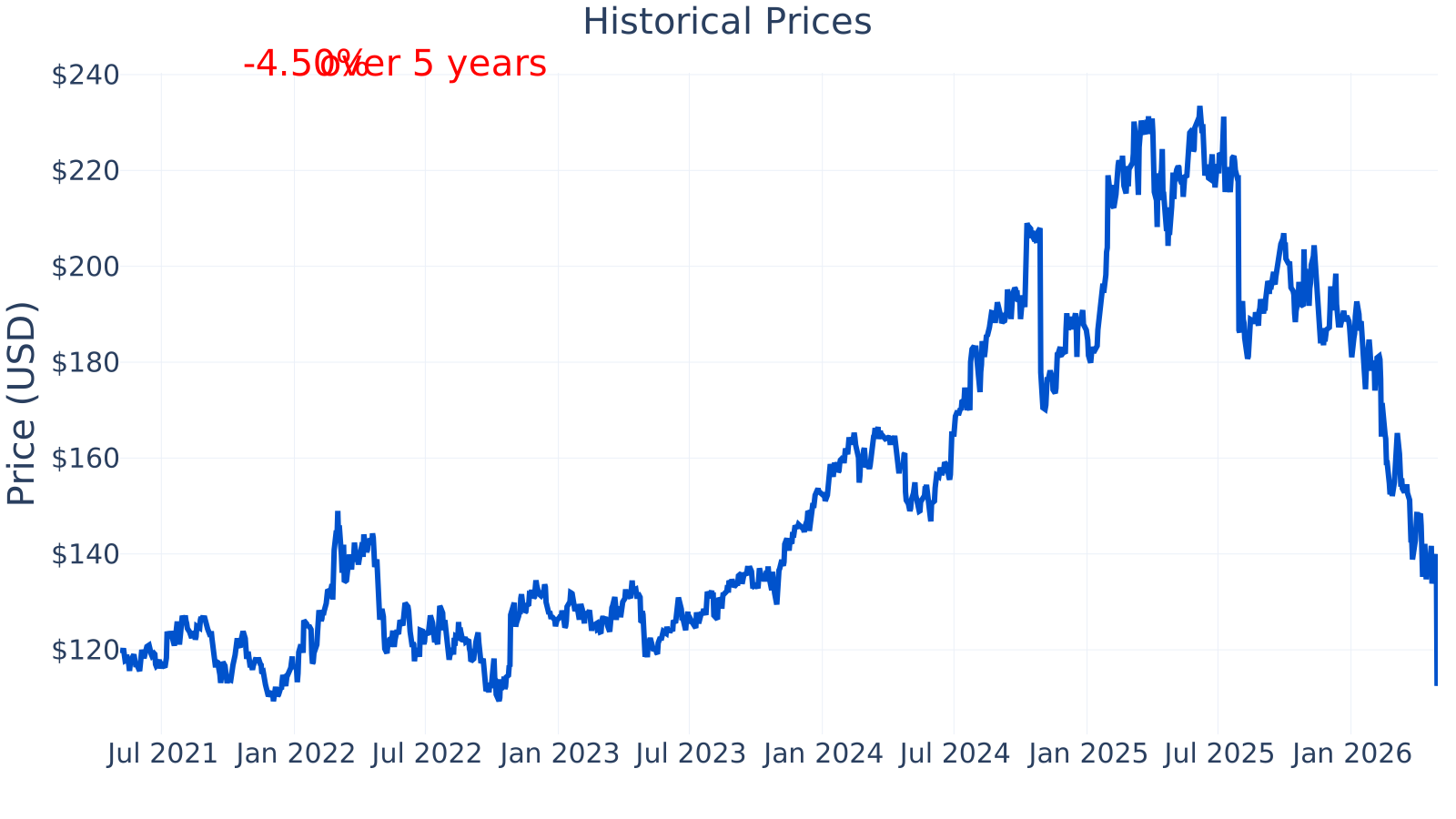
Check Point’s market capitalization is about $11.9B, placing it among established (but not mega-cap) software companies. The stock’s beta of ~0.65 suggests it has historically moved less than the broader market on average (lower volatility than many technology stocks). Profitability stands out: a ~38% profit margin is far above the industry median shown (~6.7%), indicating strong cost control and/or favorable economics. Growth is more modest: ~4.8% year-over-year revenue growth versus an industry median shown of ~18.3%. Debt-to-equity is listed at ~70%, higher than the industry median shown (~25%), which is a meaningful change compared with earlier periods in the risk section below. Free cash flow over the trailing twelve months is about $1.31B, indicating substantial cash generation after operating costs and capital spending.
Growth (Medium)
Cybersecurity is generally considered a durable, long-term demand area because digital systems keep expanding (more cloud usage, more connected devices, and more online services). That said, industry growth does not automatically translate into fast growth for every vendor. For Check Point, the recent pattern shown here is steady but not rapid expansion.
The year-over-year revenue growth trend is mostly in the mid-single digits across the period shown, peaking around the high-single digits earlier in the timeline and sitting at about ~4.8% most recently. This points to a business that has been expanding consistently, but at a slower pace than the industry median shown in the same table.
Free cash flow dips from about $1.21B (2022) to just under $1.0B (2024), then recovers to about $1.31B (2026). For long-term business durability, this cash generation matters because it can help fund research and development, acquisitions, and shareholder returns, and also provides a buffer during tougher operating periods.
Potential catalysts (described at a high level, consistent with typical cybersecurity business dynamics) tend to come from successful product transitions (for example, expanding cloud security offerings), improved customer retention and renewals, and broader adoption of consolidated security platforms. Whether these catalysts translate into faster reported growth depends on execution and competition.
Risks (Medium)
A central risk is competitive pressure. Cybersecurity is crowded, and customers often compare vendors on protection quality, ease of deployment, performance impact, and total cost. Switching costs exist (security tools are deeply integrated), but buyers can still replace vendors over time, especially during major refresh cycles or if a competitor offers a simpler platform.
Another risk is growth versus innovation trade-offs. Even with strong margins, sustained relevance requires continued investment in new threat protection, cloud capabilities, and product usability. If innovation lags, growth could slow further; if investment rises sharply, profitability could compress.
The debt-to-equity ratio is shown at about ~70% most recently, which is higher than the industry median shown (~19% to ~24% in recent points). Earlier in the timeline, the ratio is near zero, followed by a sharp increase later. A higher ratio can increase financial risk because it may reduce flexibility during downturns (even if cash flow is strong). The underlying reason for this jump would be clarified in the company’s filings (for example, changes in capital structure, equity levels, or new borrowing).
Profit margin remains consistently high (roughly in the low-to-high 30% range, reaching ~38% most recently) and stays well above the industry median shown throughout. This is a competitive strength: it suggests the company has historically been able to generate substantial earnings relative to revenue. Still, high margins can attract competition, and margin sustainability depends on pricing power and ongoing customer demand.
Competition includes large platform security vendors and specialized cybersecurity companies. Commonly recognized competitors in network and cloud security include Palo Alto Networks, Fortinet, and large technology vendors with security suites (for example, Cisco and Microsoft)—with offerings that can overlap depending on the customer’s environment. Check Point is widely known as an established player in network security, but it operates in a market where leadership can vary by segment (network, cloud, endpoint, identity) and can shift over time as technology changes.
Valuation
The price-to-earnings (P/E) ratio is shown at about ~11.8 most recently, which is below the industry median shown on the table (about ~29.6). Over the historical points displayed, the company’s P/E generally trends in the high teens to high 20s at times, and more recently is lower (around ~18.7 at the latest point on the chart). A lower P/E relative to peers can reflect a mix of factors, such as slower expected growth, different business mix, or perceived competitive risk.
In context, Check Point combines high profitability and strong cash generation with more moderate revenue growth. Valuation metrics like P/E often compress when growth is slower, even if margins are strong. Comparing valuation to the industry median shown suggests the market is not valuing Check Point like a high-growth software company, but rather more like a mature, cash-generative business with steadier expansion.
Conclusion
Check Point is a long-established cybersecurity company with a business focused on protecting organizations’ digital infrastructure. The financial profile shown here is characterized by very high profit margins and substantial free cash flow, alongside mid-single-digit revenue growth that trails the industry median shown.
The main long-term considerations are (1) whether the company can maintain product relevance and customer renewals in an intensely competitive market, and (2) whether it can convert ongoing cybersecurity demand into faster growth without sacrificing its profitability. The recent increase in debt-to-equity adds an additional point to monitor in future filings, even though cash generation appears strong.
Sources:
- U.S. SEC EDGAR — Check Point Software Technologies Ltd filings (Form 10-K, Form 10-Q)
- Check Point Software Technologies Ltd — Investor Relations (Annual Report materials and shareholder communications)
- Wikipedia — “Check Point Software Technologies” (basic company background)
This article is for informational purposes only and does not constitute financial advice. Some content is AI-generated. See Disclaimer


