Stock Analysis · Check Point Software Technologies Ltd (CHKP)
Overview
Check Point Software Technologies Ltd is a cybersecurity company. It develops and sells tools that help organizations protect their networks, devices, cloud environments, and data from attacks. In simple terms, it provides “digital security systems” for businesses and public-sector customers, and it maintains those protections through ongoing updates, support, and threat intelligence.
Its business is commonly described as centered on “prevention-first” security, meaning it aims to block threats before they cause damage. The company sells security through software and hardware appliances, and it also provides subscription-based services and support plans that keep customer protections up to date over time.
In its financial reporting, revenue is primarily grouped into two main streams:
- Products and licenses (typically upfront sales of software licenses and security appliances)
- Subscriptions and support (recurring revenue from updates, cloud-delivered security services, and customer support/maintenance)
The mix between these categories can shift depending on how customers purchase (upfront vs. recurring plans), but the long-term business model is strongly supported by recurring subscriptions and support.
Across recent years, revenue has increased steadily (from about $2.17B in 2021 to about $2.57B in 2024), while the company continued to spend heavily on research and development. Operating income stayed close to the $0.9B–$1.0B range over that period, showing a business that has remained highly profitable while funding ongoing product development.
Key Figures
| Metric | Value | Industry ⓘ |
|---|---|---|
| Date | Feb 16, 2026 | |
| Context | ||
| Sector | Technology | |
| Industry | Software - Infrastructure | |
| Market Cap ⓘ | $18.41B | |
| Beta ⓘ | 0.60 | |
| Fundamental | ||
| P/E Ratio ⓘ | 17.82 | 25.13 |
| Profit Margin ⓘ | 38.78% | 6.91% |
| Revenue Growth ⓘ | 5.90% | 15.25% |
| Debt to Equity ⓘ | N/A | 19.82% |
| PEG ⓘ | 2.10 | |
| Free Cash Flow ⓘ | $1.18B | |
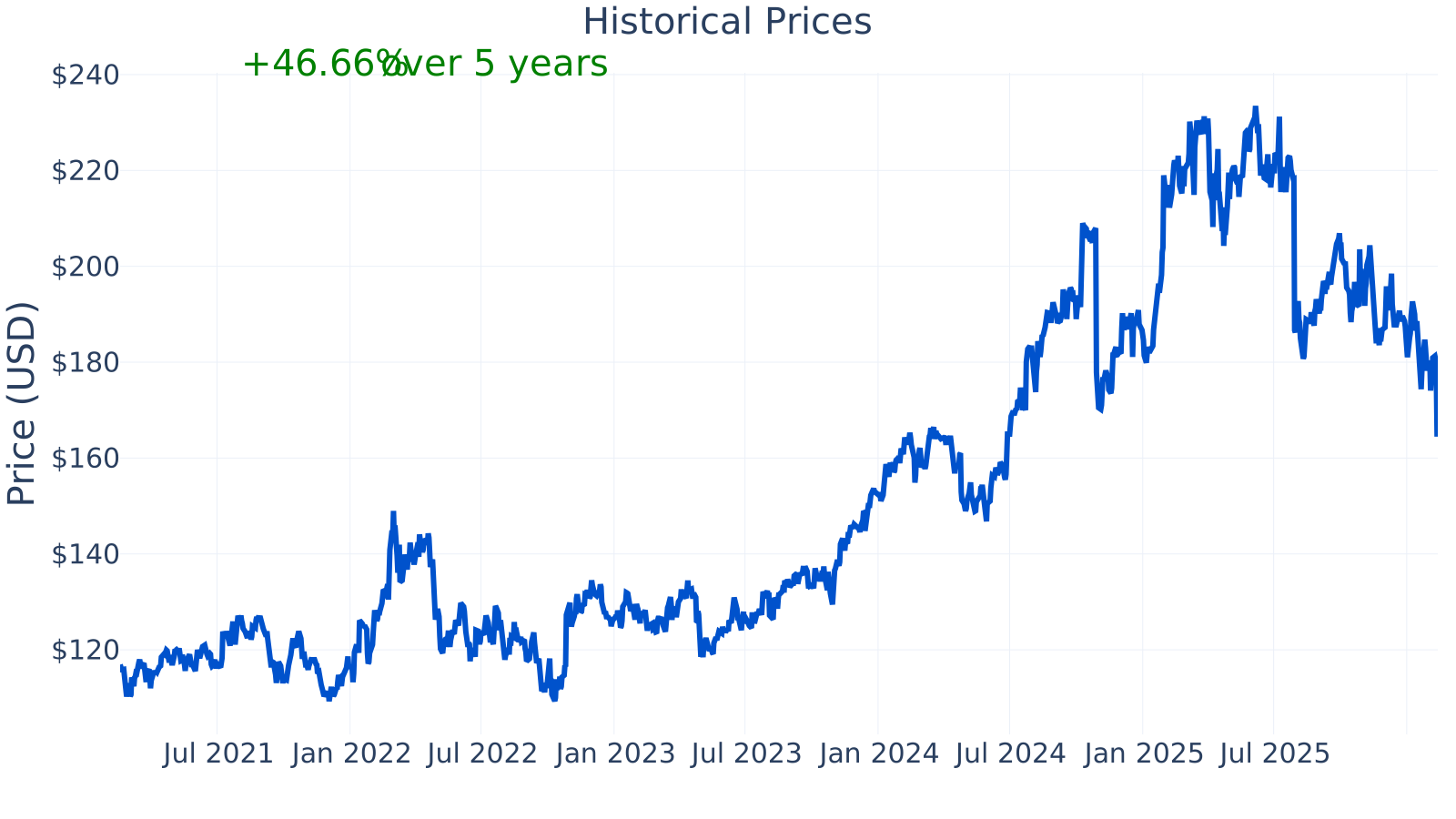
Check Point’s market capitalization is about $18.4B, placing it among established, large cybersecurity vendors. The stock’s beta of ~0.60 suggests it has historically moved less than the broader U.S. stock market on average (lower volatility does not mean low risk, but it can indicate less dramatic price swings). The company’s P/E ratio is ~17.8, below the industry median shown here (~25.1). Profitability stands out: the profit margin is ~38.8% versus an industry median around 6.9%, indicating substantially higher earnings relative to revenue than many peers. Growth is more moderate: year-over-year revenue growth is ~5.9% compared with an industry median around 15.3%. Free cash flow over the trailing twelve months is about $1.18B, reflecting meaningful cash generation after operating costs and capital spending.
Growth (Medium)
Cybersecurity is a structural growth industry because digital systems keep expanding: cloud adoption, remote work, connected devices, and software-heavy operations all increase the “attack surface” that needs protection. In addition, cyber threats keep evolving, which tends to make security spending more recurring rather than one-time.
Check Point’s strategy is positioned around broad, integrated security (network, cloud, and endpoint protection) and ongoing prevention capabilities. This can fit long-term demand, especially for organizations that prefer consolidated platforms rather than managing many separate security tools.
Revenue growth has been positive and relatively steady in recent quarters, generally in the mid-single-digit range. That pattern can be consistent with a mature company in a large market: growth is present, but not as rapid as some faster-scaling peers.
Free cash flow has remained around roughly the $1.0B–$1.2B range over the last several years shown, which can matter for long-term durability. Strong cash generation can help fund product development, support shareholder return programs, and provide flexibility during weaker IT spending cycles.
Risks (Medium)
This article is for informational purposes only and does not constitute financial advice. Some content is AI-generated. See Disclaimer


