Stock Analysis · Globant SA (GLOB)
Overview
Globant S.A. (GLOB) is a global provider of technology services. In simple terms, it helps large organizations design, build, and run digital products and modernize their technology—things like customer-facing apps and websites, cloud migrations, data platforms, cybersecurity work, and automation. The company operates as a services business: clients pay for teams and expertise to deliver projects and ongoing support.
Globant’s revenue comes primarily from professional services delivered to clients (rather than from selling physical products). In its SEC filings, the company presents revenue as a single operating segment, so a detailed public breakdown by “product line” is not consistently provided in a simple percentage format. Revenue is commonly discussed in filings by client industries and geographies, but the exact mix can change over time and should be checked in the most recent annual report for the latest split.
At a high level, Globant’s revenue is typically generated through:
- Digital transformation and software development services (project-based and longer-term delivery for enterprises)
- Ongoing managed services and support (continuous improvement, maintenance, and operational services)
- Cloud, data/AI, and experience design work (often embedded within broader transformation programs)
From the company’s income statement over recent years, the biggest outflow is the direct cost to deliver services (mainly personnel-related), followed by operating expenses such as selling, general, and administrative costs. Revenue has increased meaningfully from 2021 through 2024, while profitability has grown more modestly.
Across 2021 to 2024, total revenue rose from about $1.30B to about $2.42B. Over the same period, net income increased from about $96M to about $166M, indicating growth in absolute profit dollars, though margins can still fluctuate based on utilization (how busy delivery teams are), pricing, and operating costs.
Key Figures
| Metric | Value | Industry ⓘ |
|---|---|---|
| Date | Feb 08, 2026 | |
| Context | ||
| Sector | Technology | |
| Industry | Information Technology Services | |
| Market Cap ⓘ | $2.64B | |
| Beta ⓘ | 1.17 | |
| Fundamental | ||
| P/E Ratio ⓘ | 27.41 | 21.42 |
| Profit Margin ⓘ | 4.01% | 4.91% |
| Revenue Growth ⓘ | 0.40% | 6.15% |
| Debt to Equity ⓘ | 21.81% | 54.49% |
| PEG ⓘ | 2.01 | |
| Free Cash Flow ⓘ | $230.80M | |
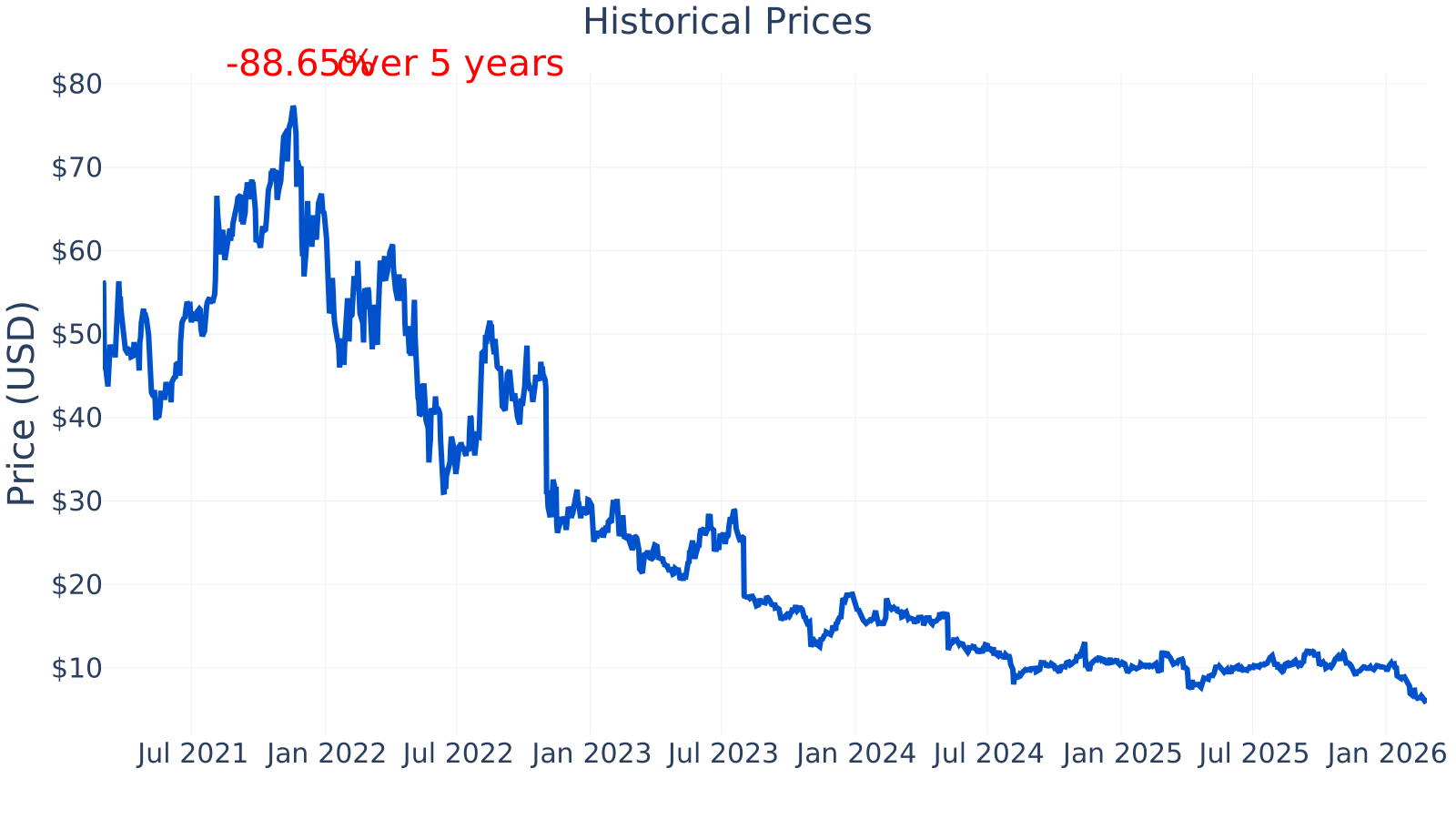
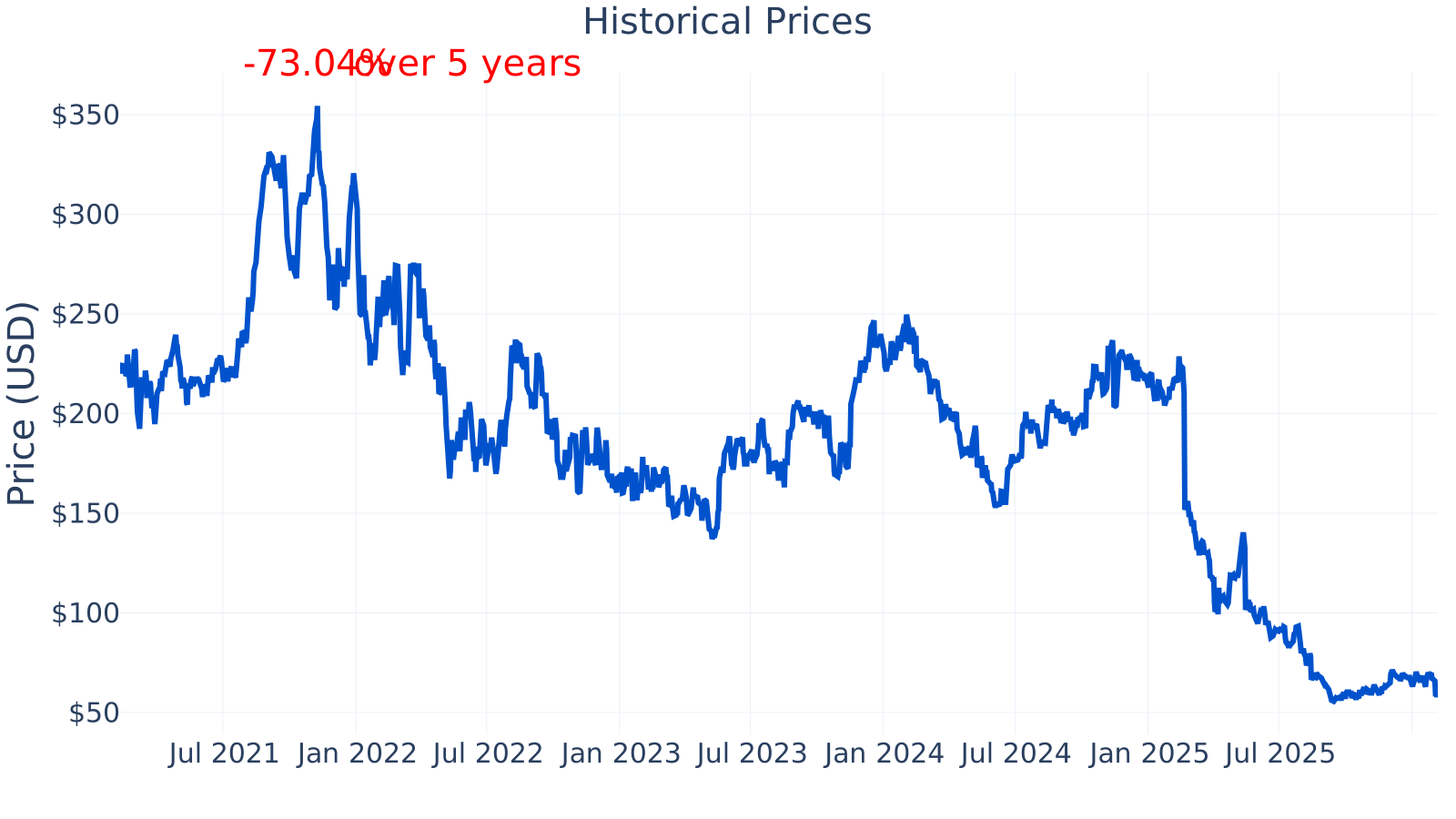
Globant’s market capitalization is about $2.64B, and the stock’s beta of about 1.17 suggests it has tended to move somewhat more than the broader market. The current P/E ratio (~27.4) is higher than the industry median (~21.4). Recent profit margin (~4.0%) is below the industry median (~4.9%), and the latest year-over-year revenue growth (~0.4%) is well below the industry median (~6.15%), reflecting a notable slowdown versus earlier years. On balance sheet leverage, debt-to-equity (~21.8%) is lower than the industry median (~54.5%). Trailing twelve-month free cash flow is about $231M.
Growth (Medium)
Globant operates in the information technology services industry, which is supported over the long run by continued enterprise spending on modernization: cloud adoption, cybersecurity, data platforms, and the ongoing shift toward digital customer experiences. These needs tend to be multi-year, because large companies usually replace systems gradually rather than all at once.
A key question for long-term context is not whether digital transformation exists, but whether Globant can keep winning work and expanding relationships while maintaining profitability. The company has historically grown quickly, but the most recent year-over-year revenue growth trend shows a sharp deceleration.
Revenue growth was very high in 2021–2022 (often above 30% year-over-year and at times much higher), stepped down into the teens during 2023–2024, and most recently is close to flat (about 0.4%). This kind of slowdown can happen when customers delay projects, reduce discretionary IT spend, or when a services provider faces tougher comparisons after a period of rapid expansion.
Free cash flow (cash generated after operating needs and capital spending) has been positive in the periods shown, ranging roughly from about $131M to $266M, with the latest around $231M. For services companies, sustained free cash flow can matter because it supports flexibility for hiring, acquisitions, debt management, and share repurchases—though it can still swing due to working-capital movements (such as the timing of client payments).
Potential future catalysts in a general, non-predictive sense include a re-acceleration in enterprise IT budgets, increased adoption of AI-related initiatives that require systems integration and software delivery, and the company’s ability to deepen its presence in strategic accounts. Whether those translate into faster growth depends on client demand, competition, and execution.
Risks (High)
This article is for informational purposes only and does not constitute financial advice. Some content is AI-generated. See Disclaimer