Stock Analysis · Norwegian Cruise Line Holdings Ltd (NCLH)
Overview
Norwegian Cruise Line Holdings Ltd. operates cruise vacations through three main brands: Norwegian Cruise Line, Oceania Cruises, and Regent Seven Seas Cruises. The company sells complete cruise trips (the itinerary and onboard experience) and also earns money from guest spending once travelers are on the ship.
In simple terms, this is a travel business with two big “cash registers”: (1) selling the cruise itself and (2) selling add-ons during the vacation. Based on the company’s reporting in its filings, revenue is mainly generated from:
- Passenger ticket revenue (the cruise fare paid before sailing) — typically the largest share
- Onboard and other revenue (spending on drinks, specialty dining, excursions, spa, photos, casino, internet, and related items) — typically the second-largest share
Over the last few years, the company’s results have been shaped by a sharp industry downturn followed by a recovery. From 2021 to 2024, total revenue rose from about $0.65B to about $9.48B, while profitability moved from large losses to positive net income. Over the same period, interest expense remained substantial (roughly $0.75B in 2024), reflecting higher debt levels.
The biggest visible change over time is the scale of the rebound: revenue and operating income improved dramatically between 2021 and 2024, but interest cost stayed large, which can meaningfully influence net results even when operations are improving.
Key Figures
| Metric | Value | Industry ⓘ |
|---|---|---|
| Date | Feb 07, 2026 | |
| Context | ||
| Sector | Consumer Cyclical | |
| Industry | Travel Services | |
| Market Cap ⓘ | $10.62B | |
| Beta ⓘ | 2.03 | |
| Fundamental | ||
| P/E Ratio ⓘ | 16.78 | 21.78 |
| Profit Margin ⓘ | 6.85% | 10.37% |
| Revenue Growth ⓘ | 4.70% | 10.60% |
| Debt to Equity ⓘ | 699.72% | 96.47% |
| PEG ⓘ | 0.46 | |
| Free Cash Flow ⓘ | -$1.04B | |
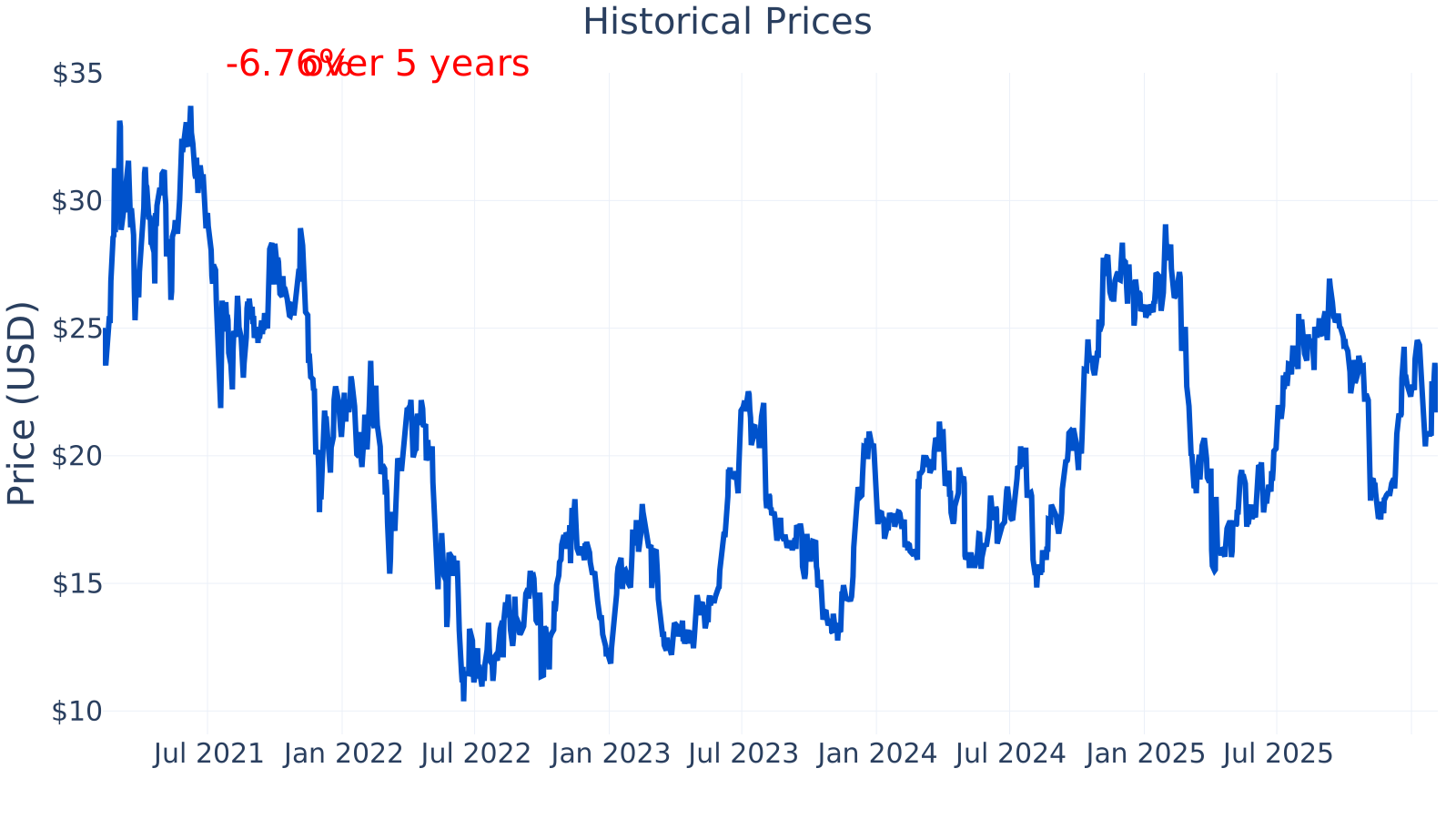
Norwegian Cruise Line Holdings has a market capitalization of about $10.6B and a beta of 2.03, which indicates the stock has historically moved more than the overall market (both up and down). The company’s P/E ratio is ~16.8 versus an industry median of ~21.8. Current profitability is positive, with a profit margin of ~6.9%, but still below the industry median of ~10.4%. Recent year-over-year revenue growth is ~4.7%, also below the industry median of ~10.6%. A key point is leverage: debt-to-equity is ~700% (about 7.0x) versus an industry median near ~96%. Free cash flow over the trailing twelve months is negative (~-$1.04B), which means cash generation after capital spending has not yet consistently turned positive.
Growth (Medium)
The cruise business is part of the broader travel and leisure market, which tends to be supported over time by long-term themes such as consumers prioritizing experiences and global vacation demand. That said, cruising is also cyclical: demand can cool quickly if household budgets tighten or if travel disruptions occur.
Norwegian’s strategy is built around operating multiple brands across different customer segments—from more mainstream cruising (Norwegian Cruise Line) to premium and ultra-luxury experiences (Oceania and Regent). For a cruise company, long-term growth typically depends on (1) keeping ships well-filled, (2) improving pricing, and (3) increasing onboard spending per guest, while managing costs such as fuel, labor, food, port fees, and marketing.
The year-over-year growth pattern shows an extreme rebound phase earlier in the recovery, followed by normalization to more typical single-digit growth rates more recently (including a negative quarter in 2025 before returning to modest growth). This kind of trend often suggests the company is transitioning from “recovery mode” to “execution mode,” where future gains depend more on pricing discipline, itinerary planning, and cost control than on a simple return of demand.
Free cash flow remains negative over the periods shown, even though it improved significantly from 2021 to 2024. For a capital-intensive business like cruising, sustained positive free cash flow is often important because it can support debt reduction, fleet investment, and resilience during weaker travel cycles. A practical catalyst to watch in this industry is the combination of higher operating earnings plus lower cash interest and lower capital spending over time—if those occur together, free cash flow can improve materially.
Risks (High)
This article is for informational purposes only and does not constitute financial advice. Some content is AI-generated. See Disclaimer


