Stock Analysis · Zoom Video Communications Inc (ZM)
Overview
Zoom Video Communications Inc. is a software company best known for its video meetings product (“Zoom Meetings”). Over time, the company has expanded into a broader communications platform that also includes phone services (“Zoom Phone”), webinar and event products, team chat, and customer contact-center tools. Zoom generally sells these services as subscriptions, mainly to businesses and organizations, with plans that scale based on features and number of users.
In its filings, Zoom describes revenue as coming primarily from subscription fees for its platform. The company reports revenue by product categories, with the largest being its core communications products and a smaller portion tied to customer contact-center services.
- Enterprise subscriptions (organizations with larger deployments; subscription-based)
- Online subscriptions (typically smaller businesses and self-serve customers; subscription-based)
- Other products and services (including contact-center-related offerings and associated services; still largely recurring)
Zoom also provides a geographic split in its filings (Americas and international), but its business model is primarily defined by recurring software subscriptions rather than one-time hardware sales or advertising.
Across recent fiscal years shown, total revenue rose from about $4.10B (FY2022) to about $4.67B (FY2025). During the same period, operating income declined sharply in FY2023 and then recovered by FY2025, reflecting how changes in operating expenses can meaningfully affect profitability even when revenue growth is modest.
Key Figures
| Metric | Value | Industry ⓘ |
|---|---|---|
| Date | Feb 07, 2026 | |
| Context | ||
| Sector | Technology | |
| Industry | Software - Application | |
| Market Cap ⓘ | $27.59B | |
| Beta ⓘ | 0.90 | |
| Fundamental | ||
| P/E Ratio ⓘ | 17.94 | 27.79 |
| Profit Margin ⓘ | 33.17% | 6.02% |
| Revenue Growth ⓘ | 4.40% | 15.80% |
| Debt to Equity ⓘ | 0.52% | 25.15% |
| PEG ⓘ | 5.07 | |
| Free Cash Flow ⓘ | $2.00B | |
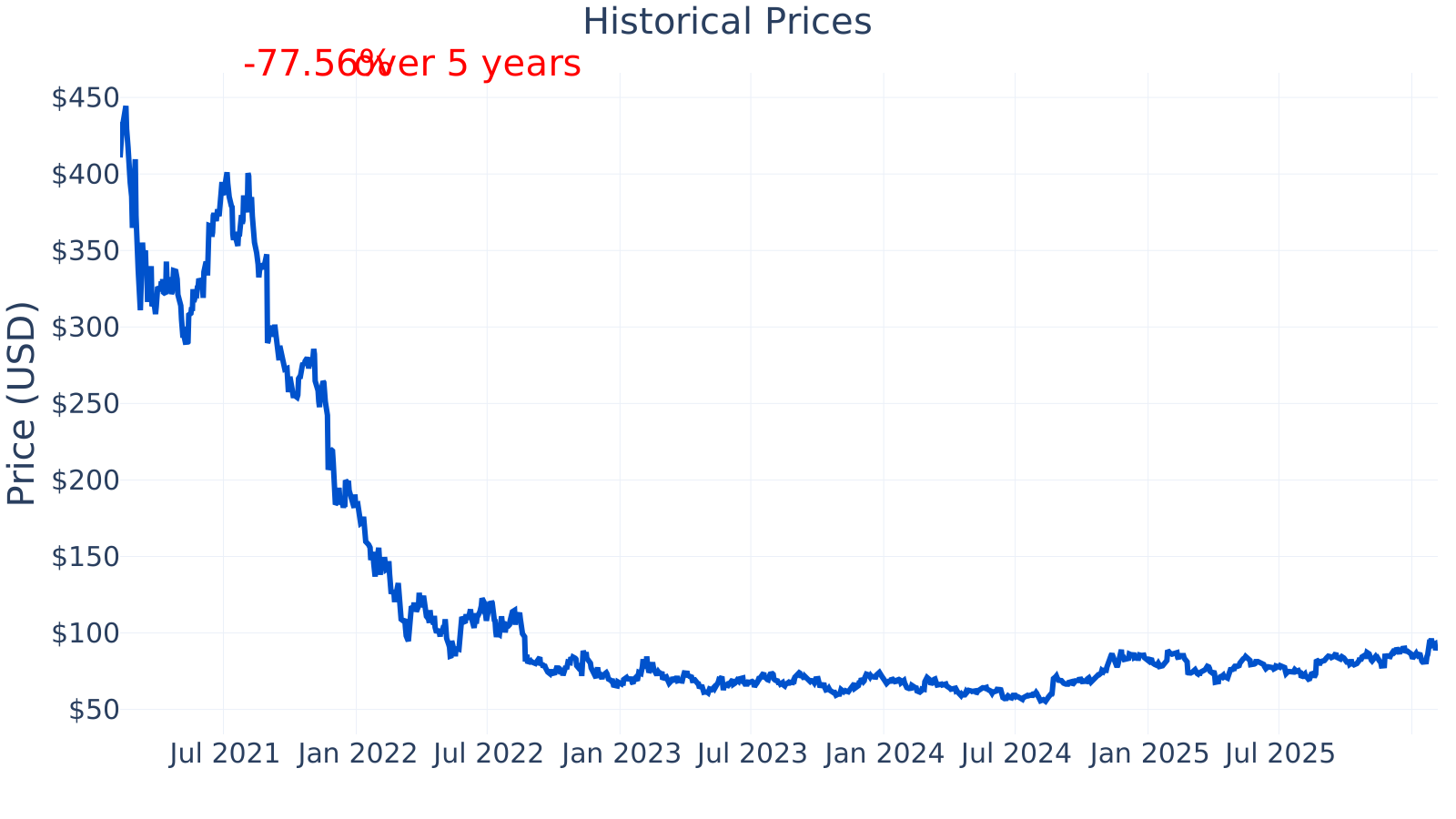
Zoom’s market capitalization is about $27.6B, and the stock’s beta is about 0.90, which indicates price movements that have been somewhat less volatile than the overall market on average.
On profitability, the latest profit margin shown is about 33.17%, which is well above the listed industry median of about 6.03%. On growth, the latest year-over-year revenue growth shown is about 4.40%, below the listed industry median of about 15.8%.
Zoom’s latest debt-to-equity ratio shown is about 0.52% (very low), compared with an industry median around 25.15%. Free cash flow over the trailing twelve months is about $2.00B. The P/E ratio is about 17.94 versus an industry median around 27.79, while the PEG ratio shown is about 5.07, a metric that can look elevated when expected growth is modest.
Growth (Medium)
Zoom operates in the communications software market, which has been reshaped by remote and hybrid work. Video meetings became widely adopted, and many organizations continue to use them as a standard tool. However, the industry has also matured: in mature software categories, growth often shifts from rapid user adoption to competition, bundling, and selling broader suites to existing customers.
Zoom’s longer-term growth strategy, as described in company filings, centers on expanding from meetings into a broader “communications platform.” In practical terms, that means increasing adoption of products like Zoom Phone, webinars/events, team collaboration, and customer contact-center offerings, and bundling them to increase the value per customer rather than relying only on new meeting users.
The year-over-year revenue growth trend shown illustrates a major slowdown from very high growth in FY2021 to low single-digit growth more recently (around 4.40% in the latest period). This pattern is consistent with a business moving from a hyper-growth phase into a more mature phase where incremental growth can be harder to generate.
Cash generation is an important support for long-term business flexibility. The free cash flow figures shown improved from about $1.18B (FY2023) to about $1.81B (FY2025), and the latest trailing twelve months is about $2.00B. For a subscription software company, steady free cash flow can help fund product development, manage downturns, and support capital returns (as allowed and disclosed by the company).
Risks (High)
This article is for informational purposes only and does not constitute financial advice. Some content is AI-generated. See Disclaimer