Stock Analysis · Zeta Global Holdings Corp (ZETA)
Overview
Zeta Global Holdings Corp (ZETA) is a marketing technology company. In simple terms, it provides software and services that help businesses find customers, personalize messages, and measure results across channels such as email, websites, and other digital touchpoints. The company positions its platform as a way to combine customer data, analytics, and campaign execution so that marketing teams can run more targeted programs and improve return on marketing spend.
From a business-model perspective, Zeta primarily earns revenue by providing its platform capabilities (software-like functionality) and by delivering marketing services that use its technology and data. In its filings, the company describes revenue being generated from customer contracts tied to these offerings (often with usage-based elements depending on the specific product/service).
Public filings typically break revenue into formal line items (for example, platform-related versus service-related categories). The latest percentages by revenue source are not included in the information shown here, so the mix and exact weighting should be taken from Zeta’s most recent annual report (Form 10-K) or quarterly report (Form 10-Q).
One notable trend over recent years is that total revenue has grown substantially (from about $458M in 2021 to about $1.006B in 2024), while net losses narrowed considerably over the same period (from about -$250M in 2021 to about -$70M in 2024). This suggests the business has been moving closer to profitability as it scales.
Key Figures
| Metric | Value | Industry ⓘ |
|---|---|---|
| Date | Feb 08, 2026 | |
| Context | ||
| Sector | Technology | |
| Industry | Software - Infrastructure | |
| Market Cap ⓘ | $4.15B | |
| Beta ⓘ | 1.26 | |
| Fundamental | ||
| P/E Ratio ⓘ | N/A | 25.66 |
| Profit Margin ⓘ | -1.86% | 6.68% |
| Revenue Growth ⓘ | 25.70% | 15.20% |
| Debt to Equity ⓘ | 28.57% | 19.82% |
| PEG ⓘ | 0.76 | |
| Free Cash Flow ⓘ | $155.69M | |
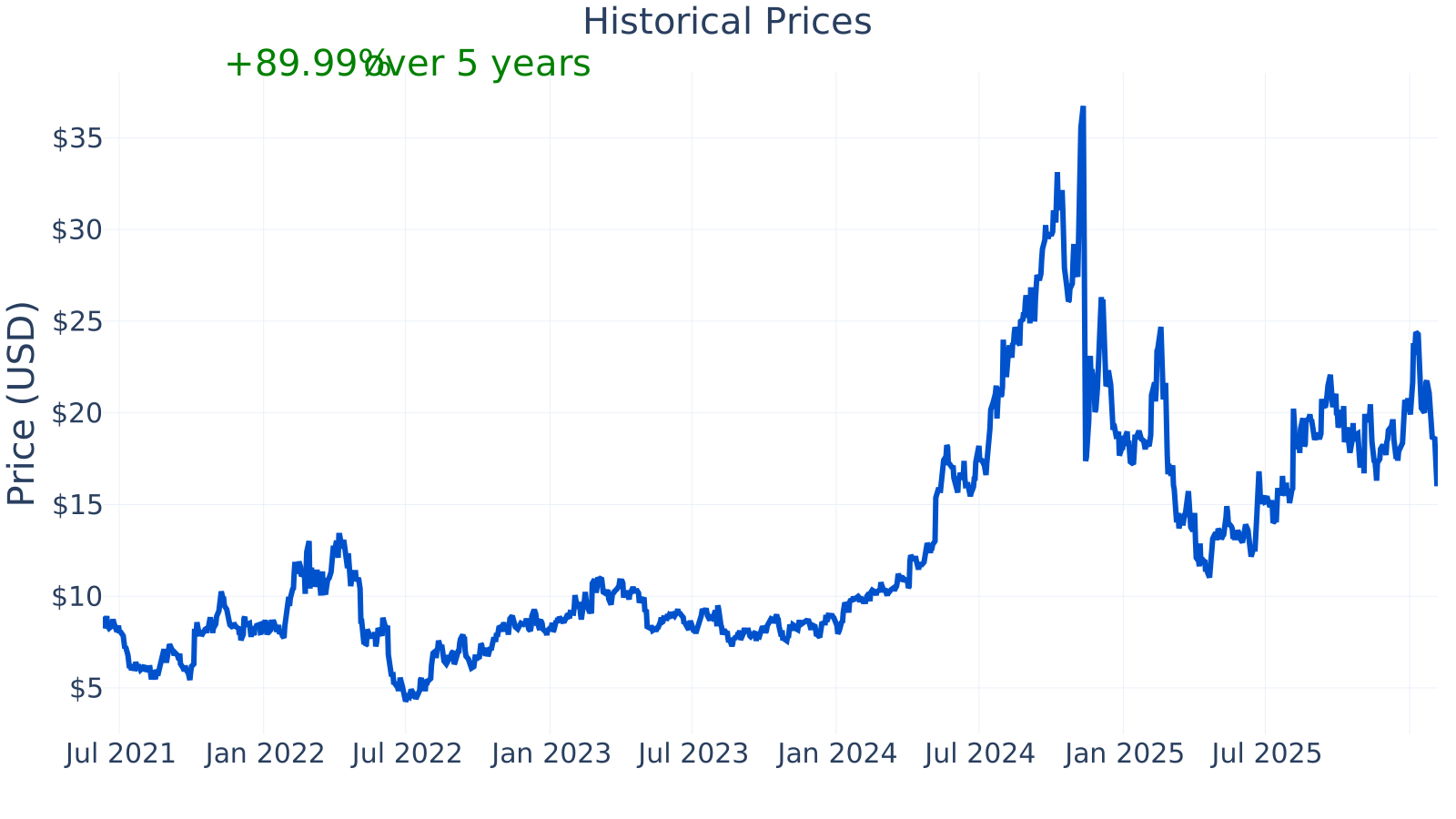
Zeta’s market capitalization is about $4.15B, and its beta of about 1.26 indicates the stock has historically moved more than the broader market (both up and down). The company shows a net profit margin of about -1.9%, which is below the industry median (about +6.7%), meaning it is still slightly unprofitable on a net basis. At the same time, year-over-year revenue growth is about 25.7%, higher than the industry median (about 15.2%). Debt-to-equity is about 28.6% versus an industry median near 19.8%, and trailing twelve-month free cash flow is about $155.7M.
Growth (medium)
Zeta operates in the marketing technology and customer data/analytics ecosystem, an area shaped by ongoing shifts of advertising and customer engagement toward digital channels. In practice, companies continue to invest in tools that can unify customer information, automate campaigns, and improve measurement across channels. This backdrop can support long-run demand, but it is also a competitive space with rapid product cycles.
A key part of Zeta’s growth logic is scale: as revenue grows, a larger portion of costs can be spread across a bigger base of customer activity. The company’s multi-year financial trajectory is consistent with that idea—revenues have increased strongly over time, and losses have narrowed, indicating operating leverage may be developing.
Revenue growth has remained positive and often strong, ranging from roughly the high teens to near 50% year-over-year across the periods shown, with the most recent value around 25.7%. Growth that stays above the industry median can matter because it may indicate share gains, expanding use within customers, or successful product positioning—though it can also reflect acquisitions or one-time factors that require reading the latest filings for context.
Free cash flow has increased meaningfully over time in the periods shown (from roughly $16M to about $121M), and the latest metric in the table is about $155.7M. For long-term business quality, improving free cash flow can be important because it reflects the company’s ability to fund operations and investment internally (even if net income is still slightly negative).
Risks (high)
This article is for informational purposes only and does not constitute financial advice. Some content is AI-generated. See Disclaimer


