Stock Analysis · Yum China Holdings Inc (YUMC)
Overview
Yum China Holdings Inc. is a restaurant operator focused on mainland China. It runs and franchises well-known quick-service and casual-dining brands, with KFC and Pizza Hut as its two largest businesses. The company also operates other concepts (such as Taco Bell in China) and uses a mix of company-owned stores, franchise arrangements, delivery, and digital ordering to reach customers.
In simple terms, Yum China earns money mainly by selling food and beverages through restaurants it operates. It also earns revenue from franchise fees and royalties (when franchisees operate restaurants under its brands) and from other related income streams described in its filings.
For a long-term view, the business profile is shaped by (1) consumer spending in China, (2) the company’s ability to open new stores and keep existing stores busy, and (3) operating efficiency in food, labor, rent, and delivery.
Looking across the multi-year income breakdown, total revenue increased from about $9.85B (2021) to about $11.80B (2025). Over the same period, operating income also rose overall (about $0.73B in 2021 to about $1.36B in 2025), which suggests that growth was not only from higher sales but also accompanied by improved operating profit versus earlier years, despite year-to-year variability.
Key Figures
| Metric | Value | Industry ⓘ |
|---|---|---|
| Date | Feb 16, 2026 | |
| Context | ||
| Sector | Consumer Cyclical | |
| Industry | Restaurants | |
| Market Cap ⓘ | $19.58B | |
| Beta ⓘ | 0.12 | |
| Fundamental | ||
| P/E Ratio ⓘ | 22.08 | 27.62 |
| Profit Margin ⓘ | 7.88% | 7.98% |
| Revenue Growth ⓘ | 8.80% | 7.40% |
| Debt to Equity ⓘ | 69.29% | 59.83% |
| PEG ⓘ | 1.43 | |
| Free Cash Flow ⓘ | $849.81M | |
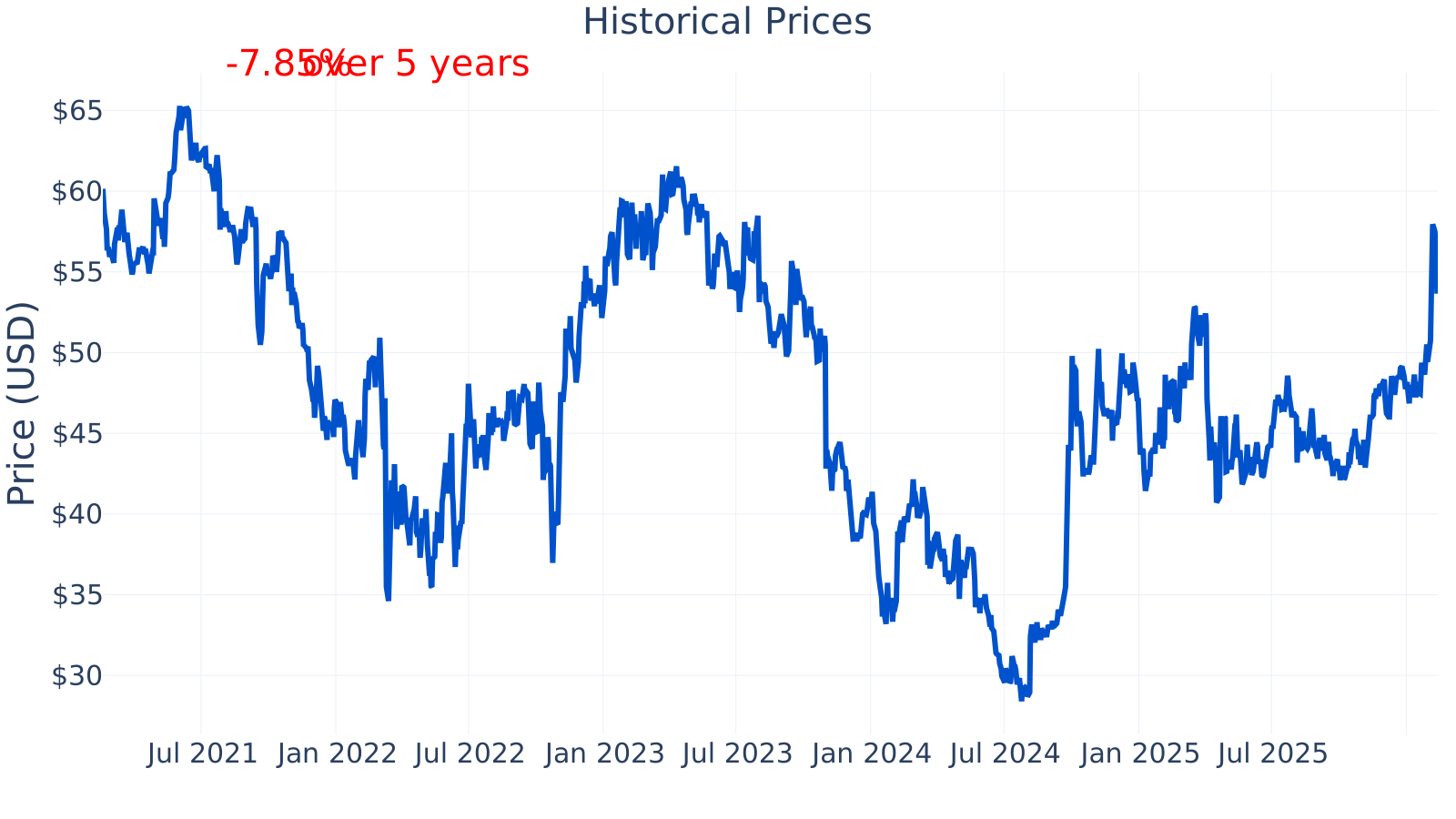
Yum China’s market capitalization is about $19.6B. The stock’s beta is about 0.12, which indicates the shares have historically moved less than the overall market (though beta can change over time and does not capture all risks).
On profitability, the latest net profit margin is about 7.88%, close to the industry median (about 7.98%). Recent year-over-year revenue growth is about 8.8%, modestly above the industry median (about 7.4%).
Debt-to-equity is about 69% versus an industry median near 60%, and trailing twelve-month free cash flow is about $850M. The P/E ratio is about 22.1, below the industry median near 27.6. A reported PEG ratio of about 1.43 suggests the valuation is not only about current earnings, but also about the market’s expectations for future growth.
Growth (medium)
Yum China operates in the restaurant industry, where long-term growth is typically tied to consumer demand, store expansion, menu innovation, and the shift toward convenient formats such as delivery and digital ordering. As a China-focused operator, its growth profile is closely linked to local consumer conditions and competitive intensity within China’s restaurant market.
A key long-term growth lever for Yum China is scaling its store base while maintaining solid unit economics (how profitable each restaurant can be after food, labor, rent, and other costs). Another driver is improving sales per store through pricing, product mix, marketing, and loyalty/digital engagement, alongside operational initiatives that manage costs and speed of service.
The year-over-year revenue growth pattern has been uneven across quarters, including periods of negative growth (notably during 2022) and a later normalization. The most recent reading shown is about 8.8% year-over-year, which is higher than the industry median shown (about 7.4%), indicating the company has recently grown somewhat faster than the typical peer in this industry grouping.
Free cash flow has fluctuated over time, ranging from roughly $246M (2022) to over $1.06B (2023), with the trailing twelve-month figure around $850M. For a restaurant operator, sustained free cash flow matters because it can fund new store openings, remodels, supply chain investments, and shareholder returns, while providing a buffer during weaker consumer cycles.
Risks (medium-high)
The largest risk factor is exposure to China’s consumer environment. Restaurant traffic and average spending can shift with economic conditions, employment trends, and consumer confidence. Because Yum China is concentrated in one country, it has less geographic diversification than global restaurant groups.
Like most restaurant operators, the company faces ongoing cost pressures and operational risks: food ingredient inflation, labor costs, rent, utilities, and delivery-related expenses. Competitive discounting in quick-service can also pressure margins if the market prioritizes promotions and value offers.
Debt-to-equity has generally been below the industry median for several years, but the most recent point jumps to about 69% (versus an industry median near 62%). This kind of step-up is worth monitoring because higher leverage can reduce flexibility during downturns, even if absolute debt levels remain manageable. (Debt-to-equity is only one indicator; cash balances, lease obligations, and interest coverage also matter.)
Net profit margin has trended in a relatively tight range in recent periods around 7%–8%, with the latest at about 7.88%, slightly under the industry median shown (about 7.93%). This suggests profitability is broadly in line with peers, rather than structurally higher—so future returns may depend more on consistent execution (sales growth, cost control, and store productivity) than on unusually high margins.
Competitive advantages for Yum China typically stem from scale, brand recognition (especially KFC and Pizza Hut), supply chain capabilities, and operational know-how built over many years in China. Scale can help with procurement, marketing efficiency, and the ability to invest in technology and delivery infrastructure.
Competition is intense. Yum China competes with other global quick-service brands operating in China and with large domestic restaurant companies and local chains across multiple cuisine types and price points. In addition, independent restaurants and fast-growing regional concepts can take share, particularly when consumer preferences shift or when value promotions become widespread.
Valuation
On a P/E basis, Yum China’s valuation has moved meaningfully over time, with periods where it traded well above the industry median (for example, a spike around early 2023) and later periods where it traded below the industry median. The latest P/E shown is about 22.1, compared with an industry median near 27.6, which places it at a lower earnings multiple than the typical peer in this industry set.
Whether that lower multiple is “high” or “low” in a practical sense depends on factors that are not captured by P/E alone: the durability of same-store sales, the pace and profitability of new unit growth, the stability of margins, China consumer conditions, and balance-sheet trajectory (including the recent uptick in debt-to-equity). The PEG ratio around 1.43 implies the market is pricing in growth, but not at an extreme level relative to the earnings multiple—assuming forecast growth materializes.
Conclusion
Yum China is a large, scaled restaurant operator concentrated in mainland China, anchored by two major brands and supported by store expansion, digital ordering, and delivery. The company has shown multi-year revenue growth and positive operating income, with recent revenue growth modestly above the industry median and profit margins broadly in line with peers.
The long-term picture depends heavily on execution in a highly competitive market and on China’s consumer backdrop. Key items to keep watching over time include the consistency of revenue growth, the stability of profit margins, free cash flow generation, and whether leverage (as reflected in debt-to-equity) remains controlled.
Sources:
- SEC EDGAR — “Yum China Holdings, Inc. Filings (10-K, 10-Q, 8-K)”
- Yum China Investor Relations — “Annual Report (Form 10-K)”
- Yum China Investor Relations — “Quarterly Report (Form 10-Q)”
- Wikipedia — “Yum China”
This article is for informational purposes only and does not constitute financial advice. Some content is AI-generated. See Disclaimer