Stock Analysis · Yum China Holdings Inc (YUMC)
Overview
Yum China Holdings Inc. is a restaurant operator focused on mainland China. It runs and franchises well-known quick-service and casual-dining brands, with KFC and Pizza Hut as its two largest businesses. The company also operates other concepts (such as Taco Bell in China) and uses a mix of company-owned stores, franchise arrangements, delivery, and digital ordering to reach customers.
In simple terms, Yum China earns money mainly by selling food and beverages through restaurants it operates. It also earns revenue from franchise fees and royalties (when franchisees operate restaurants under its brands) and from other related income streams described in its filings.
For a long-term view, the business profile is shaped by (1) consumer spending in China, (2) the company’s ability to open new stores and keep existing stores busy, and (3) operating efficiency in food, labor, rent, and delivery.
Looking across the multi-year income breakdown, total revenue increased from about $9.85B (2021) to about $11.80B (2025). Over the same period, operating income also rose overall (about $0.73B in 2021 to about $1.36B in 2025), which suggests that growth was not only from higher sales but also accompanied by improved operating profit versus earlier years, despite year-to-year variability.
Key Figures
| Metric | Value | Industry ⓘ |
|---|---|---|
| Date | Feb 16, 2026 | |
| Context | ||
| Sector | Consumer Cyclical | |
| Industry | Restaurants | |
| Market Cap ⓘ | $19.58B | |
| Beta ⓘ | 0.12 | |
| Fundamental | ||
| P/E Ratio ⓘ | 22.08 | 27.62 |
| Profit Margin ⓘ | 7.88% | 7.98% |
| Revenue Growth ⓘ | 8.80% | 7.40% |
| Debt to Equity ⓘ | 69.29% | 59.83% |
| PEG ⓘ | 1.43 | |
| Free Cash Flow ⓘ | $849.81M | |
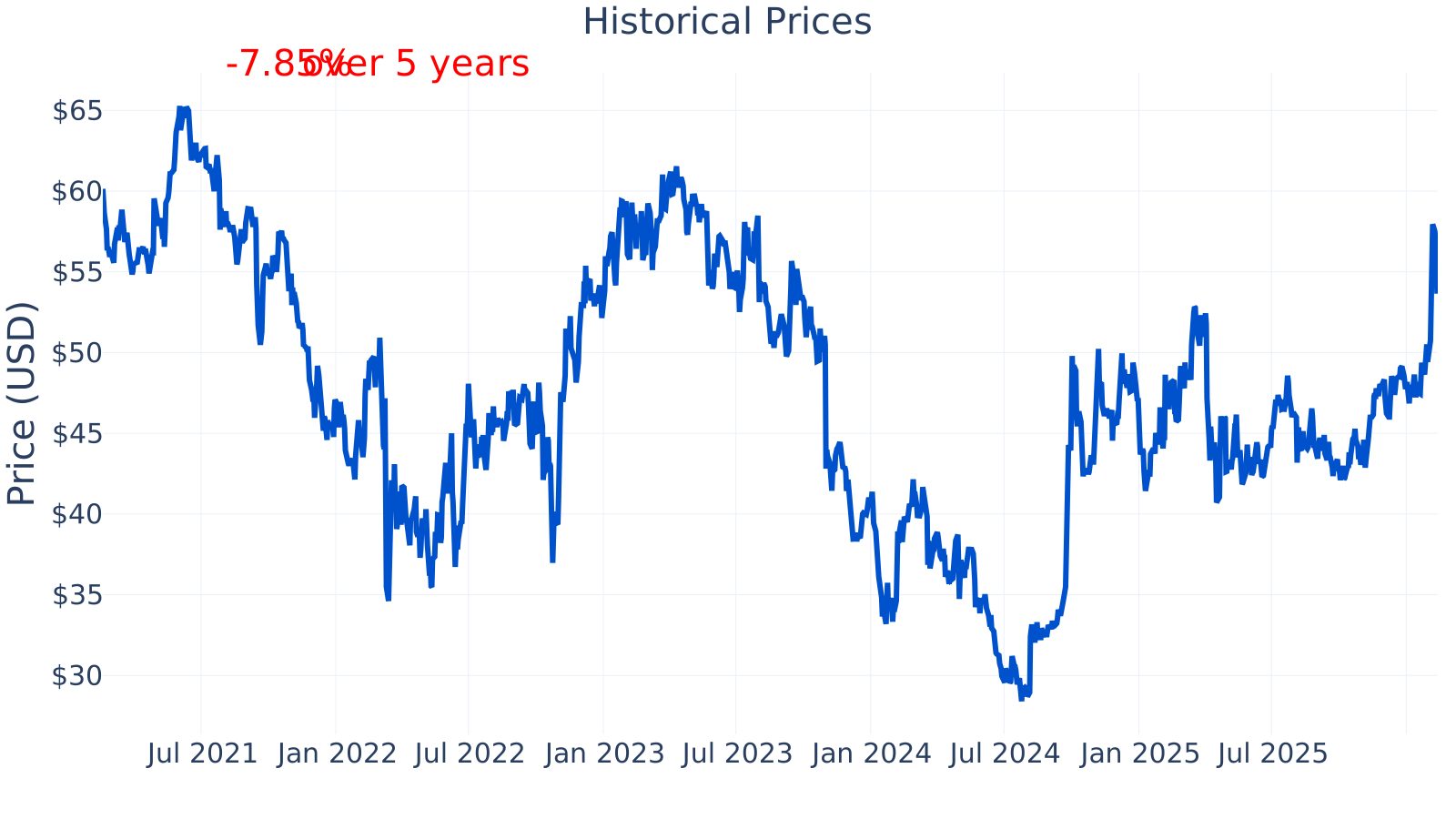
Yum China’s market capitalization is about $19.6B. The stock’s beta is about 0.12, which indicates the shares have historically moved less than the overall market (though beta can change over time and does not capture all risks).
On profitability, the latest net profit margin is about 7.88%, close to the industry median (about 7.98%). Recent year-over-year revenue growth is about 8.8%, modestly above the industry median (about 7.4%).
Debt-to-equity is about 69% versus an industry median near 60%, and trailing twelve-month free cash flow is about $850M. The P/E ratio is about 22.1, below the industry median near 27.6. A reported PEG ratio of about 1.43 suggests the valuation is not only about current earnings, but also about the market’s expectations for future growth.
Growth (medium)
Yum China operates in the restaurant industry, where long-term growth is typically tied to consumer demand, store expansion, menu innovation, and the shift toward convenient formats such as delivery and digital ordering. As a China-focused operator, its growth profile is closely linked to local consumer conditions and competitive intensity within China’s restaurant market.
A key long-term growth lever for Yum China is scaling its store base while maintaining solid unit economics (how profitable each restaurant can be after food, labor, rent, and other costs). Another driver is improving sales per store through pricing, product mix, marketing, and loyalty/digital engagement, alongside operational initiatives that manage costs and speed of service.
The year-over-year revenue growth pattern has been uneven across quarters, including periods of negative growth (notably during 2022) and a later normalization. The most recent reading shown is about 8.8% year-over-year, which is higher than the industry median shown (about 7.4%), indicating the company has recently grown somewhat faster than the typical peer in this industry grouping.
Free cash flow has fluctuated over time, ranging from roughly $246M (2022) to over $1.06B (2023), with the trailing twelve-month figure around $850M. For a restaurant operator, sustained free cash flow matters because it can fund new store openings, remodels, supply chain investments, and shareholder returns, while providing a buffer during weaker consumer cycles.
Risks (medium-high)
This article is for informational purposes only and does not constitute financial advice. Some content is AI-generated. See Disclaimer