Stock Analysis · YETI Holdings Inc (YETI)
Overview
YETI Holdings Inc designs and sells premium outdoor and lifestyle products best known for hard coolers, soft coolers, drinkware, and related gear. The brand is positioned around durability and performance, with products used for outdoor recreation as well as everyday consumption (for example, insulated tumblers and bottles). YETI sells through a mix of wholesale partners (such as sporting goods and outdoor retailers) and its own direct-to-consumer channels, including its website and company-operated stores.
In simple terms, YETI’s business model aims to pair a strong brand with product innovation and a premium price point. That combination can support margins when demand is healthy, but it also means results can be sensitive to consumer spending and competition from lower-priced alternatives.
Main sources of revenue (largest to smallest) are generally described by product category in company filings:
- Drinkware (tumblers, bottles, mugs)
- Coolers & Equipment (hard/soft coolers, bags, boxes, other gear)
- Other / accessories (smaller add-ons, depending on reporting categories)
The company’s reported revenue has increased over the last several years (for example, total revenue rising from about $1.41B in 2021 to about $1.87B in 2025, based on the figures shown below), indicating YETI has expanded beyond its early cooler-focused identity into a broader product platform.
Across the years shown, revenue grows overall (about $1.41B in 2021 to about $1.87B in 2025), while operating income and net income fluctuate. That pattern suggests profitability has been influenced not only by sales volume but also by costs such as selling, marketing, and general overhead, which can move around as the company invests in growth and manages inflation, freight, and promotions.
Key Figures
| Metric | Value | Industry ⓘ |
|---|---|---|
| Date | Feb 23, 2026 | |
| Context | ||
| Sector | Consumer Cyclical | |
| Industry | Leisure | |
| Market Cap ⓘ | $3.87B | |
| Beta ⓘ | 1.77 | |
| Fundamental | ||
| P/E Ratio ⓘ | 24.83 | 27.69 |
| Profit Margin ⓘ | 8.85% | 7.44% |
| Revenue Growth ⓘ | 6.80% | 7.30% |
| Debt to Equity ⓘ | 56.65% | 56.65% |
| PEG ⓘ | 1.66 | |
| Free Cash Flow ⓘ | $212.07M | |
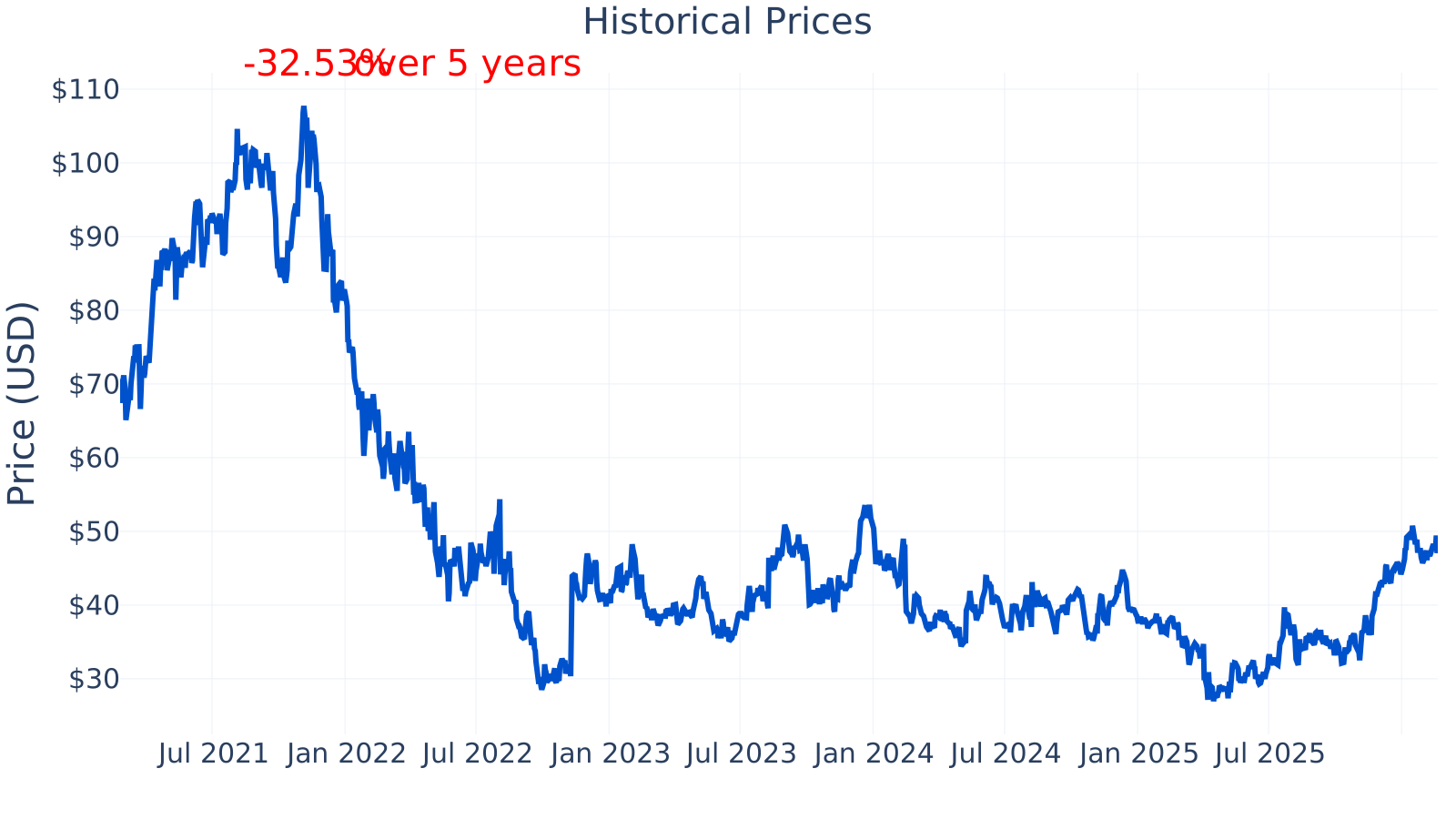
YETI’s market capitalization is about $3.9B. The stock’s beta of ~1.77 indicates it has tended to move more than the broader market (higher volatility). Profitability is positive, with a profit margin of ~8.85%, above the industry median shown (~7.44%). Recent year-over-year revenue growth is ~6.8%, slightly below the industry median shown (~7.3%). The company’s debt-to-equity is ~56.7%, in line with the industry median displayed. Trailing twelve-month free cash flow is about $212M, reflecting cash generation after operating needs and capital spending. The P/E ratio is ~24.8 versus an industry median of ~27.7, and a PEG ratio of ~1.66 is a reminder that valuation should be considered alongside expected growth (higher PEG often implies a richer valuation relative to growth, though it depends on assumptions).
Growth (Medium)
YETI operates in consumer discretionary categories tied to outdoor recreation and everyday hydration/food storage. These are mature product areas overall, but premium brands can still grow by taking share, expanding internationally, building direct-to-consumer relationships, and widening product lines. The long-term opportunity is less about a brand-new industry and more about whether YETI can keep its brand strong and continue to introduce products that customers are willing to pay premium prices for.
Strategically, YETI’s mix of wholesale distribution and direct-to-consumer sales can support growth in different ways. Wholesale can provide reach and visibility, while direct-to-consumer can deepen customer relationships and (in many retail models) can support better economics when executed well. Another practical growth lever is product expansion—drinkware, for example, can encourage repeat purchases and gifting behavior, while coolers and equipment can be more cyclical and event-driven.
The company’s year-over-year revenue growth was very strong in 2021 (over 40% in early 2021 quarters), then decelerated meaningfully, including periods around flat growth and a few negative quarters. More recently, growth appears modest (ending at about 6.8% in the most recent point shown). This pattern is consistent with a business that saw a surge and then normalized, making future growth more dependent on product launches, channel execution, and broader consumer demand.
Free cash flow rises from about $151M (2024-03-31) to about $201M (2025-03-31), with the latest table value around $212M TTM. In plain terms, the business has recently been producing more cash after necessary spending, which can improve resilience and flexibility (for example, to invest in inventory, marketing, or other initiatives) even when sales growth is not rapid.
Risks (Medium)
YETI’s results depend heavily on consumer spending patterns. Because many products are premium-priced and discretionary, demand can weaken during periods of inflation, higher interest rates, or reduced consumer confidence. Seasonality and promotional cycles also matter: if retailers become cautious or discounting increases, it can pressure both revenue and profitability.
Competition is a key structural risk. YETI competes with a wide range of brands across coolers, drinkware, and outdoor gear. The competitive set includes large diversified consumer brands and outdoor-focused companies, as well as private-label and lower-priced alternatives. In drinkware and coolers, brand and perceived quality matter—but competing products can look similar, which can raise the risk of price competition over time.
YETI does have competitive advantages that are mostly brand-related: premium positioning, strong customer loyalty in certain segments, and an established distribution footprint across wholesale and direct-to-consumer. These can help defend pricing and support new product launches. Still, these advantages are not the same as a patented technology moat; they require ongoing marketing, innovation, and careful brand management.
The debt-to-equity ratio ends at about 56.7% in the most recent point shown. The chart shows that leverage was much lower for a period (often in the ~23%–36% range through 2024), then increased sharply in the latest point displayed. A move like that can happen for different reasons (changes in debt levels, equity levels, or both). Regardless of the cause, higher leverage can reduce flexibility if the business hits a weaker demand environment.
Profit margin trends show a peak around 15%–16% in 2021, followed by a notable dip (down to mid-single digits in late 2022 and parts of 2023), then a recovery to around 8%–11% more recently. The latest value shown is about 8.85%, above the industry median displayed (~7.44%). The key takeaway is that YETI’s profitability has been positive but not stable, meaning costs (freight, promotions, overhead, and channel mix) can meaningfully change outcomes year to year.
Valuation
YETI’s valuation is often summarized using earnings-based multiples such as the price-to-earnings (P/E) ratio. A P/E compares the stock price to the company’s earnings; higher values typically imply the market is expecting stronger future performance (or viewing earnings as higher quality or more durable), while lower values can imply more modest expectations or higher perceived risk.
The current P/E is about 24.8, below the industry median shown (~27.7). Historically, the P/E shown has varied widely—above 40 in parts of 2021, dropping into the teens at points in 2022 and 2025, and spiking in parts of 2023. This range suggests that the market’s expectations for YETI have shifted materially over time, likely reflecting changing growth rates and profitability. With recent revenue growth in the mid-single digits and profit margins below the earlier peak, the justification for valuation tends to depend on whether the company can sustain brand strength, expand distribution and product lines, and keep margins from eroding in a competitive environment.
Conclusion
YETI is a consumer brand company built around premium outdoor and lifestyle products, with a business model that combines wholesale reach and direct-to-consumer relationships. The company has grown revenue over time, generates meaningful free cash flow, and shows profit margins that are currently above the industry median displayed, even though profitability has been volatile across the last several years.
The main long-term questions are whether YETI can keep its brand premium, introduce compelling new products, and maintain pricing power while competing against both major brands and lower-priced alternatives. At the same time, results can be sensitive to consumer spending and promotional intensity, and recent leverage metrics shown increased compared with prior periods. The valuation metrics presented (including a P/E around the mid-20s) sit in a zone where future outcomes may rely more on consistent execution than on a rapid industry expansion.
Sources:
- SEC EDGAR — YETI Holdings, Inc. Form 10-K (Annual Report)
- SEC EDGAR — YETI Holdings, Inc. Form 10-Q (Quarterly Report)
- YETI Holdings, Inc. — Investor Relations (company materials and filings)
- Wikipedia — “YETI (company)” (basic background only)
This article is for informational purposes only and does not constitute financial advice. Some content is AI-generated. See Disclaimer