Stock Analysis · Xpel Inc (XPEL)
Overview
Xpel Inc (XPEL) develops and sells products that help protect and enhance a vehicle’s exterior and interior surfaces. Its best-known offerings are paint protection films (transparent films applied to painted surfaces), window films (for heat rejection, glare reduction, and privacy), and coatings (for hydrophobic and surface-protection benefits). The company’s model is largely “product + ecosystem”: it designs and brands the materials, supports installers with training and software tools, and distributes products through a network that includes independent installers, dealers, and other channel partners. This makes the business closely tied to trends in automotive appearance, durability, and aftermarket upgrades.
In its filings, Xpel describes revenue primarily by product lines rather than a long list of unrelated businesses, which helps keep the story straightforward: it is focused on protective films and related solutions. Percentages by product line can vary by period and are typically disclosed in company reports; at a high level, the largest revenue drivers are generally tied to paint protection film, followed by window film and coatings/other related items.
Main revenue sources (from largest to smaller, as described in company reporting):
- Paint protection film and related installation-support solutions
- Automotive window film
- Ceramic coatings and other surface-protection products
Xpel has also expanded internationally over time, which matters because demand for premium vehicle protection can differ by region depending on climate, vehicle mix, and consumer preferences.
Over recent years, total revenue increased materially (from about $259M in 2021 to about $476M in 2025). Gross profit rose as well (about $93M in 2021 to about $201M in 2025), showing that the company has scaled its sales while maintaining a meaningful gross profit dollars base. Operating expenses also grew, which is typical for a company investing in distribution, support, and product expansion.
Key Figures
| Metric | Value | Industry ⓘ |
|---|---|---|
| Date | Mar 02, 2026 | |
| Context | ||
| Sector | Consumer Cyclical | |
| Industry | Auto Parts | |
| Market Cap ⓘ | $1.18B | |
| Beta ⓘ | 1.26 | |
| Fundamental | ||
| P/E Ratio ⓘ | 25.07 | 24.70 |
| Profit Margin ⓘ | 10.76% | 3.56% |
| Revenue Growth ⓘ | 13.70% | 4.90% |
| Debt to Equity ⓘ | 8.02% | 76.35% |
| PEG ⓘ | N/A | |
| Free Cash Flow ⓘ | $62.41M | |
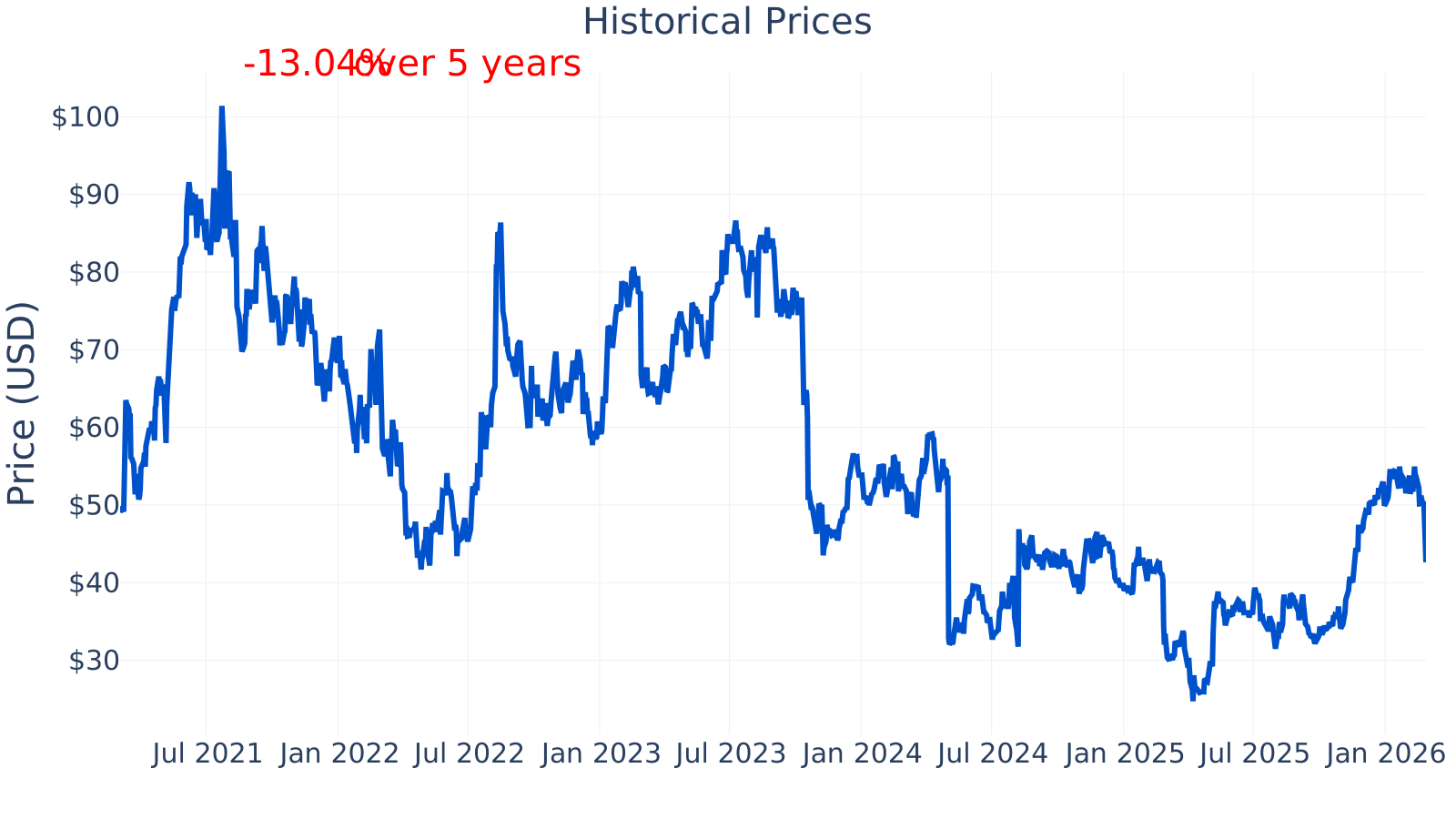
Xpel’s market capitalization is about $1.18B. The stock’s beta of about 1.27 suggests it has tended to move more than the broader market (higher ups and downs). On profitability, the latest profit margin is about 10.8%, which is notably higher than the industry median shown (about 3.6%). Growth is also higher than the industry median in the latest year-over-year comparison (about 13.7% vs. about 4.9%). Leverage appears low: debt-to-equity is about 8.0% versus an industry median around 76.3%. Trailing twelve-month free cash flow is about $62.4M, indicating that after operating costs and capital spending, the business has been generating cash overall.
Growth (Medium)
Xpel operates in the automotive aftermarket and vehicle protection segment—an area supported by several long-running behaviors: owners seeking to preserve resale value, consumers spending on appearance and comfort upgrades, and higher vehicle prices making protection feel more “worth it.” Unlike businesses dependent on selling brand-new cars, protective films and window tint can be applied to both new and used vehicles, which can help diversify demand across the vehicle life cycle.
The company’s strategy—building a recognized brand, expanding installer/distribution networks, and broadening its catalog across film, tint, and coatings—fits a “share gain” approach in a fragmented market. In practical terms, growth can come from: (1) selling more through existing installers, (2) adding new installers and dealers, (3) expanding internationally, and (4) increasing average revenue per vehicle by bundling multiple products.
Revenue growth has clearly cooled from the very high rates seen in 2021–2022 to more moderate levels in 2024, before re-accelerating into the low-to-mid teens in 2025 (ending 2025 around 13.7% year-over-year). Even at these more moderate levels, the growth rate shown remains above the industry median provided for the same metric.
Free cash flow has also improved over time, moving from a negative period in 2022 to solidly positive results more recently (about $51.2M by early 2025 and about $62.4M on a trailing basis in the latest snapshot). For long-term business building, consistent positive free cash flow can matter because it can provide flexibility for inventory, international expansion, technology/tools for installers, or other internal investments—without relying heavily on external financing.
Risks (Medium)
Xpel’s results depend on consumer and dealer spending tied to discretionary vehicle upgrades. In weaker economic periods, some buyers may delay non-essential add-ons like premium protection film or higher-end window tint. The company is also exposed to execution risks common to product-driven businesses: keeping product quality consistent, managing inventory, controlling shipping and raw-material costs, and maintaining strong relationships across a wide installer network.
Competition is another key risk. The vehicle film and tint markets include large, well-established materials and specialty-chemical companies as well as regional brands. Competition can show up through pricing pressure, installer incentives, product performance claims, and distribution reach. Xpel’s competitive positioning is often associated with its brand recognition in paint protection film, its installer-focused tools/training, and its broader product lineup that encourages bundling. Whether that advantage is durable depends on continued product performance, service levels, and the ability to keep installers engaged over time.
Financial risk appears more limited than many peers due to relatively low leverage, but it is still important to monitor because working capital needs can rise as the company grows.
Xpel’s debt-to-equity ratio declined substantially from the higher levels seen in 2022 (peaking above 50%) to about 8% most recently, which is far below the industry median level shown (roughly 76%). Lower leverage can reduce sensitivity to interest rates and refinancing conditions, but it does not remove operational risks such as demand swings or margin pressure.
Profit margin has generally stayed in a band around the low-teens over the years shown, dipping somewhat in 2024–2025 but remaining around 10–11% most recently. That is still well above the industry median displayed, which suggests the business has been converting revenue into profit more efficiently than many peers in the same broad industry grouping. A risk to watch is whether competitive pricing, mix changes, or higher operating costs reduce this margin advantage over time.
Valuation
One simple way to contextualize valuation is the price-to-earnings (P/E) ratio, which compares the stock price to the company’s earnings. In the latest metrics, Xpel’s P/E is about 25.1 versus an industry median around 24.7, placing it roughly in line with the peer midpoint on this measure.
Historically, Xpel’s P/E has varied widely, reaching much higher levels earlier in the period shown (often well above the industry median), then compressing notably around late 2023 through 2025 before rising again to around the high-20s by late 2025. In plain terms, the market has at times placed a much higher “growth premium” on the company than it does today, but the multiple has also moved meaningfully over time—so the valuation backdrop has not been stable.
Whether the current valuation level is “high” or “low” ultimately depends on sustainability of growth and profitability: if revenue growth stays in the low-to-mid teens and margins remain structurally above many peers, a mid-20s P/E can look consistent with a quality, profitable growth profile; if growth slows materially or margins compress, the same P/E can become harder to support. This is why watching trends in growth rates, margins, and cash generation tends to matter more than any single valuation snapshot.
Conclusion
Xpel is a focused vehicle-protection products company built around paint protection film, window film, and coatings, sold through a broad installer and dealer ecosystem. The company has expanded revenue substantially over the last several years and has produced profit margins above the industry median shown, while also operating with relatively low leverage. Revenue growth has moderated from exceptionally high levels earlier in the period to more “normalized” double-digit rates recently, and free cash flow has improved from a weak period in 2022 to stronger positive levels.
The main points that shape a long-term view are straightforward: the business appears to have carved out a differentiated position in a specialized aftermarket category, but results can be sensitive to discretionary spending, competitive intensity, and the company’s ability to keep its installer network engaged. On valuation, the current P/E sits near the industry median, while the company’s profitability metrics are stronger than the median, making future outcomes particularly dependent on whether that margin and growth profile holds up over time.
Sources:
- SEC EDGAR — Xpel, Inc. annual reports on Form 10-K (Business overview, risk factors, segment/product discussion, financial statements)
- SEC EDGAR — Xpel, Inc. quarterly reports on Form 10-Q (updates on operations, financial performance, and risks)
- Xpel, Inc. Investor Relations — Earnings materials and press releases (company-hosted/public)
- Wikipedia — “XPEL” (basic company background)
This article is for informational purposes only and does not constitute financial advice. Some content is AI-generated. See Disclaimer