Stock Analysis · Xpel Inc (XPEL)
Overview
Xpel Inc (XPEL) develops and sells protective products that help keep vehicles looking new for longer. Its best-known category is paint protection film (a clear, durable film applied to painted surfaces to reduce chips and scratches). The company also sells window film (for heat rejection, UV protection, and privacy) and ceramic coatings (a chemical coating that helps with gloss and easier cleaning). XPEL supports a network of installers and dealers by supplying products, patterns/software used to cut film accurately for specific vehicle models, training, and marketing support.
From a business model perspective, XPEL largely benefits when vehicle owners (or dealers) spend on appearance protection and when installers expand their throughput. In its filings, the company describes revenue coming primarily from product sales through a mix of channels (including installers/dealers and other partners) and across multiple geographies. Exact revenue splits by product line or channel can vary by period and may not always be presented as fixed percentages in a simple breakdown.
Main sources of revenue (high-level):
- Paint protection film and related installation products (core category)
- Window film
- Ceramic coatings and other appearance/protection products
- Software/pattern-related offerings and services (supporting the installation ecosystem)
The income profile over recent years shows a company that has scaled revenue meaningfully, while also spending more on operating expenses (notably selling, general and administrative costs, and higher R&D than earlier years). Revenue grew from about $259.3M (2021) to about $420.4M (2024), while net income moved from about $31.6M (2021) to about $45.5M (2024), with a peak around $52.8M (2023).
One notable trend in recent years is that revenue has continued to rise, but profitability has not increased in a straight line. For example, net income increased through 2023 and then declined in 2024, alongside higher operating expenses (especially SG&A), even as gross profit expanded.
Key Figures
| Metric | Value | Industry ⓘ |
|---|---|---|
| Date | Feb 08, 2026 | |
| Context | ||
| Sector | Consumer Cyclical | |
| Industry | Auto Parts | |
| Market Cap ⓘ | $1.44B | |
| Beta ⓘ | 1.26 | |
| Fundamental | ||
| P/E Ratio ⓘ | 30.55 | 25.56 |
| Profit Margin ⓘ | 10.12% | 3.38% |
| Revenue Growth ⓘ | 11.10% | 4.95% |
| Debt to Equity ⓘ | N/A | 66.87% |
| PEG ⓘ | N/A | |
| Free Cash Flow ⓘ | $70.76M | |
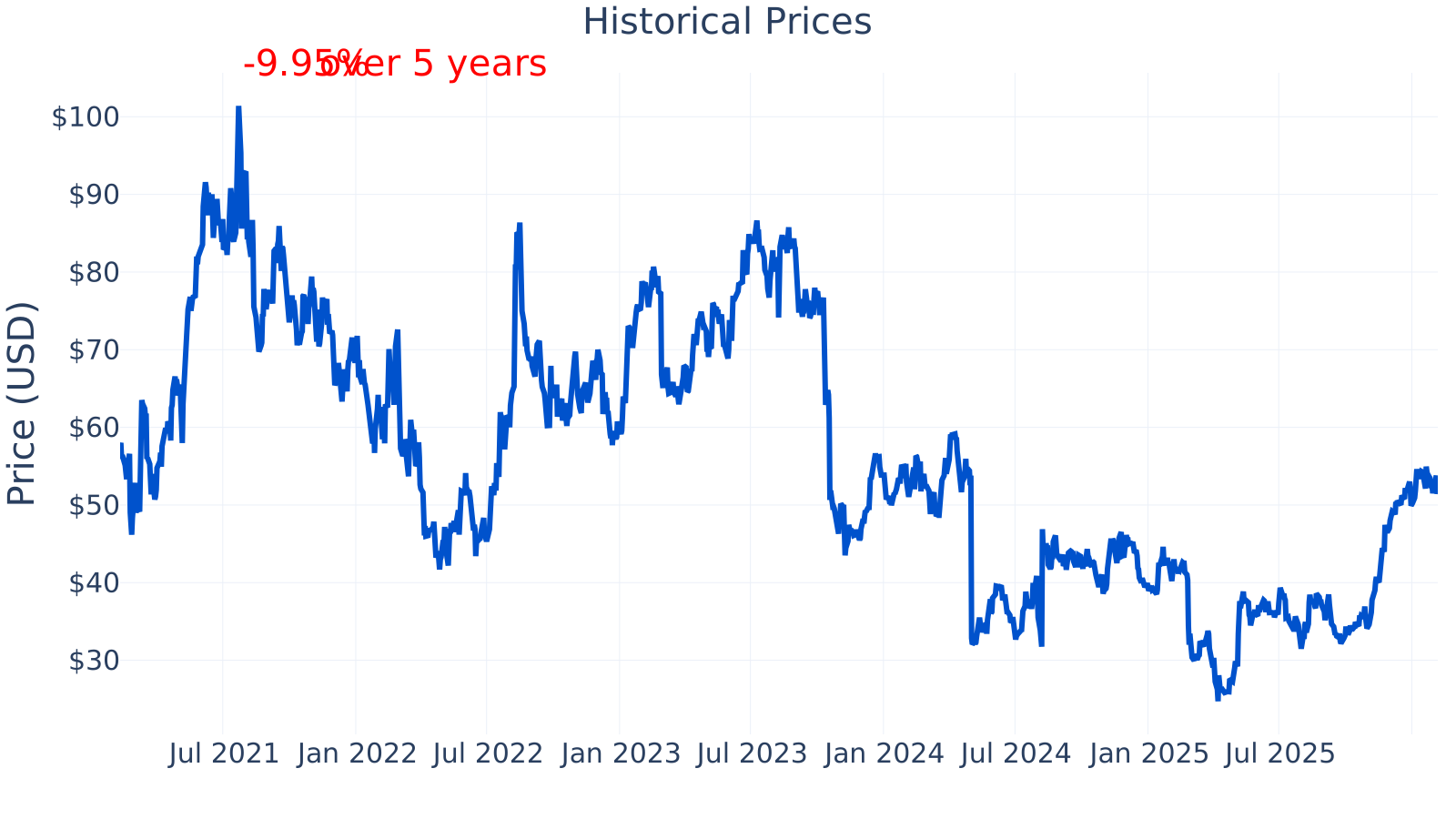
XPEL’s market capitalization is about $1.44B. The stock’s beta (~1.27) suggests it has tended to move more than the broader market. On profitability, the company’s profit margin is ~10.1% versus an industry median around 3.4%, indicating stronger bottom-line efficiency than many peers in the same industry grouping. Growth has moderated from earlier very high rates, but the latest year-over-year revenue growth shown is about 11.1% versus an industry median near 5.0%. The company also shows positive trailing twelve-month free cash flow of about $70.8M, which can help fund operations and growth initiatives without relying as heavily on external financing.
Growth (Medium)
XPEL operates in automotive aftermarket and dealer-installed categories tied to vehicle appearance, protection, and comfort. Demand drivers tend to include: consumers keeping vehicles longer, preferences for maintaining resale value and aesthetics, and dealer upsell packages on new and used vehicles. These factors can support steady long-term demand, but they are also influenced by broader auto sales volumes and consumer spending.
The company’s strategy is built around expanding its installer/dealer ecosystem, adding products that can be sold to the same customer base (film, window tint, coatings), and growing internationally. This “attach more products to the same installation channel” approach can make growth more efficient if installers adopt multiple categories and if XPEL maintains strong training, service, and product availability.
Revenue growth has clearly cooled from exceptionally high levels in 2021 (when year-over-year growth rates were often far above 40%) to more moderate rates more recently (roughly low-to-mid teens in 2025 quarters shown). For long-term analysis, this shift matters: it suggests the company may be transitioning from an earlier hyper-growth phase to a more mature growth profile, where execution and margin discipline become more important.
Free cash flow has improved over time in the trailing twelve-month view presented, moving from negative territory in 2022 to about $51.2M by 2025-03-31 and about $70.8M in the latest metric snapshot. Improving cash generation can be a practical catalyst because it provides flexibility (for inventory, capacity, technology, marketing, or selective acquisitions) while reducing financial strain.
Risks (Medium)
This article is for informational purposes only and does not constitute financial advice. Some content is AI-generated. See Disclaimer