Stock Analysis · Wynn Resorts Limited (WYNN)
Overview
Wynn Resorts Limited is a hospitality and gaming company focused on operating high-end integrated resorts. These properties combine casino gaming with luxury hotel rooms, fine dining, retail, entertainment, and convention/meeting space. The business model is designed to attract both leisure travelers and premium customers, aiming to generate spending across multiple areas of a resort rather than relying on a single activity.
In its financial reporting, Wynn typically groups revenue by operating segments (properties/regions) and by major categories such as casino, hotel rooms, food & beverage, entertainment, and retail. A large portion of the company’s business is tied to destination resorts, which means results can be influenced by travel patterns, consumer confidence, and local regulations where it operates.
Main sources of revenue (typical categories used in company reporting):
- Casino gaming (table games and slots)
- Hotel rooms (room nights and related fees)
- Food and beverage (restaurants, bars, nightlife)
- Entertainment, retail, and other (shows, shopping, miscellaneous resort revenue)
The company’s recent results show a much larger revenue base than in earlier years, reflecting the post-pandemic normalization of travel and on-property activity, along with the inherently operating-leverage-heavy nature of resorts (fixed costs are meaningful, so volume changes can have an outsized impact on profit).
Across the last few years, total revenue rose from about $3.8B (2021) to about $7.1B (2024–2025). Over the same period, operating income moved from negative in 2021–2022 to positive in 2023–2025, while interest expense remained a substantial ongoing cost (hundreds of millions of dollars per year), which is typical for capital-intensive resort operators.
Key Figures
| Metric | Value | Industry ⓘ |
|---|---|---|
| Date | Feb 16, 2026 | |
| Context | ||
| Sector | Consumer Cyclical | |
| Industry | Resorts & Casinos | |
| Market Cap ⓘ | $11.79B | |
| Beta ⓘ | 1.01 | |
| Fundamental | ||
| P/E Ratio ⓘ | 36.11 | 20.24 |
| Profit Margin ⓘ | 4.59% | 4.87% |
| Revenue Growth ⓘ | 1.50% | 3.65% |
| Debt to Equity ⓘ | -3295.93% | 548.08% |
| PEG ⓘ | 3.24 | |
| Free Cash Flow ⓘ | $736.71M | |
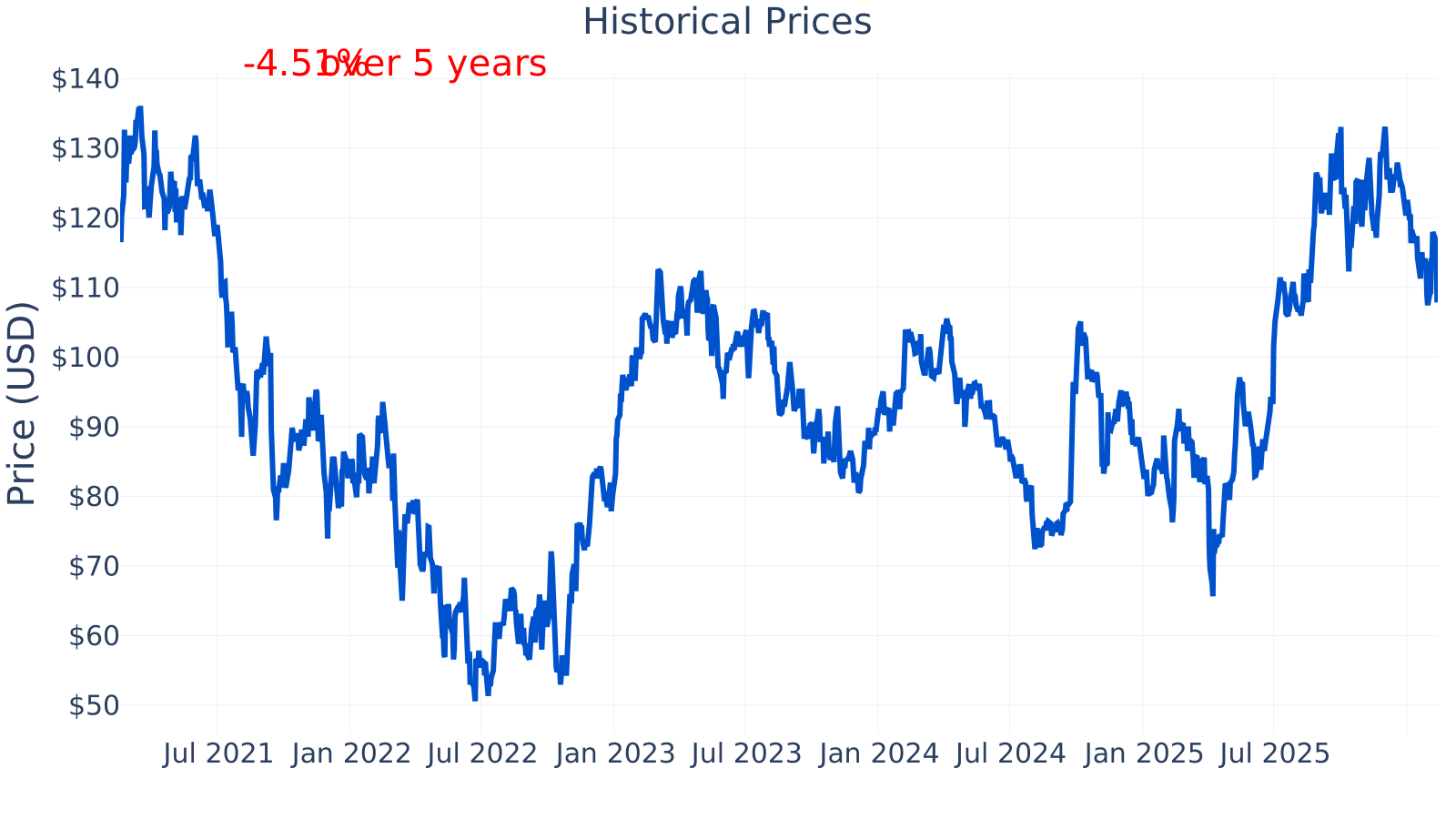
Wynn’s market capitalization is about $11.8B. The stock’s beta (~1.01) suggests price moves have been broadly similar to the overall market on average. Profitability is positive but modest on a net basis, with a profit margin of ~4.6% versus an industry median near 4.9%. Year-over-year revenue growth is currently modest at about 1.5% (below the industry median near 3.7%). The company is generating positive trailing free cash flow (about $737M). The listed debt-to-equity metric appears negative, which commonly happens when accounting equity is negative; in that situation, the ratio can become difficult to interpret and should be viewed alongside other leverage measures in filings (such as total debt, net debt, and interest coverage).
Growth (Medium)
Resorts and casinos are part of the broader travel and leisure economy. Over long periods, demand tends to follow consumer income, tourism flows, and business/event travel. At the same time, it is a cyclical area: customers may cut discretionary spending during economic slowdowns, and travel can be affected by external shocks. For Wynn specifically, the growth profile is also shaped by how quickly high-value tourism and premium gaming demand normalize and expand in the regions where it operates.
A key element of Wynn’s strategy is concentrating on large-scale, premium integrated resorts. This approach can support growth when visitation is rising because guests who come to the property may spend across multiple categories (gaming, rooms, dining, entertainment). It can also create operating leverage when occupancy and gaming volumes improve, since many resort costs are relatively fixed.
The year-over-year revenue growth pattern has been volatile: there were very large rebound periods earlier in the recovery, followed by a clear slowdown more recently, including some quarters near flat to slightly negative growth. That shift suggests that, at least in the near term, growth may depend more on market share gains, customer mix, and monetization per visitor than on broad-based demand expansion.
Free cash flow has improved substantially versus earlier periods: it was negative in 2021–2023, then turned strongly positive in 2024 and remained positive into 2025 (roughly $760M–$920M in the periods shown). For a capital-intensive resort operator, sustained positive free cash flow can matter because it increases flexibility to reinvest in properties, reduce debt, or return capital to shareholders (depending on management decisions and constraints).
Risks (High)
This article is for informational purposes only and does not constitute financial advice. Some content is AI-generated. See Disclaimer