Stock Analysis · Wyndham Hotels & Resorts Inc (WH)
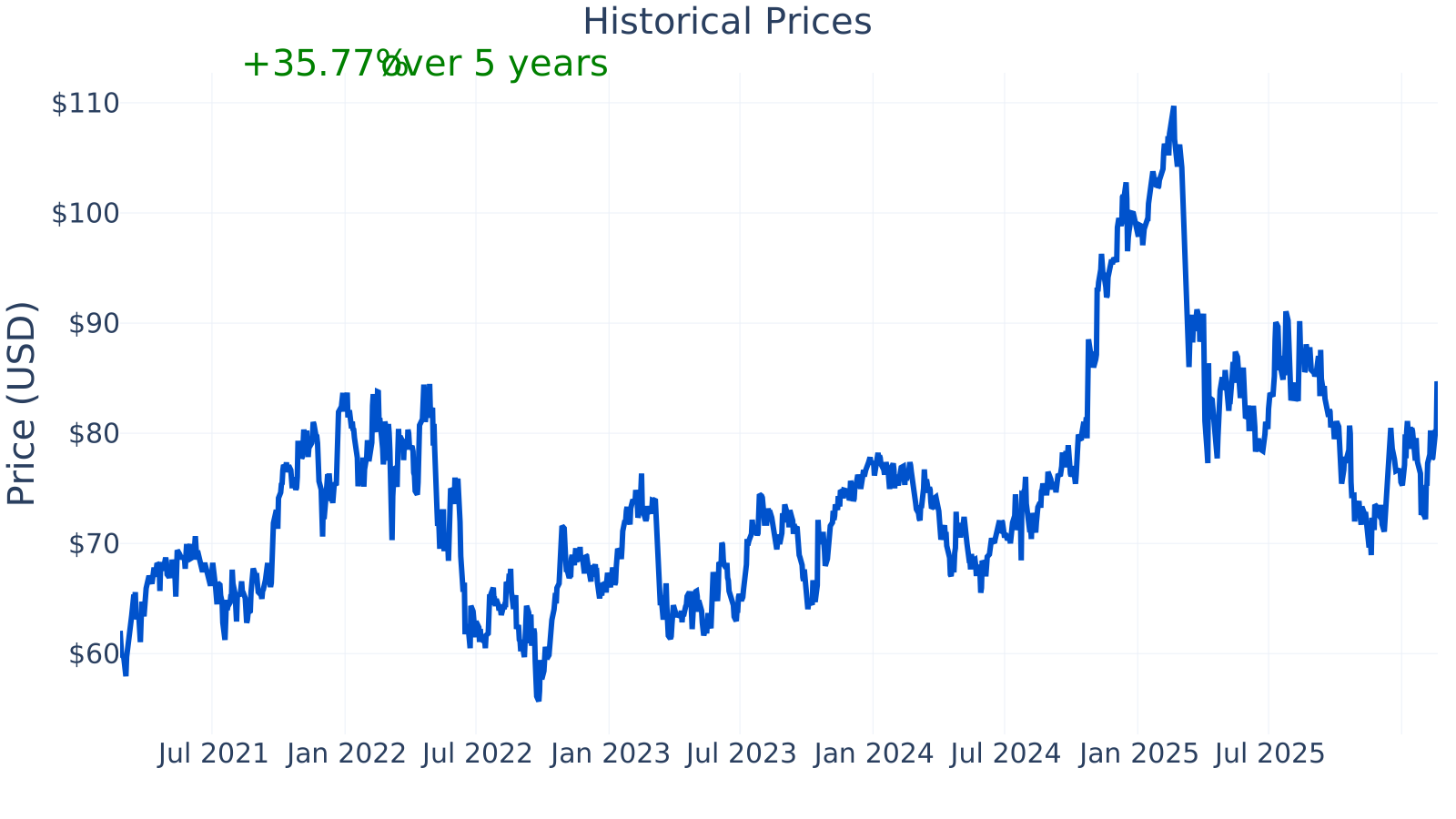
Overview
Wyndham Hotels & Resorts Inc. (WH) is a hotel franchisor: it licenses well-known hotel brands to independently owned hotels. In this “asset-light” setup, most properties are not owned by Wyndham. Instead, hotel owners pay Wyndham fees to use its brands, technology, and distribution systems (such as central reservations), and they may also contribute to brand marketing programs. The company also operates a hotel loyalty program (Wyndham Rewards), which is designed to help drive repeat stays and strengthen relationships with both guests and hotel owners.
Because Wyndham’s business model relies heavily on franchising, its financial results tend to be more influenced by hotel demand and room pricing than by the direct costs of running thousands of buildings. This can support steadier margins than hotel owners/operators, but it also means Wyndham’s growth depends on adding new franchised hotels (system growth) and maintaining strong brand standards so owners stay in the network.
Main revenue sources generally include the following (largest to smallest; exact mix can shift year to year based on accounting and one-time items):
- Franchise fees (ongoing royalties tied to hotel room revenue)
- Marketing, reservation, and related fees (fees linked to brand-wide programs and distribution)
- Licensing and other ancillary fees (brand/IP licensing, partnership-related items, and other services)
Over time, the company’s income statement has shown a structure consistent with an asset-light franchisor: a large portion of revenue remains as gross profit, while corporate overhead and interest expense (from debt) are key items that influence net income.
Across the years shown, total revenue stays in a relatively narrow band (about $1.4B–$1.6B), while interest expense trends upward in the later periods (reaching about $139M in 2025). This highlights how financing costs can meaningfully affect final earnings even when revenue is relatively stable.
Key Figures
| Metric | Value | Industry ⓘ |
|---|---|---|
| Date | Feb 23, 2026 | |
| Context | ||
| Sector | Consumer Cyclical | |
| Industry | Lodging | |
| Market Cap ⓘ | $6.43B | |
| Beta ⓘ | 0.76 | |
| Fundamental | ||
| P/E Ratio ⓘ | 19.46 | 30.60 |
| Profit Margin ⓘ | 13.51% | 14.61% |
| Revenue Growth ⓘ | -2.10% | 7.00% |
| Debt to Equity ⓘ | 653.21% | 44.41% |
| PEG ⓘ | 0.92 | |
| Free Cash Flow ⓘ | $294.00M | |
Wyndham’s market capitalization is about $6.4B, and its beta of 0.76 suggests the stock has historically moved less than the overall market. The latest P/E ratio is about 19.5 versus an industry median near 30.6. Profit margin is about 13.5% (industry median ~14.6%). Year-over-year revenue growth is about -2.1% versus an industry median around +7.0%. Debt-to-equity is about 653% versus an industry median near 44%, indicating substantially higher leverage. Trailing twelve-month free cash flow is about $294M.
Growth (Medium)
The lodging industry is cyclical: demand rises and falls with the economy, consumer spending, and business travel trends. Over long periods, however, travel demand has historically grown with population, income levels, and globalization. Wyndham’s franchising model is designed to scale by adding properties to its system (rather than building hotels), which can be a practical long-term structure if the company keeps its brands relevant to travelers and attractive to hotel owners.
The year-over-year revenue growth pattern shown is uneven, including strong rebound periods followed by slower or negative comparisons. The latest value shown (about -2.1%) is below the lodging industry median (about +7.0%), which can happen when fees, timing effects, and comparables shift. For a franchisor, an important context is that reported revenue does not always move in lockstep with the overall hotel network’s size or travel volumes, but persistent underperformance versus peers can still matter.
Free cash flow over the periods shown remains positive but declines from about $455M (2022) to about $226M (2025), with the most recent trailing twelve months shown at about $294M. For an asset-light company, consistently positive free cash flow can support reinvestment in technology and brand marketing, debt servicing, and shareholder return programs. At the same time, the direction of free cash flow is worth watching because it can be pressured by interest costs, working capital swings, and one-time items.
Potential catalysts for a franchisor like Wyndham typically include: expanding the number of franchised hotels, improving how much revenue each hotel generates (through pricing and occupancy trends), increasing direct booking and loyalty engagement, and enhancing owner value via distribution/technology. The durability of these drivers depends heavily on brand strength and competitive positioning.
Risks (High)
This article is for informational purposes only and does not constitute financial advice. Some content is AI-generated. See Disclaimer


