Stock Analysis · Winnebago Industries Inc (WGO)
Overview
Winnebago Industries Inc. is a U.S. manufacturer of recreational products. The company designs and builds motorhomes and towable RVs, and it also participates in the marine market through boat brands. Its products are typically sold through independent dealer networks, which means end-customer demand is influenced by dealer inventory levels, consumer confidence, and the availability and cost of financing.
From a business mix standpoint, Winnebago is best understood as a portfolio of outdoor-recreation brands. In its SEC filings, the company reports results by operating segments that generally include a motorhome business, a towable RV business, and a marine business. Revenue is primarily generated by the sale of new units to dealers, with additional contribution from parts, service, and other related items (the exact breakdown and percentages can change year to year based on demand and how the company reports segment results).
At a high level, the company’s revenue is driven by these categories (largest to smallest can vary by cycle and year):
- Towable RVs (travel trailers and fifth wheels)
- Motorhomes (Class A, Class C, camper vans, and related models)
- Marine (boats, depending on the period and brand portfolio)
- Parts, service, and other (smaller compared with whole-unit sales)
The flow of profitability in recent years shows how cyclical the business can be. Revenue rose to about $5.0B (FY2022) and then fell to about $2.8B (FY2025), while net income compressed materially versus earlier years.
The most visible shift is the drop in total revenue from FY2022 to FY2025, alongside a much smaller net income result. This pattern is consistent with a downcycle where production, discounting, and fixed costs can pressure earnings even if the company remains profitable.
Key Figures
| Metric | Value | Industry ⓘ |
|---|---|---|
| Date | Feb 08, 2026 | |
| Context | ||
| Sector | Consumer Cyclical | |
| Industry | Recreational Vehicles | |
| Market Cap ⓘ | $1.38B | |
| Beta ⓘ | 1.13 | |
| Fundamental | ||
| P/E Ratio ⓘ | 38.12 | 27.33 |
| Profit Margin ⓘ | 1.27% | 2.07% |
| Revenue Growth ⓘ | 12.30% | 12.75% |
| Debt to Equity ⓘ | 46.90% | 113.36% |
| PEG ⓘ | 0.35 | |
| Free Cash Flow ⓘ | $136.00M | |
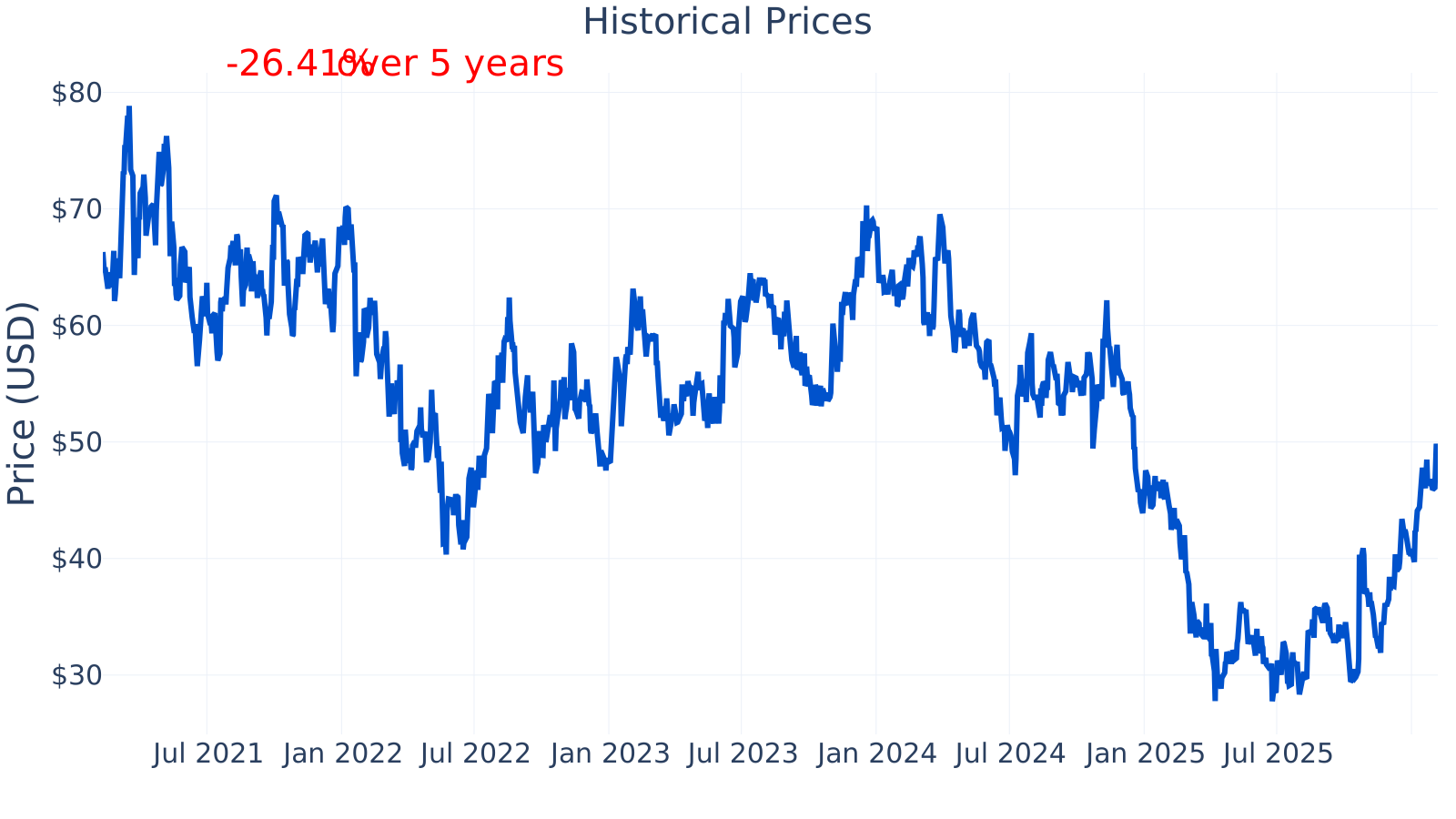
Winnebago’s market capitalization is about $1.38B, and the stock’s beta (~1.13) suggests it has tended to move somewhat more than the broader market. Profitability is currently thin: the latest profit margin shown is about 1.27%, below the industry median of about 2.07%. Growth has recently turned positive on a year-over-year basis at about 12.3%, roughly in line with the industry median (~12.75%), but that comes after a period of declines. Leverage appears moderate for the space: debt-to-equity is about 46.9% versus an industry median above 100%. Free cash flow over the trailing twelve months is about $136M, which indicates the business has continued to generate cash despite weaker earnings than the peak years.
Growth (Medium)
Winnebago operates in the recreational vehicles industry, which is historically cyclical. Demand tends to rise when consumer confidence is strong and financing is available at reasonable costs, and it tends to soften when interest rates rise or discretionary spending tightens. Over the long term, the category is supported by large installed bases of RV owners, product replacement cycles, and continued interest in road travel and outdoor leisure—but the path is rarely smooth year to year.
One way to see the cycle is through the company’s year-over-year revenue growth trend. After very strong growth in parts of 2021–2022, revenue growth turned negative through much of 2023–2024 and has recently improved back into positive territory.
For long-term business durability, cash generation matters, especially during weaker demand periods. Winnebago’s trailing free cash flow has remained positive in recent years, but it has declined from earlier highs (for example, around $277M in FY2023 to about $72M in FY2025, then about $136M most recently shown in the table). That pattern suggests the company has been navigating a tougher operating environment while still producing cash.
Potential catalysts for improved results in this type of business generally include: easing interest rates (improving affordability), normalization of dealer inventory levels, new product launches that better match consumer preferences, and operational actions that protect margins (cost reductions, purchasing efficiencies, and tighter production planning). Whether and when these occur is uncertain, but they typically drive the “upcycle” portion of the RV industry.
Risks (High)
This article is for informational purposes only and does not constitute financial advice. Some content is AI-generated. See Disclaimer