Stock Analysis · Wingstop Inc (WING)
Overview
Wingstop Inc. operates and franchises fast-casual restaurants focused on chicken wings, chicken sandwiches, and related menu items. The company’s brand is built around a narrow menu and flavor variety, with a large portion of orders designed for takeout and delivery. Wingstop’s business model is primarily franchise-driven, meaning many locations are owned and run by franchisees while Wingstop earns ongoing fees and supports the system through marketing, technology, and supply chain coordination.
In simple terms, Wingstop makes money mainly by enabling franchisees to run Wingstop restaurants, and by operating a smaller number of company-owned restaurants.
Main sources of revenue (based on company reporting categories in its filings) typically include:
- Royalties from franchised restaurants (ongoing fees tied to franchise sales)
- Advertising fees (funds collected for brand marketing, generally tied to franchise sales)
- Company-owned restaurant sales (food and beverage sales at restaurants the company operates directly)
- Other revenue (may include items such as franchise fees and other services, depending on the period)
The franchise-heavy approach generally means Wingstop’s reported revenue can be much smaller than the total sales happening across all Wingstop restaurants, because franchisee sales are not recorded as Wingstop’s revenue; instead, Wingstop records royalties and fees related to those sales.
Over recent years, total revenue and net income increased notably, which is consistent with a scalable franchise model where corporate earnings can expand as the restaurant base grows and as system sales increase. Interest expense is also a visible cost line, which matters when debt levels and interest rates are elevated.
Key Figures
| Metric | Value | Industry ⓘ |
|---|---|---|
| Date | Feb 23, 2026 | |
| Context | ||
| Sector | Consumer Cyclical | |
| Industry | Restaurants | |
| Market Cap ⓘ | $7.29B | |
| Beta ⓘ | 1.81 | |
| Fundamental | ||
| P/E Ratio ⓘ | 42.35 | 27.46 |
| Profit Margin ⓘ | 25.01% | 7.73% |
| Revenue Growth ⓘ | 8.60% | 7.35% |
| Debt to Equity ⓘ | -180.31% | 99.20% |
| PEG ⓘ | 2.37 | |
| Free Cash Flow ⓘ | $105.62M | |
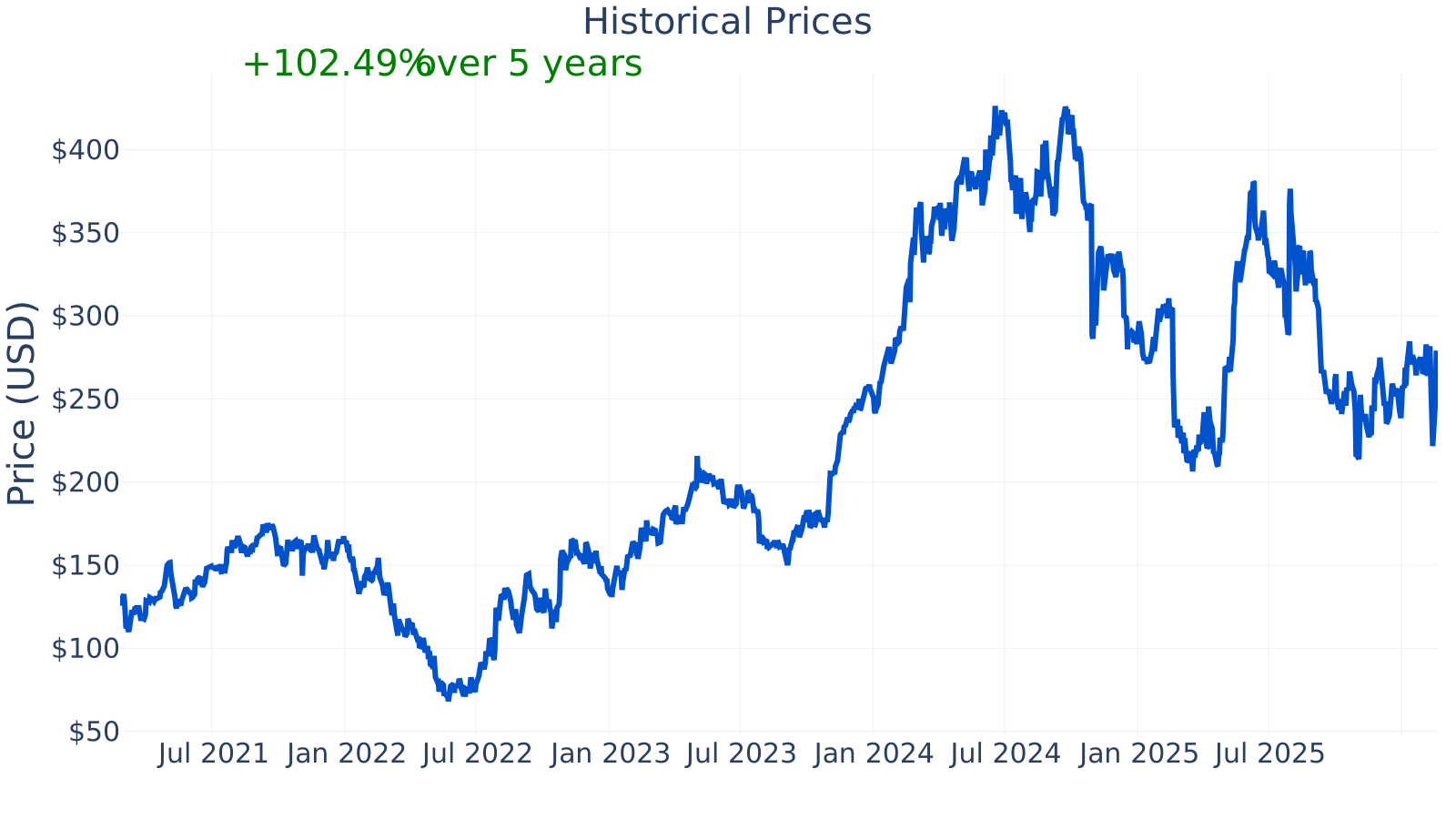
Wingstop’s market capitalization is about $7.3B. The stock’s beta of ~1.82 indicates the share price has tended to move more than the broader market (higher volatility). The company’s P/E ratio is ~42.35, above the restaurant industry median (~27.46), which often suggests the market is pricing in higher growth and/or stronger profitability than peers. Profitability stands out: the latest profit margin is ~25.01% versus an industry median of ~7.73%. Latest year-over-year revenue growth is ~8.6%, slightly above the industry median (~7.35%). Trailing twelve-month free cash flow is about $105.6M.
Growth (Medium)
Wingstop operates within the restaurant industry, which is mature overall, but certain segments—especially franchised, off-premise-friendly concepts—can still expand faster than the broader category. A franchise-led structure can support growth because adding new restaurants is typically funded and operated by franchisees rather than entirely by the corporation, allowing the brand to scale its footprint without bearing all the cost of building and running each location.
A key part of the long-term growth logic for franchise systems is that additional restaurants can expand royalty and advertising fee streams, while centralized corporate costs (technology, support functions, brand marketing infrastructure) may grow more slowly than the overall system. This can help profitability if execution remains strong.
Revenue growth has been uneven over time. The most recent year-over-year revenue growth is ~8.6%, down from much higher growth rates seen in several prior quarters (when growth exceeded 20% and, in some periods, was considerably higher). This pattern can reflect normalization after unusually strong periods, as well as changes in pricing, restaurant openings, and consumer demand.
Free cash flow over the trailing twelve months is about $105.6M. Over the last several years shown, free cash flow dipped in 2022 (around $24.0M in the period shown) and then recovered and grew (reaching roughly $89.5M by 2025-03-31 in the series). For a franchise-centric restaurant company, sustained free cash flow matters because it can support reinvestment in the brand (marketing, digital platforms, and support), debt service, and other corporate uses.
Potential catalysts for future growth generally include continued net restaurant openings, improved restaurant-level economics for franchisees (which can support additional development), brand marketing effectiveness, and the ongoing shift toward digital ordering and delivery. Execution consistency is especially important because the concept is highly specialized; maintaining traffic, pricing power, and customer satisfaction can influence both franchisee returns and the pace of new unit development.
Risks (High)
This article is for informational purposes only and does not constitute financial advice. Some content is AI-generated. See Disclaimer


