Stock Analysis · Williams-Sonoma Inc (WSM)
Overview
Williams-Sonoma, Inc. (WSM) is a specialty retailer focused on home products. It sells cookware and kitchen tools, home furnishings, décor, textiles, and related items through a mix of e-commerce and physical stores. The company operates a portfolio of brands that target different price points and lifestyles, including Williams Sonoma, Pottery Barn, West Elm, and others. Its business model blends product design/curation, brand marketing, and multi-channel distribution, with a meaningful portion of sales typically coming through direct-to-consumer channels (websites, mobile, and phone) alongside retail locations.
In its financial reporting, Williams-Sonoma groups revenue primarily by brand rather than by product category. That means the clearest “where revenue comes from” view is typically the brand mix (instead of, for example, “furniture vs. cookware” in fixed percentages).
Main sources of revenue (reported by brand group in company filings) generally include:
- Pottery Barn brands (Pottery Barn, Pottery Barn Kids, Pottery Barn Teen)
- West Elm
- Williams Sonoma
- Other brands (such as Rejuvenation, Mark and Graham, and related)
The company’s recent income structure shows that revenue has been fairly steady in the last few years, while profitability has remained sizable. Total revenue was about $8.2B (FY2022), $8.7B (FY2023), $7.8B (FY2024), and $7.7B (FY2025), with net income around $1.1B in FY2022, $1.1B in FY2023, $0.95B in FY2024, and $1.1B in FY2025. One noticeable change across this period is that interest expense rose in FY2024 versus earlier years, while net income later recovered.
Key Figures
| Metric | Value | Industry ⓘ |
|---|---|---|
| Date | Feb 07, 2026 | |
| Context | ||
| Sector | Consumer Cyclical | |
| Industry | Specialty Retail | |
| Market Cap ⓘ | $26.34B | |
| Beta ⓘ | 1.64 | |
| Fundamental | ||
| P/E Ratio ⓘ | 24.33 | 23.78 |
| Profit Margin ⓘ | 14.30% | 6.27% |
| Revenue Growth ⓘ | 4.60% | 5.20% |
| Debt to Equity ⓘ | 70.88% | 103.28% |
| PEG ⓘ | 2.69 | |
| Free Cash Flow ⓘ | $1.11B | |
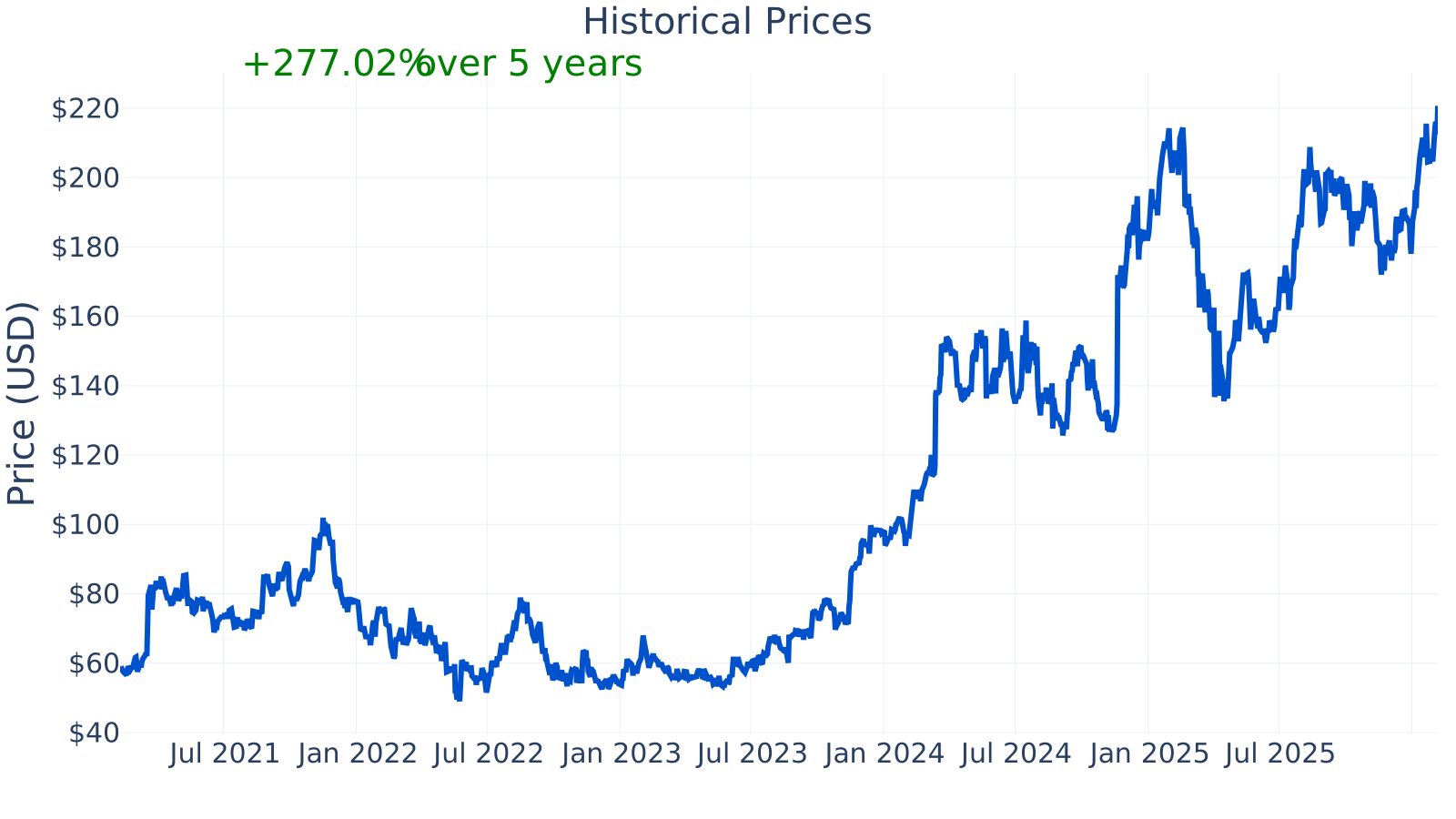
Williams-Sonoma’s market capitalization is about $26.3B. The stock’s beta of 1.64 indicates the share price has tended to move more than the broader market (higher volatility). The P/E ratio is about 24.3, close to the specialty retail industry median near 23.8.
Profitability stands out versus peers: the net profit margin is about 14.3% compared with an industry median around 6.3%. Recent year-over-year revenue growth is about 4.6%, slightly below the industry median near 5.2%. Leverage is moderate: debt-to-equity is about 70.9% versus an industry median around 103.3%. Free cash flow over the trailing twelve months is about $1.11B, indicating meaningful cash generation after operating needs and capital spending.
Growth (Medium)
Williams-Sonoma operates in home retail, which is shaped by household formation, housing turnover, remodeling cycles, and consumer spending power. Demand can be strong when consumers move, renovate, or refresh their homes, and can soften when discretionary spending tightens. As a result, the industry tends to be cyclical rather than steadily expanding every year.
In the recent pattern of growth, the company moved from very strong year-over-year increases earlier in the period to a stretch of declines, and then back to modest positive growth more recently. This sequence is consistent with a home-goods category that experienced an exceptional surge and then normalized.
A practical indicator of “capacity to invest for the future” is cash generation. Williams-Sonoma has produced substantial free cash flow over time, although it has fluctuated year to year. This matters because free cash flow can support reinvestment in product development, digital capabilities, supply chain improvements, store refreshes, and returning capital to shareholders (without implying anything about future policy decisions).
Potential long-term catalysts described in company communications and filings typically relate to strengthening brand positioning, expanding or optimizing the store footprint, and improving e-commerce and customer engagement (including loyalty programs and personalization). Another structural tailwind for the business model is that customers can shop seamlessly across online and stores, which may help retain customers even as shopping habits evolve.
Risks (Medium)
This article is for informational purposes only and does not constitute financial advice. Some content is AI-generated. See Disclaimer