Stock Analysis · John Wiley & Sons B (WLYB)
Overview
John Wiley & Sons (Class B, ticker WLYB) is a long-established publisher focused on research, education, and professional learning. Over time, the company has been shifting away from traditional print publishing toward digital products and recurring revenue tied to online platforms, subscriptions, and content licensing. Its activities typically revolve around helping researchers publish and access scientific content, supporting universities and students with course materials, and providing professionals with training and credentials.
In its SEC filings, Wiley generally describes its business through major operating segments such as Research (scientific, technical, and medical journals and related services) and Learning (education and professional learning solutions). The mix can change over time due to portfolio actions (acquisitions/divestitures) and the pace of digital adoption.
Main revenue streams are generally centered on:
- Research publishing and services (journals, open access publishing, content platforms, and related offerings)
- Learning solutions (courseware, educational publishing, professional training/upskilling)
- Content licensing and distribution-related arrangements (where applicable, depending on contract structures)
Percentages by segment can be pulled directly from the most recent Form 10-K segment note; they are not included here because they vary each fiscal year and depend on how the company reports its segments in that filing.
Scale and profitability snapshot (FY2021–FY2025): total revenue declined from about $1.94B (FY2021) to about $1.68B (FY2025). Operating income and net income were volatile across these years, including a notable loss in FY2024 before returning to positive profitability in FY2025.
Across FY2021 to FY2025, revenue trended lower, while the gap between gross profit and operating expenses (the driver of operating income) widened sharply in FY2024 and then improved in FY2025. Interest expense also rose versus earlier years in this period, which can matter when operating results are under pressure.
Key Figures
| Metric | Value | Industry ⓘ |
|---|---|---|
| Date | Feb 08, 2026 | |
| Context | ||
| Sector | Communication Services | |
| Industry | Publishing | |
| Market Cap ⓘ | $1.57B | |
| Beta ⓘ | 0.96 | |
| Fundamental | ||
| P/E Ratio ⓘ | 15.93 | |
| Profit Margin ⓘ | 6.11% | |
| Revenue Growth ⓘ | -1.10% | |
| Debt to Equity ⓘ | 39.11% | |
| PEG ⓘ | 2.47 | |
| Free Cash Flow ⓘ | $148.34M | |
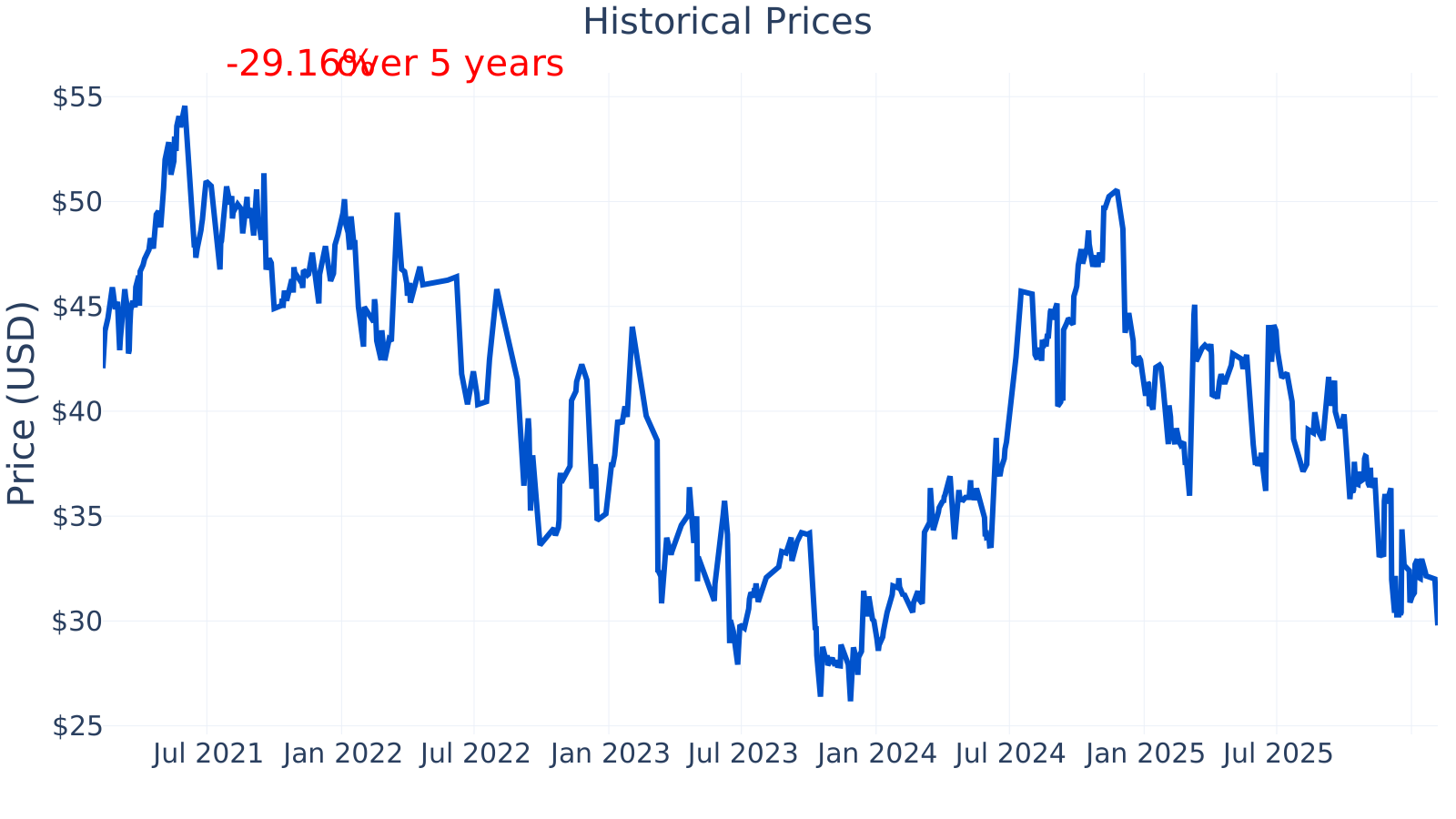
Wiley’s market capitalization is about $1.57B and its beta is about 0.96, which is close to overall market volatility. The latest P/E ratio shown is about 15.9. Profit margin is about 6.1%. Year-over-year revenue growth is slightly negative at about -1.1%. Debt-to-equity is about 39%. The PEG ratio shown is about 2.47 (a metric that relates valuation to expected growth, and can look higher when growth expectations are modest). Trailing twelve-month free cash flow is about $148.3M.
Growth (Low to Medium)
Academic and professional publishing is not a classic “high-growth” area, but it can be structurally resilient because research output continues globally and universities and institutions often rely on established content platforms. Growth tends to come more from digital delivery, workflow tools, data-driven services, and recurring contracts than from print volumes.
A practical way to judge momentum is to watch whether revenue stabilizes and whether cash generation stays durable while the business mix moves toward more recurring and digital revenue. Over the most recent periods shown, revenue growth has been negative in many quarters, and the latest point remains slightly negative.
The year-over-year revenue growth trend shows a shift from positive growth earlier in the period to a long stretch of contraction, with the most recent reading at roughly -1.1%. For long-term monitoring, a key question is whether the company can return to consistently flat-to-positive growth without relying on one-time items.
Free cash flow over the trailing twelve-month periods shown moved from about $239M (FY2022) down to about $122M (FY2023), then recovered and stabilized around $141M–$151M (FY2024–FY2025). Even with uneven earnings in the middle of the period, this level of cash generation can be important because it supports reinvestment in products, debt service, and other corporate needs.
Potential catalysts that can matter for Wiley’s long-term trajectory typically include: (1) further growth in digital research publishing and open access volumes, (2) improved efficiency and cost structure in Learning, and (3) portfolio simplification that raises the share of recurring revenue. Whether these catalysts translate into sustained growth depends on execution and competitive dynamics.
Risks (Medium)
This article is for informational purposes only and does not constitute financial advice. Some content is AI-generated. See Disclaimer