Stock Analysis · John Wiley & Sons (WLY)
Overview
John Wiley & Sons (WLY) is a long-established publisher focused on research and education. In practice, that means it helps universities, companies, libraries, and individual learners access scientific and professional content (journals, books, digital platforms) and related services. Over time, Wiley has been shifting toward more digital and recurring-style revenue (subscriptions, licensing, and online learning) versus traditional print-only publishing.
In its public reporting, Wiley generally describes its business through major operating segments that center on research publishing and learning-focused products and services (including digital courseware and professional learning). The exact mix can change over time as products evolve and as the company reshapes its portfolio.
Main sources of revenue (high-level)
- Research publishing (scholarly journals and related publishing services, largely digital)
- Learning and training (education publishing, digital learning tools, and professional learning services)
- Other publishing and licensing activities (smaller, depending on the period and reporting structure)
Across the periods shown, revenue trends downward from about $2.08B (FY2022) to about $1.68B (FY2025). Profitability also shows meaningful volatility, including a large loss in FY2024 (net income about -$200M) followed by a return to positive net income in FY2025 (about $84M). Selling, general, and administrative costs remain a large share of the cost structure, which makes cost control and efficiency important drivers of results.
Key Figures
| Metric | Value | Industry ⓘ |
|---|---|---|
| Date | Mar 09, 2026 | |
| Context | ||
| Sector | Communication Services | |
| Industry | Publishing | |
| Market Cap ⓘ | $1.97B | |
| Beta ⓘ | 0.95 | |
| Fundamental | ||
| P/E Ratio ⓘ | 20.03 | |
| Profit Margin ⓘ | 9.24% | |
| Revenue Growth ⓘ | 1.30% | |
| Debt to Equity ⓘ | 119.66% | |
| PEG ⓘ | 13.05 | |
| Free Cash Flow ⓘ | $190.44M | |
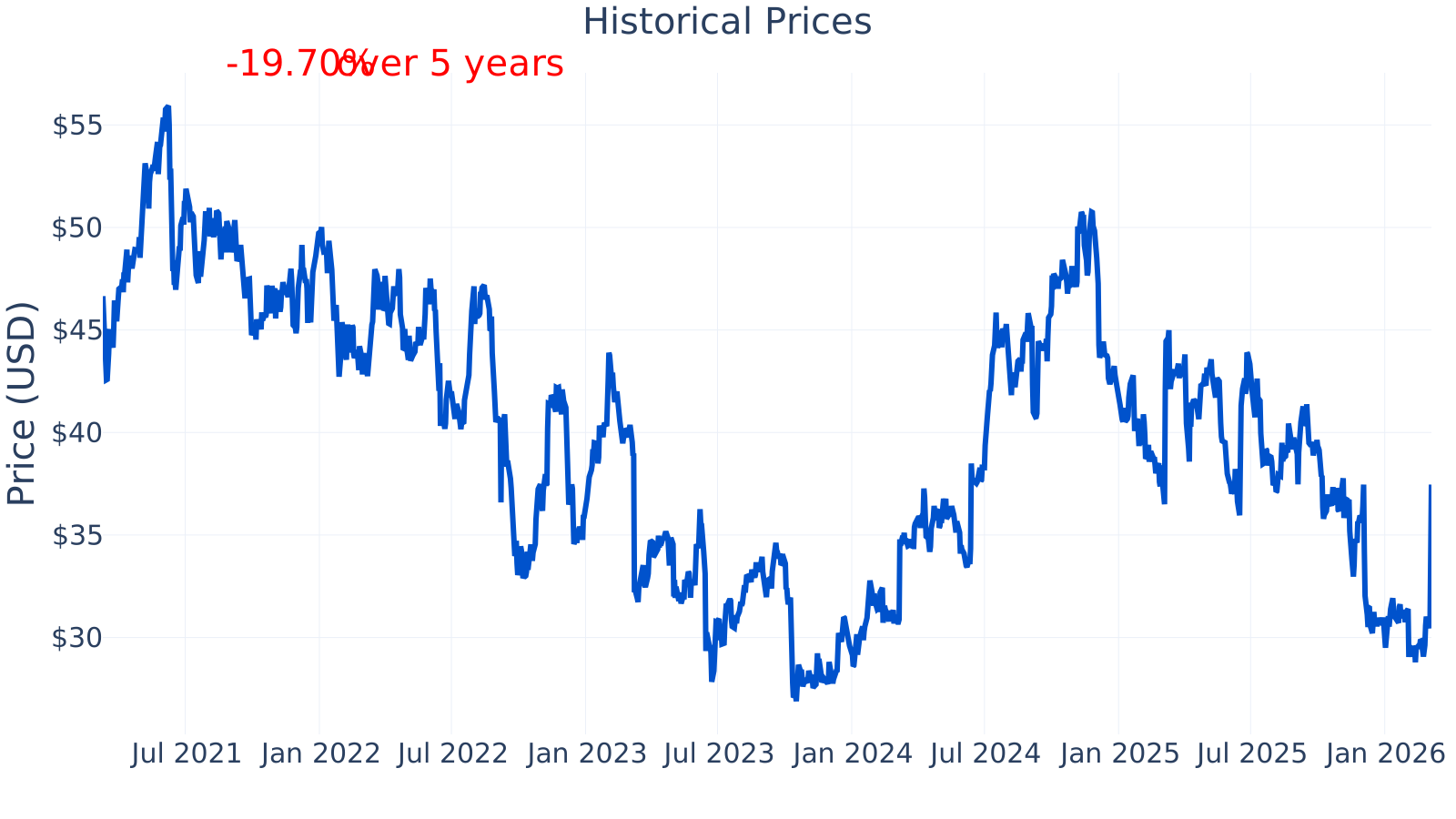
Wiley’s market capitalization is about $2.0B, and the stock’s beta is about 0.96 (historically close to overall market volatility). The latest P/E ratio is about 20.0, while the profit margin is about 9.2%. Recent year-over-year revenue growth is about 1.3%, indicating limited top-line expansion in the most recent period. Debt-to-equity is about 119.7%, which suggests meaningful leverage compared with a low-debt balance sheet. Free cash flow over the trailing twelve months is about $190M.
Growth (Low)
Wiley operates in mature areas of publishing, but with long-running structural shifts that still matter for the future: the ongoing move from print to digital access, rising demand for research distribution and analytics-like workflow tools, and continued emphasis on job-relevant skills and professional training. These trends can support stability and incremental growth, but they also come with pricing pressure and changing customer preferences (libraries, universities, and corporate buyers).
The year-over-year revenue growth trend shows a multi-year stretch of decline through much of 2023–2025, before turning slightly positive most recently (about +1.3%). This pattern points to a business that has been working through headwinds (portfolio changes, demand shifts, or contract timing) and is trying to stabilize rather than consistently expand.
Free cash flow improves meaningfully from about $122M (FY2023 trailing period) to about $190M most recently. For a publisher with substantial intangible assets and periodic restructuring, cash generation is often watched closely because it can be used for debt reduction, dividends, or reinvestment in digital products. A potential catalyst over time is continued execution on operational efficiency and further mix shift toward higher-recurring digital revenue.
Risks (Medium)
Wiley’s results can be affected by budget cycles and procurement decisions at universities and libraries, changes in research funding, and evolving preferences in how academic institutions and researchers publish and access content. In learning-focused offerings, competition is intense and customers can be price sensitive, particularly when products must prove measurable outcomes.
Leverage is a key balance-sheet risk to track. Debt-to-equity has generally been elevated and at times rising, reaching about 119.7% most recently. While leverage can be manageable when cash flow is steady, it can reduce flexibility during weaker operating periods or when interest costs rise.
Profitability has also been volatile. Profit margin was negative through much of 2023–2024, then recovered to about 9.2% most recently. This rebound is notable, but the earlier losses highlight execution risk (cost structure, restructuring, impairments, or other charges) and the potential for earnings to fluctuate even when the business remains cash-generative.
Competitive positioning depends on the segment. In scholarly publishing, Wiley competes with other large academic publishers and society publishers; scale, journal reputation, editorial relationships, and distribution infrastructure can be advantages, but customer bargaining power (libraries and consortia) and open-access models can pressure pricing and margins. In education and professional learning, competition includes both traditional publishers and digital-first learning platforms. Competitive advantages tend to come from brand recognition, trusted content, long-term institutional relationships, and the ability to integrate content into customer workflows, but none of these eliminates competitive pressure.
Valuation
The latest P/E ratio is about 20.0. Historically, the P/E shown varies widely, with some periods not displayed (set to 0 on the chart) due to unusually high or non-meaningful values, which can happen when earnings are very low or negative. In practical terms, that history signals that valuation based on earnings can be hard to interpret when profitability is volatile.
Given low recent revenue growth (about 1.3% year-over-year) and the recent swing from losses to profitability, the current earnings multiple is best interpreted in the context of (1) whether margins remain durable after the rebound and (2) whether cash generation stays strong enough to support the balance sheet. The PEG ratio shown (about 13.0) is high, which typically corresponds to modest expected growth relative to the earnings multiple, though PEG is sensitive to how growth is estimated and is less informative when earnings are unstable.
Conclusion
Wiley is a well-known research and education publisher that is continuing a long-term transition toward digital and more recurring revenue streams. The recent picture shows limited revenue growth, improving free cash flow, and a rebound in profit margin after a difficult period that included significant losses. Key uncertainties center on how stable that profitability recovery is, how effectively the company can sustain or rebuild revenue, and how leverage affects flexibility across cycles.
Sources:
- U.S. SEC EDGAR — John Wiley & Sons, Inc. filings (Form 10-K, 10-Q, 8-K)
- John Wiley & Sons — Investor Relations materials (Annual Report and shareholder communications)
- Wikipedia — “John Wiley & Sons” (basic company background)
This article is for informational purposes only and does not constitute financial advice. Some content is AI-generated. See Disclaimer