Stock Analysis · Trump Media & Technology Group Corp (DJT)
Overview
Trump Media & Technology Group Corp (DJT) is a communication services company focused on digital media and social networking. Its main operating product has been Truth Social, a social-media platform that the company positions as an alternative to larger, mainstream social networks. In its public filings, the company describes additional initiatives beyond social media, but the business to date has been centered on building and operating its platform and related offerings.
Based on the company’s filings, revenue has been relatively small and tied to early-stage platform monetization. The company’s disclosures typically describe revenue in broad categories rather than a large, diversified mix.
Main revenue sources (based on company disclosures; detailed percentages are not consistently provided in a way that supports a reliable split):
- Advertising and platform-related revenue (primary source described in filings)
- Other early-stage and ancillary revenue (smaller, less consistently described)
The high-level income flow over recent years shows a business with limited revenue relative to operating costs. In 2024, revenue was a few million dollars while operating expenses were much larger, which is consistent with a company still in a build-out phase rather than a mature, consistently profitable platform.
Key Figures
| Metric | Value | Industry ⓘ |
|---|---|---|
| Date | Feb 17, 2026 | |
| Context | ||
| Sector | Communication Services | |
| Industry | Internet Content & Information | |
| Market Cap ⓘ | $3.07B | |
| Beta ⓘ | 4.62 | |
| Fundamental | ||
| P/E Ratio ⓘ | N/A | 18.89 |
| Profit Margin ⓘ | N/A | 9.94% |
| Revenue Growth ⓘ | -3.80% | 6.80% |
| Debt to Equity ⓘ | 41.86% | 10.16% |
| PEG ⓘ | N/A | |
| Free Cash Flow ⓘ | -$6.28M | |
The latest snapshot points to a company with a multi-billion-dollar market capitalization alongside very high price volatility (beta ~4.6). Profitability is weak based on recent margins, and free cash flow has been negative over the trailing period shown. Year-over-year revenue growth is slightly negative in the latest reading (about -3.8% versus an industry median near +6.8%), suggesting that near-term sales momentum has not been consistent.
Growth (Medium)
The company operates in the broad market for online content, social networking, and digital advertising, which is structurally large and continues to evolve. However, this is also a mature, highly competitive space where scale, user engagement, and advertiser demand tend to reinforce the largest platforms.
Revenue growth has been uneven across the periods shown, with large swings (including one very high growth period off a small base) and several quarters of decline. The most recent year-over-year figure is modestly negative (about -3.8%), which does not, by itself, demonstrate a steady upward trend in monetization.
Free cash flow has been consistently negative across the timeline shown, and it worsened materially by 2025 (around -$73 million at that point in the series). For a platform business, persistent negative cash flow can be normal early on, but over time it increases dependence on cash reserves or external financing if it does not improve.
Potential catalysts discussed in company materials and typical for platform businesses include user growth, improved monetization (especially advertising), new product features, and potential expansion into additional media/technology offerings. Whether these catalysts translate into durable growth depends on execution, user engagement, and the ability to attract advertisers at scale.
Risks (Very High)
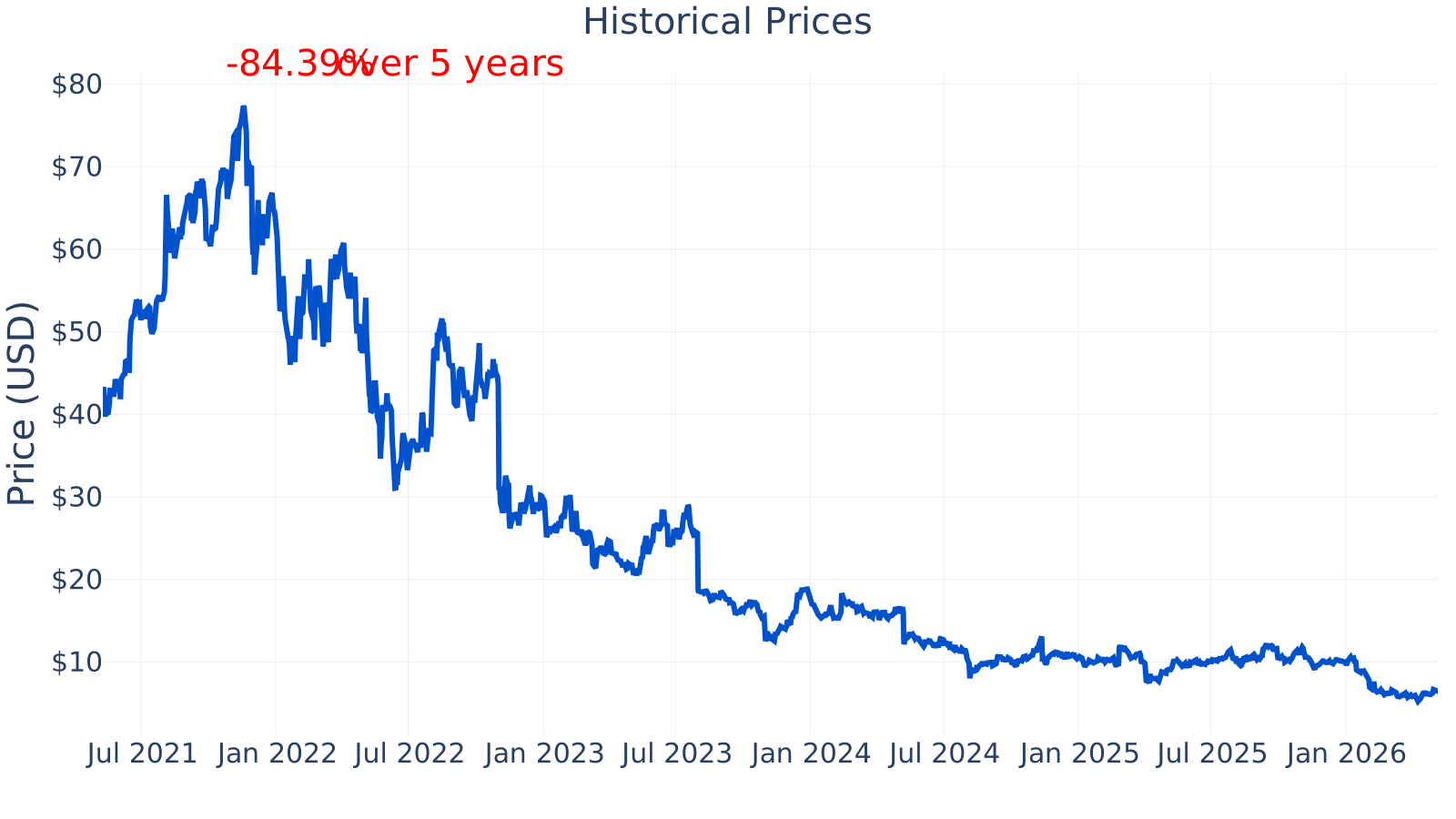
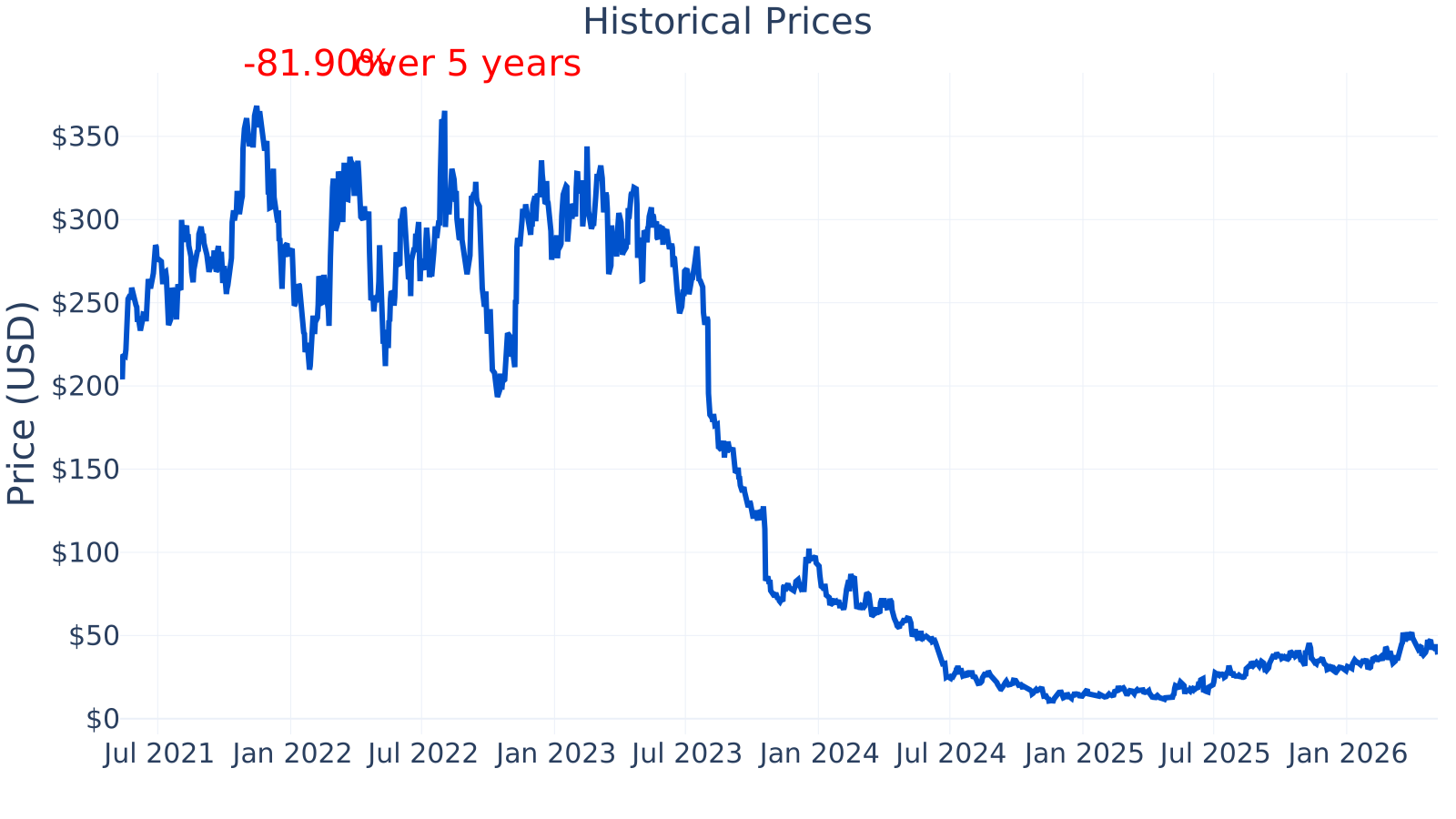
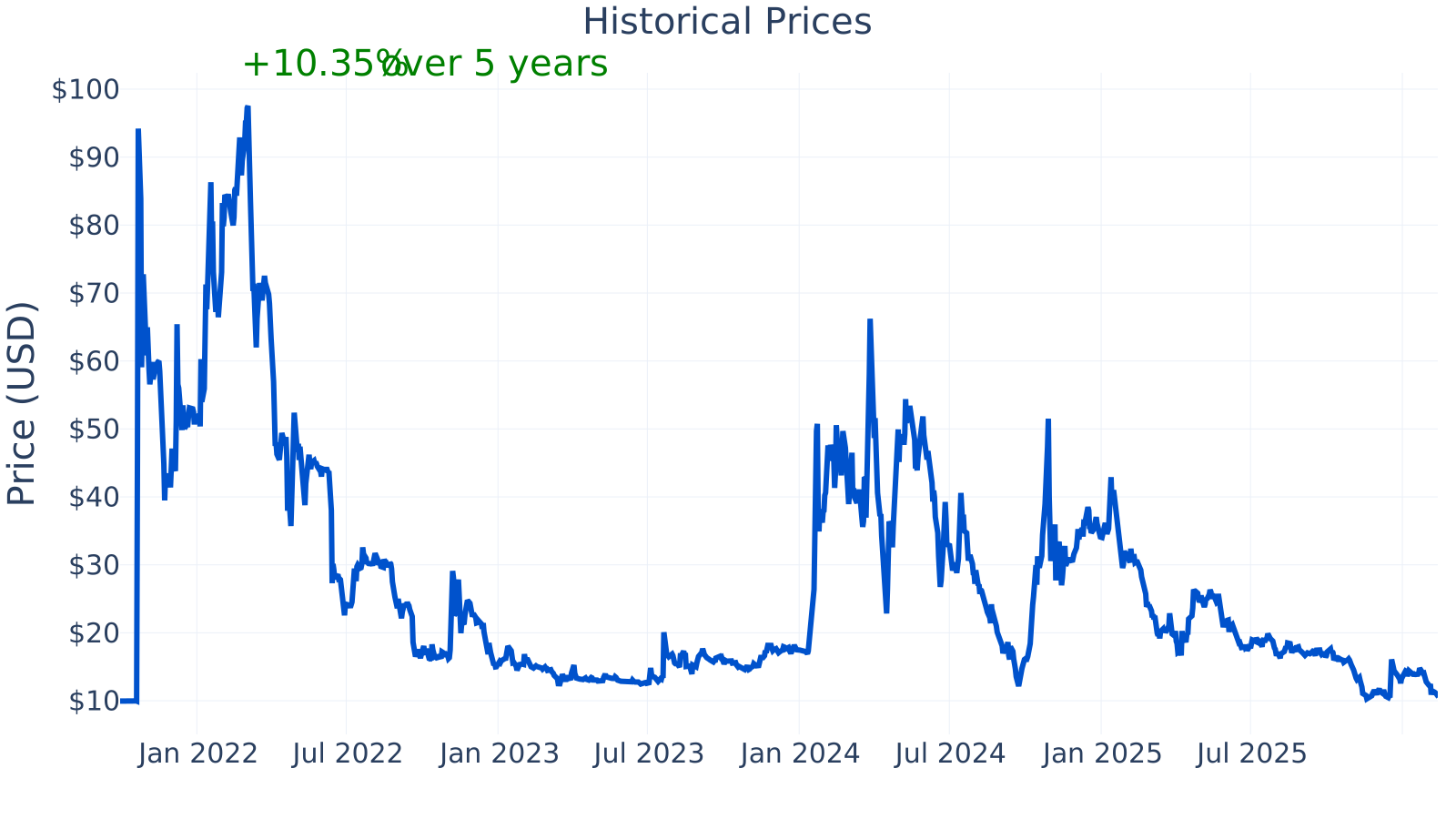
DJT’s risk profile is elevated for long-term, fundamentals-driven analysis because the company currently shows limited revenue, significant losses, and negative cash generation in the periods presented. In addition, the stock has shown very large price swings, and the latest beta suggests substantially higher volatility than the overall market.
Debt-to-equity is shown around 41.9% at the latest point, compared with an industry median near 10.2%. This indicates higher leverage than many peers in the same broad category, which can matter more when cash flow is negative. (Some earlier periods show negative values, which can occur when accounting equity is negative or fluctuates; that typically reflects balance-sheet complexity and can make simple ratio comparisons less straightforward.)
Profit margins have been deeply negative in multiple periods shown (for example, around -39% at the latest point), while the industry median is positive (about 12.1%). Some earlier extreme readings can happen when revenue is very small and one-time items or accounting effects dominate results, but the overall pattern still indicates that the business has not yet demonstrated stable profitability.
Competitive positioning is another central risk. In social media and digital advertising, the largest platforms benefit from network effects (users attracting more users), strong data/advertiser tools, and large budgets for product development and moderation. DJT is not the category leader by scale relative to major social platforms.
Key competitors and alternatives include large social-media and content platforms (for example, major global social networks and short-form video platforms) and other smaller or niche social networks. Compared with the largest players, DJT appears to operate at much smaller scale based on revenue and operating footprint described in filings. Without clear evidence of a durable advantage (such as a uniquely defensible network effect, materially superior monetization, or proprietary distribution), competition remains a major constraint.
There are also company-specific uncertainties that commonly appear in risk disclosures for early-stage platforms, including execution risk (building features reliably), reputation and brand concentration risk, platform policy and advertiser demand risk, and regulatory/legal exposure that can affect online media businesses. The company’s own SEC risk-factor sections are important reading for a fuller picture.
Valuation
Traditional valuation tools can be hard to apply when a company has net losses or highly volatile earnings. That is reflected here: DJT’s P/E ratio is often not meaningful or not shown over much of the timeline, while the industry median P/E remains in a more typical range (roughly in the teens to 30s across the periods displayed, and around 18.9 in the latest table).
With limited revenue (only a few million dollars in the most recent full year shown in the income flow) and significant losses, the stock price tends to reflect expectations about future growth and monetization rather than current earnings power. When that is the case, valuation can change quickly with shifts in sentiment, user metrics, monetization progress, and financing conditions.
Conclusion
Trump Media & Technology Group Corp is an early-stage digital media and social platform company whose recent financial picture shows small revenue relative to expenses, negative margins, and negative free cash flow. The industry is large, but competition is intense and tends to favor scaled platforms with strong network effects and proven advertising ecosystems.
From a long-term, fundamentals-focused perspective, the key questions are whether the company can (1) grow and retain an engaged user base, (2) translate that engagement into consistent advertising or other revenue streams, and (3) narrow losses toward a sustainable financial model without relying heavily on external funding. The available metrics and trends presented here indicate that these outcomes have not yet been demonstrated in a stable way.
Sources:
- SEC EDGAR — Trump Media & Technology Group Corp filings (Form 10-K, 10-Q, 8-K)
- Trump Media & Technology Group Corp — Investor Relations materials and press releases (as hosted by the company)
- Wikipedia — “Trump Media & Technology Group” (basic background; non-financial context)
This article is for informational purposes only and does not constitute financial advice. Some content is AI-generated. See Disclaimer