Stock Analysis · The Wendys Co (WEN)
Overview
The Wendy’s Company (WEN) is a quick-service restaurant (fast-food) brand best known for hamburgers and chicken sandwiches, with a large portion of its restaurants operated by franchisees. In a franchise-heavy model, the company typically earns money not only from restaurants it operates directly, but also from fees and royalties paid by franchisees who run Wendy’s locations under the brand.
In broad terms, Wendy’s business combines (1) brand management and marketing, (2) franchise support and restaurant standards, and (3) a smaller set of company-operated restaurants. This structure can produce steadier, fee-based income from franchising, while still keeping exposure to day-to-day restaurant operations where the company runs its own locations.
Main sources of revenue generally include (exact mix can vary by year):
- Sales at company-operated restaurants
- Franchise royalties and fees (typically based on a percentage of franchisee sales plus certain fees)
- Rental income (in cases where the company controls a site and leases it to a franchisee)
Across 2021–2024, total revenue increased from about $1.90B to about $2.25B. Over the same period, operating income stayed in a relatively tight band (roughly $350M–$403M), while interest expense remained meaningful (about $109M–$124M each year), showing that financing costs are an ongoing factor in overall profitability.
Key Figures
| Metric | Value | Industry ⓘ |
|---|---|---|
| Date | Feb 17, 2026 | |
| Context | ||
| Sector | Consumer Cyclical | |
| Industry | Restaurants | |
| Market Cap ⓘ | $1.42B | |
| Beta ⓘ | 0.38 | |
| Fundamental | ||
| P/E Ratio ⓘ | 8.80 | 27.62 |
| Profit Margin ⓘ | 7.58% | 7.88% |
| Revenue Growth ⓘ | -5.50% | 7.40% |
| Debt to Equity ⓘ | 3531.19% | 59.83% |
| PEG ⓘ | 0.85 | |
| Free Cash Flow ⓘ | $237.82M | |
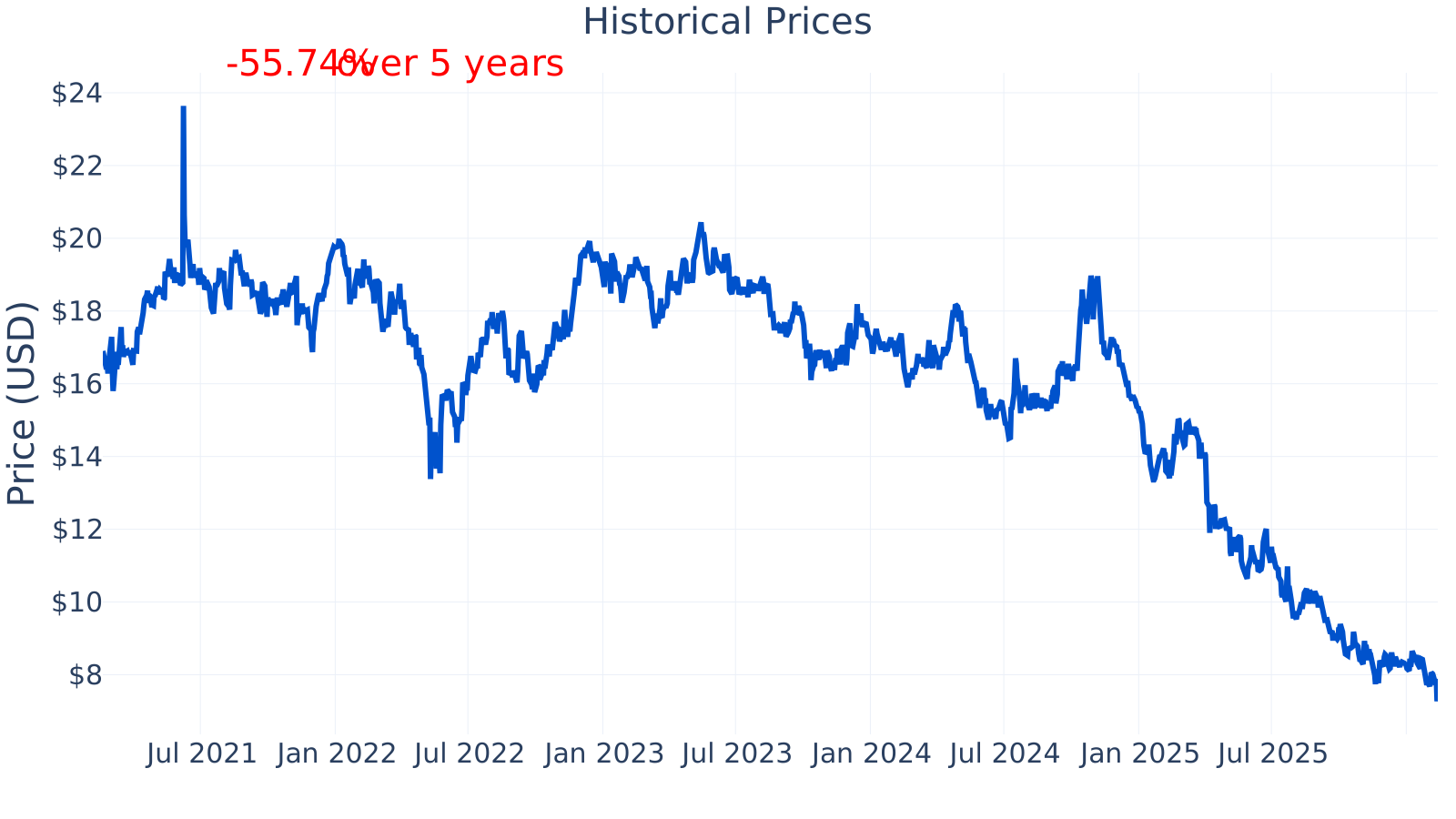
At the latest point shown, Wendy’s market capitalization is about $1.42B and its beta is about 0.38 (historically less volatile than the broader market). The company’s P/E ratio is 8.8, below the industry median of 27.6. Profit margin is about 7.6%, close to the industry median near 7.9%. The latest year-over-year revenue growth shown is -5.5% versus an industry median of +7.4%. Trailing twelve-month free cash flow is about $238M. A major outlier is leverage: debt-to-equity is about 3,531%, far above the industry median near 60%, which can materially shape risk and equity valuation.
Growth (Low to Medium)
Quick-service restaurants are a mature industry in the U.S., typically characterized by intense competition, frequent promotions, and steady (but not explosive) long-term demand. Over time, growth often comes from a mix of menu innovation, brand marketing, pricing power, improved restaurant-level execution, and unit expansion (especially through franchising, which can be less capital-intensive than building and operating company-owned stores).
The year-over-year revenue growth pattern shown is uneven: strong growth in parts of 2021–2022, followed by a clear slowdown through 2023–2024, and then negative readings in 2025 (as displayed). This type of deceleration can happen in mature restaurant categories where traffic is sensitive to consumer budgets, and where price increases eventually become harder to sustain without affecting volumes.
Free cash flow (money left after operating costs and capital spending) appears positive across the period shown, ranging from roughly $201M (2022) up to roughly $322.9M (2021), with about $246.0M shown for 2025. Consistent positive free cash flow can support reinvestment in the brand (marketing, technology, restaurant upgrades) and shareholder returns, but its stability matters—especially when financing costs are significant.
Potential catalysts in a franchise-led restaurant model typically include improved same-restaurant sales (sales at existing locations), net new restaurant openings (often led by franchisees), better digital and loyalty engagement, and productivity improvements in restaurant operations. The practical impact of these catalysts shows up in sustained revenue growth and stable-to-improving margins over multiple quarters.
Risks (High)
This article is for informational purposes only and does not constitute financial advice. Some content is AI-generated. See Disclaimer


