Stock Analysis · Climb Global Solutions (CLMB)
Overview
Climb Global Solutions (CLMB) is a technology distributor. In plain terms, it helps software and IT vendors reach business customers by working with a network of resellers and service providers. Climb’s role is often described as “value-added distribution”: beyond simply moving products, it can support partners with services like enablement, technical support, and go-to-market assistance, depending on the vendor and offering.
Its revenue is primarily generated from reselling third-party technology products and services (often software, cloud-related offerings, and other IT solutions) through a channel model. Like many distributors, a large share of reported revenue typically comes from product pass-through (the sale price of what it resells), while profitability depends on the margin it earns and on operating discipline.
A simple way to think about the business model is:
- Revenue base: sales of third-party software and IT solutions via channel partners (the largest component)
- Profit drivers: gross margin on what it distributes + the company’s ability to keep operating costs (like sales and administration) under control
From the company’s income statement pattern (high cost of revenue relative to revenue), Climb’s economics resemble a classic distribution model: large revenue numbers, relatively thin net margins, and an emphasis on scale, partner relationships, and efficient operations.
Over recent years, total revenue increased from about $282.6M (2021) to about $652.5M (2025). Over the same period, net income rose from about $9.2M to about $21.3M, showing that profits expanded alongside the business, even as operating expenses also grew with scale.
Key Figures
| Metric | Value | Industry ⓘ |
|---|---|---|
| Date | Mar 23, 2026 | |
| Context | ||
| Sector | Technology | |
| Industry | Electronics & Computer Distribution | |
| Market Cap ⓘ | $1.45B | |
| Beta ⓘ | 1.13 | |
| Fundamental | ||
| P/E Ratio ⓘ | 67.72 | 16.40 |
| Profit Margin ⓘ | 3.27% | 1.88% |
| Revenue Growth ⓘ | 19.80% | 10.65% |
| Debt to Equity ⓘ | 2.93% | 50.71% |
| PEG ⓘ | 1.23 | |
| Free Cash Flow ⓘ | $14.61M | |
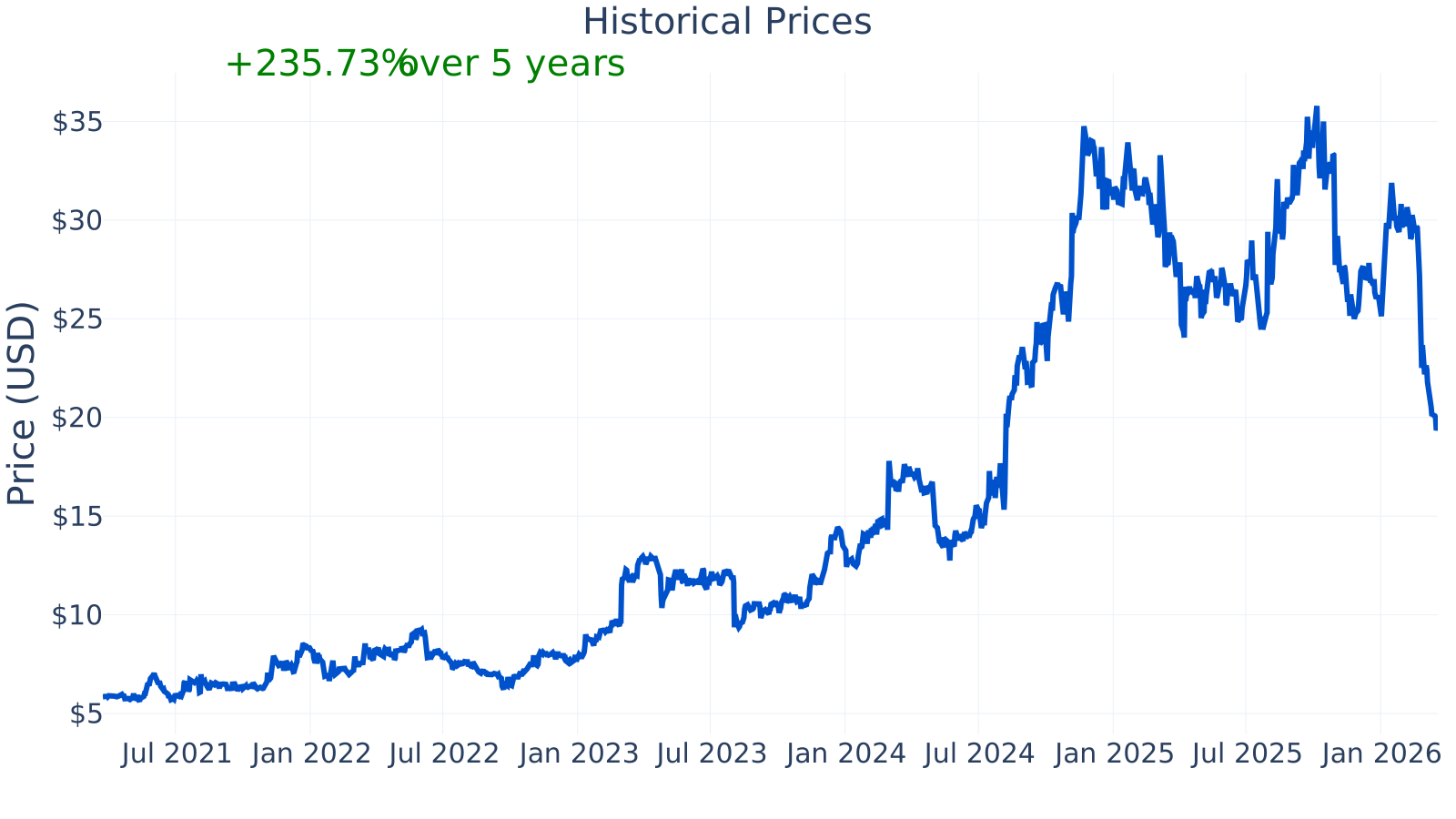
Climb Global Solutions’ market capitalization is about $1.45B, placing it in the smaller-public-company range. The stock’s beta of ~1.13 suggests it has historically moved somewhat more than the overall market (though beta can change over time).
On profitability, the latest profit margin is ~3.27%, which is higher than the industry median shown (~1.88%). For a distributor, low single-digit net margins are common, so being above the displayed industry midpoint can be meaningful if it proves durable.
Growth has been notable: the latest year-over-year revenue growth is ~19.8% versus an industry median of ~10.65%. Debt looks low, with debt-to-equity of ~2.93% versus an industry median of ~50.71%. Free cash flow (trailing twelve months) is about $14.6M. Finally, the current P/E ratio is ~67.7, well above the industry median shown (~16.4), which matters when discussing valuation expectations.
Growth (medium)
Climb operates in technology distribution, which is tied to long-run IT spending trends such as cloud adoption, cybersecurity, and ongoing software modernization. While distribution is not always a “hyper-growth” business by itself, it can grow steadily when (1) vendors add new offerings that gain adoption, (2) channel partners expand, and (3) the distributor increases its share of wallet with existing partners and vendors.
Revenue growth has been uneven quarter-to-quarter (including at least one period of contraction), but the more recent quarters show strong positive growth rates. This pattern is consistent with a business that can accelerate when product demand is strong, when it broadens its portfolio, or when acquisitions contribute—while still being exposed to the ups and downs of IT purchasing cycles.
Free cash flow has fluctuated meaningfully across the periods shown, ranging from about $5.4M (2022) to about $48.4M (2021), with about $23.1M (2025) on the chart and $14.6M as the latest trailing figure in the table. For long-term monitoring, this variability is important: in distribution businesses, cash flow can swing due to working capital needs (inventory and receivables) even when reported earnings look stable.
Potential catalysts generally come from (a) adding or expanding vendor relationships, (b) scaling higher-margin services alongside distribution, and (c) acquisition-led expansion. Whether these translate into sustained results typically shows up in gross margin stability, operating expense control, and consistent cash generation over multiple years.
Risks (medium)
This article is for informational purposes only and does not constitute financial advice. Some content is AI-generated. See Disclaimer