Stock Analysis · Warner Music Group (WMG)
Overview
Warner Music Group (WMG) is a global music company that works with recording artists and songwriters. Its activities generally fall into two complementary areas: (1) recorded music, which covers discovering and developing artists, producing and marketing music, and collecting money when that music is streamed, downloaded, bought, or used; and (2) music publishing, which represents songwriters and owns/controls rights to musical compositions, collecting royalties when songs are streamed, performed publicly, broadcast, synchronized with video (film/TV/ads/games), or otherwise licensed.
In simple terms, WMG earns money when people listen to music on streaming services, when music is sold or licensed, and when WMG-managed songs are used in media or performed.
Main revenue sources (largest to smaller, based on how major music groups typically report and describe their businesses in annual filings):
- Streaming and other digital consumption (paid subscriptions and ad-supported streaming)
- Music publishing royalties and licenses (the underlying songs/compositions)
- Physical sales (for example, vinyl and CDs)
- Licensing/synchronization and other artist-related income (music used in film/TV/ads/games and other uses)
The company’s cost structure is largely driven by royalties and revenue share paid to artists and songwriters, plus operating expenses such as marketing and administration. Over the past several fiscal years, total revenue has increased, while operating income and net income have fluctuated, showing that profitability can move around even when the top line trends upward.
Across the periods shown, total revenue rises from about $5.3B (FY2021) to about $6.7B (FY2025). Costs tied to generating revenue (often driven by royalties) also rise, and operating income does not increase in a straight line (roughly $578M → $865M → $750M → $762M → $652M). This pattern highlights an important feature of the music business: revenue growth is meaningful, but margins can be influenced by royalty rates, product mix, and spending levels.
Key Figures
| Metric | Value | Industry ⓘ |
|---|---|---|
| Date | Feb 07, 2026 | |
| Context | ||
| Sector | Communication Services | |
| Industry | Entertainment | |
| Market Cap ⓘ | $15.18B | |
| Beta ⓘ | 1.24 | |
| Fundamental | ||
| P/E Ratio ⓘ | 50.96 | 50.96 |
| Profit Margin ⓘ | 5.44% | 4.93% |
| Revenue Growth ⓘ | 14.60% | 5.20% |
| Debt to Equity ⓘ | 32.64% | 80.15% |
| PEG ⓘ | 0.78 | |
| Free Cash Flow ⓘ | $572.00M | |
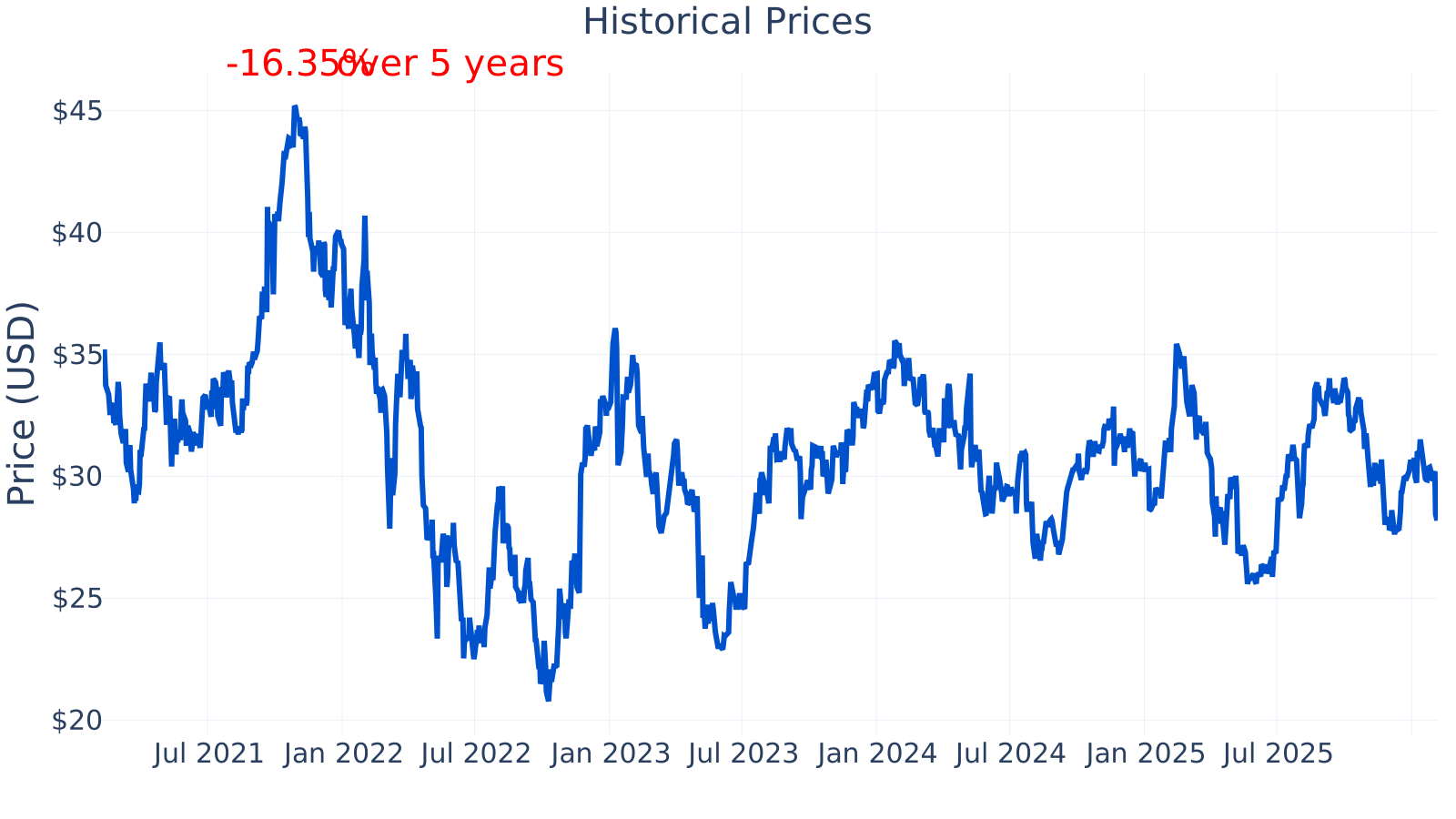
WMG’s market capitalization is about $15.2B. The stock’s beta (~1.24) indicates it has tended to move somewhat more than the broader market. The P/E ratio (~51.0) is in line with the industry median shown. Recent profit margin (~5.44%) is slightly above the industry median (~4.93%). Year-over-year revenue growth (~14.6%) is notably above the industry median (~5.2%) in the latest snapshot. Debt-to-equity (~32.6%) is below the industry median (~80.1%), and trailing twelve-month free cash flow is about $572M.
Growth (Medium)
The recorded music and publishing businesses are closely tied to the shift toward streaming and the long-run global growth in paid subscriptions. For large rightsholders, streaming can support a more recurring revenue profile than one-time album purchases, although pricing, platform terms, and consumer trends still matter. Music publishing can also benefit from a broad set of uses (streaming, public performance, and licensing into video and social formats).
WMG’s strategy (as described in company filings) generally centers on: expanding and monetizing its catalog, investing in artist development, growing publishing, and improving monetization across digital platforms and licensing channels. A potential long-term catalyst for the industry is continued growth in paid music subscribers globally and more use-cases for music in short-form video, gaming, and other digital media (with monetization dependent on platform agreements and enforcement of rights).
Year-over-year revenue growth has been uneven across quarters, including some negative periods, but the most recent points shown rebound to roughly ~14.6% and ~10.4%. This “not perfectly smooth” pattern is common in media businesses where timing of releases, licensing, and comparisons to prior periods can affect growth rates.
Free cash flow over the trailing twelve months rises meaningfully from about $52M (2022) to roughly $579M (2023), and remains in the $500M–$600M+ range through the latest period shown (about $617M at the 2025 point, and $572M in the latest metric snapshot). For long-term analysis, steady free cash flow can matter because it helps fund debt service, reinvestment, and shareholder returns, but it can still vary year to year.
Risks (Medium)
This article is for informational purposes only and does not constitute financial advice. Some content is AI-generated. See Disclaimer