Stock Analysis · Warner Bros Discovery Inc (WBD)
Overview
Warner Bros Discovery Inc (WBD) is a global media and entertainment company. It produces and distributes movies and TV series, operates cable networks, and runs direct-to-consumer streaming services. The company’s assets include well-known content libraries and franchises, along with global brands across entertainment, news, and sports programming.
In broad terms, WBD turns content into revenue through three main routes: (1) licensing and distribution (selling or licensing rights to movies/series), (2) advertising (selling ad time across TV networks and digital properties), and (3) subscriptions (charging monthly fees for streaming). In its SEC filings, the company reports results through operating segments that generally map to these activities: Studios, Networks, and Direct-to-Consumer.
Main revenue sources (largest to smaller, described at a high level):
- Advertising (primarily from TV networks and some digital/streaming ad tiers)
- Distribution and content licensing (carriage fees from pay-TV distributors and licensing of content to third parties)
- Streaming subscriptions (direct-to-consumer services)
- Theatrical and home entertainment (box office and other consumer viewing formats)
The mix can shift year to year depending on advertising conditions, pay-TV subscriber trends, streaming subscriber levels, and the timing of big film/TV releases.
Across the years shown, total revenue rises materially from 2021 to 2023 and then is lower in 2024. Over the same period, interest expense remains a meaningful recurring cost (in the billions), which highlights how important debt management and refinancing conditions can be for overall results. Net income is also volatile, including large reported losses in 2022–2024, showing that accounting earnings can swing significantly for this business.
Key Figures
| Metric | Value | Industry ⓘ |
|---|---|---|
| Date | Feb 24, 2026 | |
| Context | ||
| Sector | Communication Services | |
| Industry | Entertainment | |
| Market Cap ⓘ | $71.71B | |
| Beta ⓘ | 1.62 | |
| Fundamental | ||
| P/E Ratio ⓘ | 152.21 | 53.25 |
| Profit Margin ⓘ | 1.28% | 4.43% |
| Revenue Growth ⓘ | -6.00% | 5.50% |
| Debt to Equity ⓘ | 93.69% | 83.94% |
| PEG ⓘ | 2.79 | |
| Free Cash Flow ⓘ | $4.13B | |
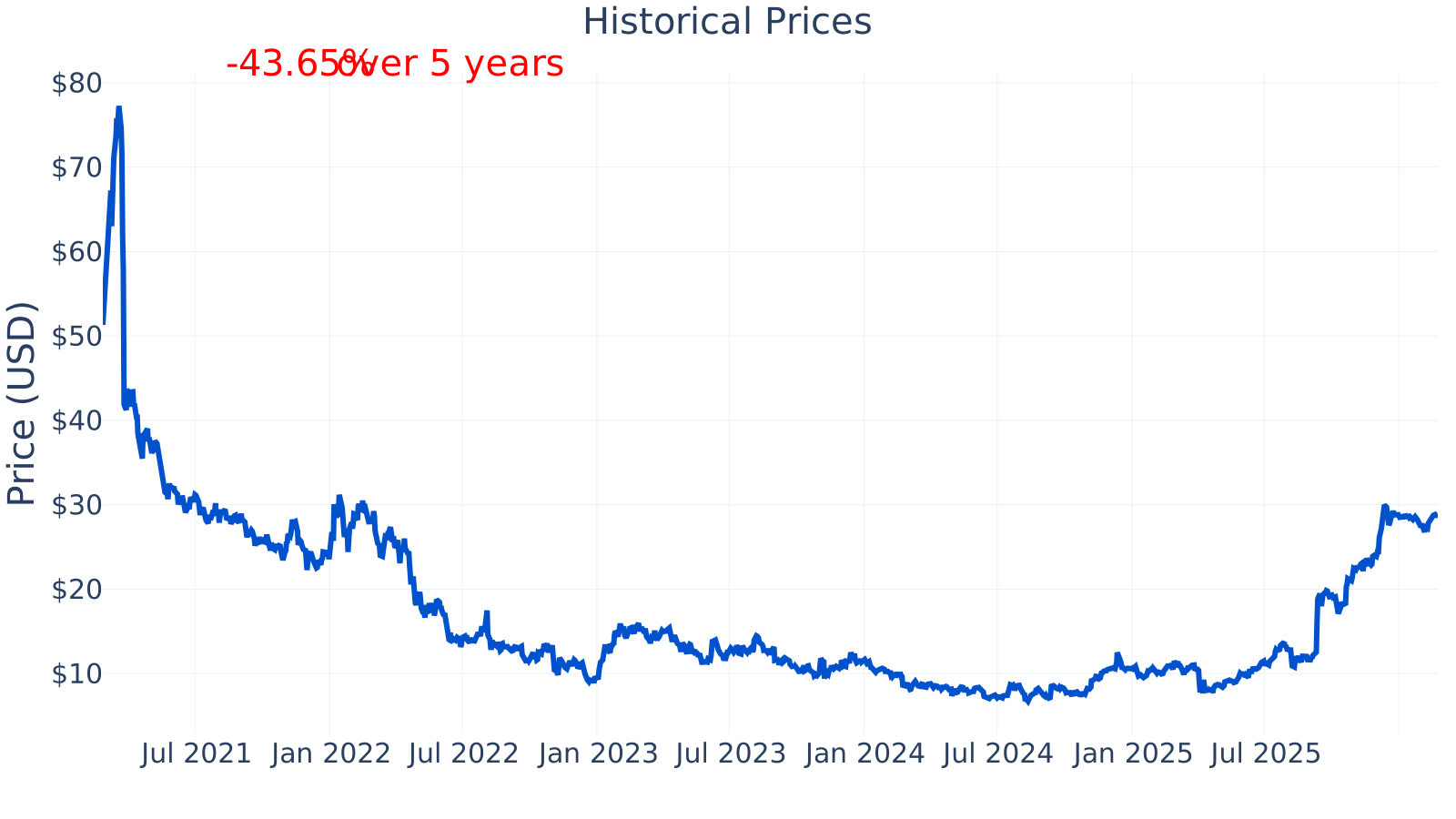
WBD’s market capitalization is about $71.7B. The stock’s beta of ~1.62 suggests it has tended to move more than the overall market, which can matter for people who prefer steadier price behavior. Profit margin is about 1.28% versus an industry median near 4.43%, indicating thinner recent profitability than many peers. Year-over-year revenue growth is about -6% versus an industry median around +5.5%, pointing to recent top-line pressure. Debt-to-equity is about 93.7% (industry median ~83.9%), reflecting a comparatively leveraged balance sheet. On valuation metrics, the reported P/E ~152 is well above the industry median (~53), which can happen when earnings are small relative to the equity value or when profitability is recovering from weak levels. Trailing twelve-month free cash flow is shown at roughly $4.13B, a key figure for a capital-intensive content business.
Growth (Medium)
The entertainment industry is experiencing a long-running shift from traditional pay-TV bundles toward streaming and on-demand viewing. That shift creates both opportunity and disruption: streaming can expand global reach and enable new ad formats, while legacy TV networks can face structural pressure as audiences and distributors migrate.
WBD’s strategy generally aims to use its large content library and recognized brands to compete in streaming while continuing to monetize traditional networks and studio output. In practice, future growth tends to depend on execution details such as controlling content spending, maintaining a compelling slate of releases, improving streaming unit economics, and keeping advertising inventory valuable across both linear TV and digital platforms.
The year-over-year revenue growth trend is uneven. After very high growth rates in 2022–2023 (which can be influenced by major business changes and comparisons), more recent periods show flat-to-declining revenue, including several quarters around mid-single-digit declines and a recent reading near -6%. This pattern suggests the company has recently been managing through industry headwinds and/or portfolio and timing effects rather than delivering steady, broad-based expansion.
Free cash flow is notable because it reflects cash left after operating needs and investment spending. The chart shows a peak around $7.48B (2024-03-31) and then a step down to about $4.34B (2025-03-31). Even with volatility, sustained multi-billion-dollar free cash flow can be important for debt reduction, interest costs, and funding future content investment—areas that strongly influence long-term flexibility for media companies.
Potential catalysts for stronger growth (described structurally, not as forecasts) include: improved streaming profitability, successful content releases that travel well globally, better advertising demand, and progress on reducing leverage and interest burden.
Risks (High)
This article is for informational purposes only and does not constitute financial advice. Some content is AI-generated. See Disclaimer