Stock Analysis · Vontier Corp (VNT)
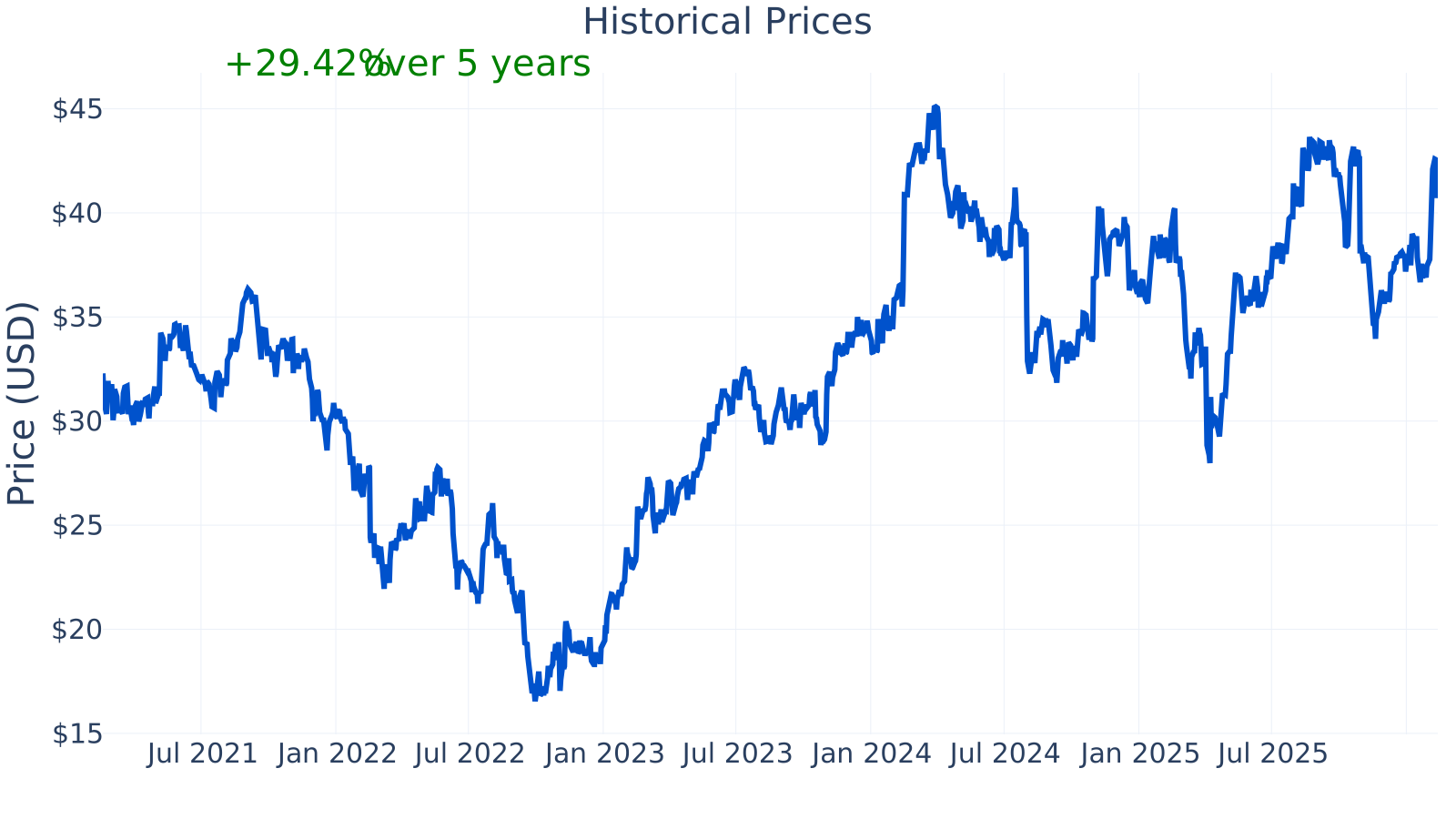
Overview
Vontier Corp is an industrial technology company focused on products and software used to move, measure, and manage energy and other critical fluids. In plain terms, it sells equipment and digital tools that help organizations handle fuel and other liquids more efficiently, with an increasing emphasis on automation, connected devices, and data-driven workflows.
From a business-model perspective, Vontier tends to combine:
- Hardware (equipment installed in the field, often with long operating lives)
- Software and services (tools and support that can create more recurring revenue over time)
- Aftermarket and maintenance activity (ongoing needs tied to an installed base of equipment)
Public filings describe revenue by operating segments; the exact segment mix can shift over time as the company reshapes its portfolio. A common way to think about the revenue streams is:
- Mobility technologies tied to fuel and convenience retail infrastructure and related workflow solutions
- Diagnostics and repair technologies supporting vehicle service and maintenance ecosystems
Over the last few years, the company’s reported annual revenue has been around the $3.0–$3.2 billion range, indicating a fairly stable scale rather than rapid expansion.
Looking at how revenue turns into profit in recent years, operating income has been relatively steady (roughly the mid-$500M range), while spending on R&D has gradually increased versus earlier years. Interest expense is present and meaningful, which fits with a business that uses debt financing.
Key Figures
| Metric | Value | Industry ⓘ |
|---|---|---|
| Date | Feb 16, 2026 | |
| Context | ||
| Sector | Technology | |
| Industry | Scientific & Technical Instruments | |
| Market Cap ⓘ | $6.06B | |
| Beta ⓘ | 1.28 | |
| Fundamental | ||
| P/E Ratio ⓘ | 15.14 | 37.73 |
| Profit Margin ⓘ | 13.20% | 12.51% |
| Revenue Growth ⓘ | 4.10% | 7.45% |
| Debt to Equity ⓘ | 171.64% | 49.68% |
| PEG ⓘ | 1.27 | |
| Free Cash Flow ⓘ | $441.10M | |
Vontier’s market capitalization is about $6.1B. The stock’s beta of ~1.29 suggests it has tended to move more than the overall market. On valuation, the current P/E ratio is ~15.1, which is below the industry median ~37.7 in its peer set. Profitability, as measured by profit margin (~13.2%), is slightly above the industry median (~12.5%). Recent year-over-year revenue growth (~4.1%) is below the industry median (~7.5%). Balance-sheet leverage stands out: debt-to-equity is ~172%, higher than the industry median (~50%). Trailing twelve-month free cash flow is about $441M, a meaningful cash generation level relative to the company’s size.
Growth (Medium)
Vontier operates in areas influenced by long-term themes such as automation of physical infrastructure, connected devices, and compliance-driven upgrades. Many customers (such as fuel retailers, fleets, and service/repair ecosystems) tend to modernize over time, which can support steady demand even if year-to-year growth is not smooth.
That said, Vontier’s recent revenue pattern has not been consistently strong. The year-over-year growth trend has included multiple negative quarters, followed by periods of recovery.
The chart shows revenue growth moving from strong post-pandemic periods to several quarters of contraction, then returning to modest growth most recently. This pattern can occur when end markets normalize, when large customers delay projects, or when equipment cycles and comparisons become tougher.
A key support for long-term business durability is cash generation. Free cash flow matters because it can fund product development, acquisitions, debt reduction, and shareholder returns.
Free cash flow has been positive across the period shown, with a notable drop after 2021 and then a gradual improvement into the most recent trailing period (about $441M). This suggests the company has maintained an ability to convert earnings into cash, even when growth has been uneven.
Potential catalysts described in filings typically include portfolio changes (acquisitions, divestitures), new product rollouts, and increased software and services penetration. These are strategic levers that can improve the quality of revenue (more recurring and higher margin), but they also take time and execution to show up clearly in reported results.
Risks (Medium-High)
This article is for informational purposes only and does not constitute financial advice. Some content is AI-generated. See Disclaimer


