Stock Analysis · Visteon Corp (VC)
Overview
Visteon Corp is an automotive technology supplier. In simple terms, it designs and sells the “electronics and software layer” inside vehicles—especially the digital displays and computing systems that power modern dashboards. Its products are primarily sold to automakers (OEMs), meaning revenue is closely tied to global vehicle production and new-model launches.
Visteon’s focus has increasingly centered on cockpit electronics, where multiple screens and functions are integrated and controlled through high-performance computing. This area matters because vehicles are adding more digital features (bigger displays, more connectivity, richer user interfaces), and automakers increasingly source these systems from specialized suppliers rather than building everything in-house.
Main revenue sources (as described in company reporting) generally fall into these buckets:
- Digital cockpit / display systems (instrument clusters, infotainment displays, and related electronics)
- Domain controllers / cockpit computing (centralized computers that run multiple cockpit functions)
- Software and services (embedded software supporting the cockpit platform, typically tied to hardware programs)
Percentages by product line can vary by year and are best read directly from the most recent annual report segment disclosures (Visteon commonly presents its business around “Cockpit Electronics” rather than many separate segments).
Across the years shown, revenue expanded from about $2.77B (2021) to a peak near $3.95B (2023), then eased to about $3.77B (2025). Operating income increased over the period (from about $91M in 2021 to about $342M in 2025), while spending on research and development remained substantial (roughly $191M–$220M per year), which is typical for a supplier competing on technology and platform capabilities.
Key Figures
| Metric | Value | Industry ⓘ |
|---|---|---|
| Date | Apr 27, 2026 | |
| Context | ||
| Sector | Consumer Cyclical | |
| Industry | Auto Parts | |
| Market Cap ⓘ | $3.03B | |
| Beta ⓘ | 1.16 | |
| Fundamental | ||
| P/E Ratio ⓘ | 19.01 | 24.61 |
| Profit Margin ⓘ | 4.36% | 3.56% |
| Revenue Growth ⓘ | 2.10% | 5.40% |
| Debt to Equity ⓘ | 8.55% | 76.35% |
| PEG ⓘ | 1.01 | |
| Free Cash Flow ⓘ | $305.00M | |
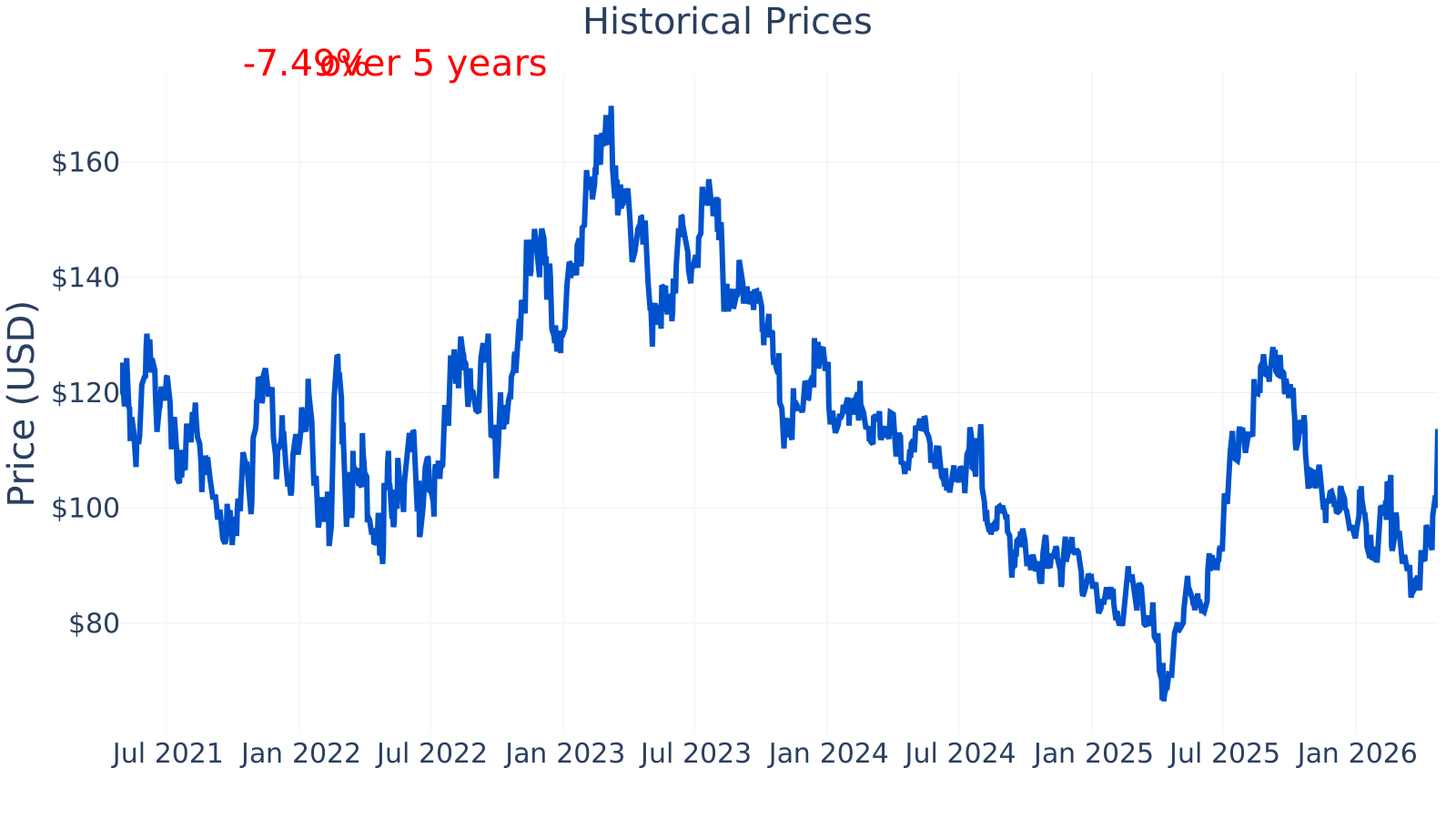
Visteon’s market capitalization is about $3.03B, and the stock’s beta of about 1.16 indicates it has tended to move somewhat more than the broader market. The latest P/E ratio is ~19.0, below the industry median of ~24.6 in the Auto Parts peer set provided. Profit margin is about 4.36% versus an industry median near 3.57%, while the most recent year-over-year revenue growth is about 2.1%, below the industry median of about 5.4%. Debt-to-equity is about 8.55%, much lower than the industry median near 76.35%, and trailing twelve-month free cash flow is approximately $305M. The PEG ratio shown is about 1.01, a metric often used to relate valuation to growth assumptions (but it can be sensitive to how growth is estimated).
Growth (Medium)
Visteon operates in a part of the auto supply chain that is being reshaped by the “software-defined vehicle” trend: cars are adopting larger screens, more computing power, and more integrated electronic architectures. Even when total vehicle unit growth is modest, the electronics content per vehicle can rise as automakers add features and move from multiple separate control units to more centralized computing approaches.
Strategically, Visteon’s emphasis on cockpit electronics and consolidated cockpit computing aligns with where automakers have been investing: fewer boxes, more software, more upgradable platforms, and a more “digital” in-cabin experience. If this transition continues, suppliers that can deliver reliable hardware plus an integrated software platform can remain important partners in new vehicle programs.
The year-over-year revenue growth pattern has been uneven. After very strong growth in parts of 2021–2022, results became more mixed, including multiple slightly negative quarters, with the most recent figure around 2.1%. This profile is consistent with an auto supplier exposed to production cycles and program timing (launch ramps, model transitions, and customer scheduling changes), even if the longer-term product theme remains intact.
Free cash flow improved meaningfully over time—from about -$47M (TTM, 2022) to roughly $305M (TTM, 2026). For long-term business durability, sustained positive free cash flow can matter because it supports investment in R&D, balance sheet flexibility, and resilience during downturns. The improvement suggests the company has recently been converting more of its operations into cash, though cash generation can still fluctuate in this industry due to working capital swings and customer production schedules.
Risks (High)
Visteon’s end market is cyclical. Demand depends heavily on automakers’ production volumes and consumer vehicle demand, which can fall during economic slowdowns. In addition, program awards in automotive are typically long-cycle and competitive; losing a major platform, delays in a customer launch, or cost/quality issues on a program can have multi-year impacts.
Competition is another key risk. Cockpit electronics and in-vehicle computing attract large, well-capitalized suppliers, and automakers also have bargaining power because they purchase at scale. Pricing pressure is common across auto supply chains, and suppliers often must deliver continuous cost reductions while simultaneously funding new technology development.
On balance sheet leverage, Visteon’s latest debt-to-equity is about 8.55%, which is far lower than the peer median (about 76.35%) shown in the same industry grouping. The longer trend displayed shows a sharp decline from much higher leverage levels earlier in the period to today’s low level. Lower leverage can reduce financial risk, but it does not remove operational risks tied to cyclicality and execution.
Profitability improved versus earlier years, with the most recent profit margin around 5.31%, above the industry median near 3.4% on the same comparison set. However, margins in auto supply can be sensitive to warranty costs, launch inefficiencies, customer pricing negotiations, and input cost volatility. Notably, the chart shows margins spiking well above typical levels in 2023–2024 before settling lower, which suggests investors may want to understand how much of that uplift was driven by recurring operating performance versus items that can vary by period (for example, program mix, timing effects, or tax-related impacts reflected in net income).
Competitive positioning depends on technology, scale, customer relationships, and the ability to execute launches. Visteon is a recognized player in cockpit electronics, but it competes with larger diversified suppliers and specialized electronics firms. Common competitor groups in this space include major global automotive suppliers with cockpit and infotainment offerings (often alongside ADAS and other vehicle electronics), as well as consumer-electronics-adjacent manufacturers that participate in displays and computing modules. Relative to larger peers, Visteon’s scale is smaller, which can be a disadvantage in pricing and capacity, but a narrower focus can also help concentrate investment on a specific product domain.
Valuation
The latest P/E ratio shown for Visteon is about 19.0, compared with an industry median around 24.6 in the peer set provided. Historically, the displayed P/E has moved substantially over time, ranging from very high levels earlier in the period to much lower single-digit levels in parts of 2024–2025, and then rising again to the low teens more recently. Large swings in P/E can happen when either the stock price changes quickly, earnings change quickly, or both.
In context, a valuation multiple below the peer median can reflect different factors: differing growth expectations (Visteon’s recent revenue growth is below the peer median), perceived cyclicality, customer concentration concerns, or uncertainty around the durability of margins. On the other hand, the company’s relatively low leverage and improved cash generation can be viewed as fundamentals that often support resilience. The PEG ratio shown (~1.01) is close to 1, which typically indicates the valuation is roughly in line with assumed growth rates, though this metric can shift materially depending on the growth inputs used.
Conclusion
Visteon is an automotive supplier positioned around the digitization of the vehicle cockpit, an area supported by long-term trends such as larger displays, more integrated in-vehicle computing, and increasing software content. Financially, recent years show improved cash generation and currently low balance sheet leverage compared with the industry median in the peer group provided.
At the same time, the company operates in a cyclical, highly competitive market where near-term revenue growth can be uneven, pricing pressure is common, and execution on launches and quality is critical. The current valuation metrics shown (including a P/E below the peer median) need to be interpreted alongside those business risks and the sustainability of margins through a full auto cycle.
Sources:
- SEC EDGAR — Visteon Corp filings (Form 10-K, Form 10-Q)
- Visteon Investor Relations — Annual Report materials and investor presentations (company-hosted)
- Wikipedia — “Visteon” (basic company background)
This article is for informational purposes only and does not constitute financial advice. Some content is AI-generated. See Disclaimer


