Stock Analysis · Vishay Intertechnology Inc (VSH)
Overview
Vishay Intertechnology Inc. is a manufacturer of electronic components used to control, power, and protect electrical signals in a wide range of products. In simple terms, Vishay supplies many of the “building blocks” that let electronics function reliably—components that appear in industrial equipment, cars, consumer devices, communications gear, and other systems.
Vishay’s business is typically described in two large product families:
- Semiconductors (for example, power diodes and MOSFETs used to convert and manage power)
- Passive components (for example, resistors, capacitors, and inductors used to shape and stabilize electrical signals)
These components are generally sold into multiple end markets, with demand influenced by overall electronics production cycles. In company filings, revenue is commonly broken down by product groups rather than a simple “subscription-like” model, so the most practical way to think about revenue sources is by these component categories (semiconductors and passive components) and their many applications.
Over recent years, the company’s revenue and gross profit have moved with the electronics cycle: total revenue rose from about $3.24B (2021) to $3.50B (2022), then declined to about $2.94B (2024) before increasing to about $3.07B (2025). Over the same period, operating income fell sharply (from hundreds of millions in 2021–2023 to much lower levels in 2024–2025), showing how profitability can compress when volumes weaken and costs don’t fall as quickly.
Key Figures
| Metric | Value | Industry ⓘ |
|---|---|---|
| Date | Feb 08, 2026 | |
| Context | ||
| Sector | Technology | |
| Industry | Semiconductors | |
| Market Cap ⓘ | $2.70B | |
| Beta ⓘ | 1.14 | |
| Fundamental | ||
| P/E Ratio ⓘ | N/A | 45.89 |
| Profit Margin ⓘ | -0.29% | 9.42% |
| Revenue Growth ⓘ | 12.10% | 12.95% |
| Debt to Equity ⓘ | 55.98% | 25.62% |
| PEG ⓘ | 0.75 | |
| Free Cash Flow ⓘ | -$88.98M | |
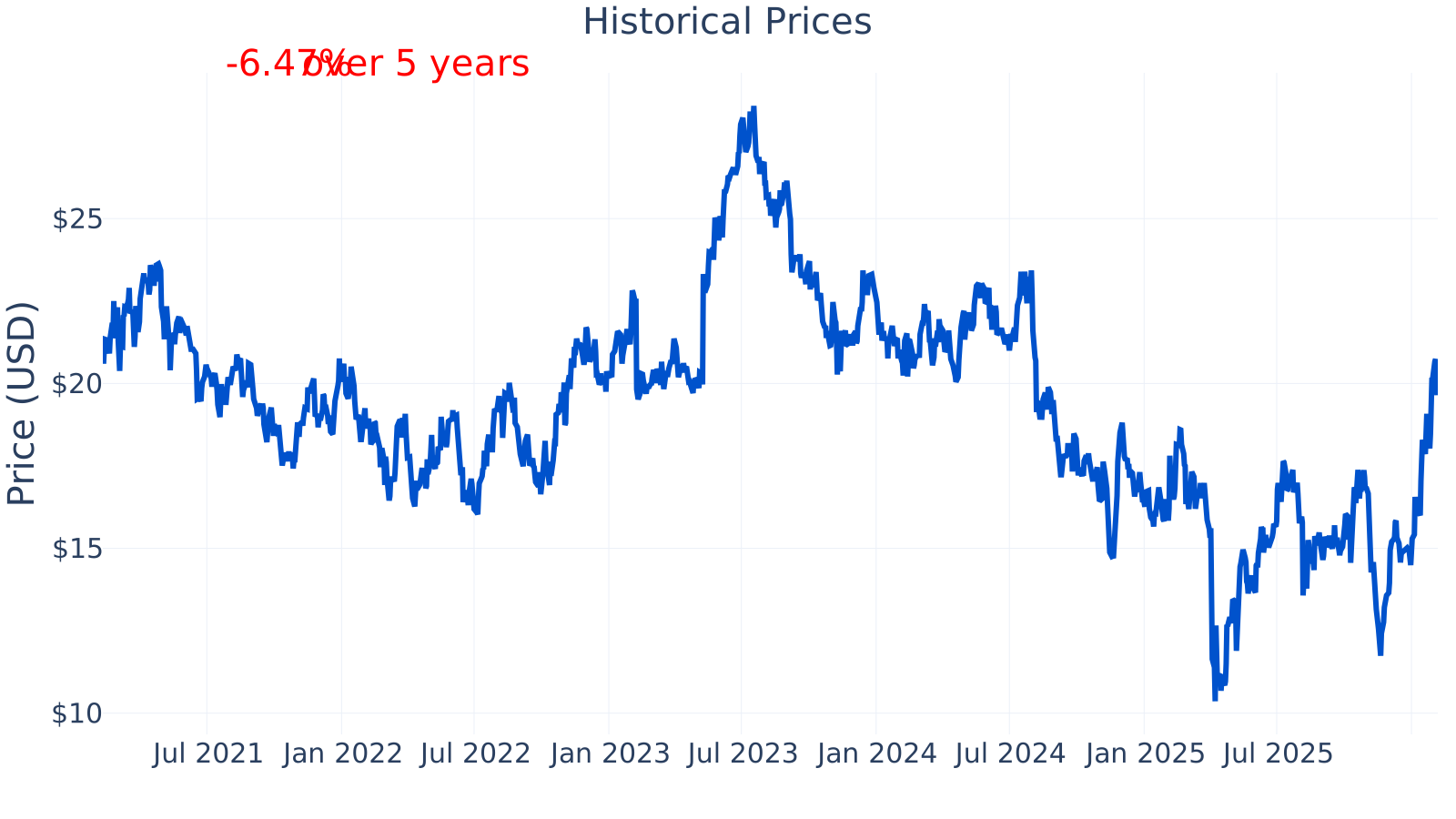
Vishay’s equity market value is about $2.70B, placing it in the small-to-mid range compared with many global semiconductor peers. The stock’s beta of ~1.14 indicates it has historically moved somewhat more than the overall market (though beta can change over time). The most recent profit margin is slightly negative (about -0.3%) versus an industry median around 9.4%, reflecting weaker profitability in the latest period. Year-over-year revenue growth is about 12.1%, close to the industry median (~13.0%), while free cash flow over the trailing twelve months is negative (about -$89.0M), indicating cash outflows after operating needs and capital spending.
Growth (Medium)
Vishay operates in the broader semiconductor and electronic components space, which is supported by long-term trends like electrification, energy efficiency requirements, automation in factories, and growing electronics content in vehicles. Many of these trends are structural, but the industry is also cyclical: customers often adjust inventories and slow orders during weaker periods, then rebuild later.
The revenue growth pattern shows this cyclicality clearly: very strong growth in 2021, slowing through 2022, negative growth across much of 2023–2024, and then a return to positive growth in 2025 (ending around +12% year-over-year). That rebound can be consistent with a recovery in demand or normalization after a downturn, but it does not remove the underlying cycle risk.
Free cash flow shifted from strongly positive levels (roughly $210M–$246M in 2021–2023) to negative in 2024–2025 (down to roughly -$219M at one point, and around -$89M most recently). For a manufacturing business, negative free cash flow can happen during downcycles if earnings weaken while the company continues investing, builds inventory, or experiences less favorable working-capital timing. For long-term evaluation, investors commonly watch whether cash generation improves as demand recovers and whether spending levels remain aligned with revenue.
Potential growth catalysts for a components supplier like Vishay are typically tied to end-market recovery (industrial, automotive, and broader electronics), stronger utilization of factories (which supports margins), and product-mix improvements (selling more higher-value components). The company’s filings also discuss ongoing efforts around manufacturing footprint and efficiency, which can matter because small changes in utilization and pricing can have an outsized effect on profitability.
Risks (High)
This article is for informational purposes only and does not constitute financial advice. Some content is AI-generated. See Disclaimer