Stock Analysis · Victoria's Secret & Co (VSCO)
Overview
Victoria’s Secret & Co (VSCO) is a specialty retailer focused on women’s intimate apparel, sleepwear, loungewear, activewear, and beauty products. The company sells primarily through its Victoria’s Secret and PINK brands, using a mix of physical stores and digital channels (e-commerce). Its business model is typical of apparel retail: design and merchandising decisions drive product demand, while sourcing, inventory management, and promotions heavily influence profitability.
From a revenue perspective, the company reports two main operating segments in its filings:
- Victoria’s Secret (largest segment): bras, panties, lingerie, sleep and lounge, beauty, and related categories sold through stores and online.
- PINK (smaller segment): bras, panties, loungewear, activewear, and campus-oriented apparel, sold through stores and online.
Within these segments, sales are generally generated through stores and direct (digital) channels. Specific percentage splits can vary by year and are detailed in the company’s annual report segment disclosures.
Over the last few fiscal years shown, total revenue moved from about $6.8B (FY2021) down to roughly $6.2–$6.3B (FY2024–FY2025), while profitability contracted sharply from $646M net income (FY2021) to $109M (FY2023), then partially recovered to $165M (FY2024). This highlights how sensitive results can be to product demand, promotions, and operating costs in apparel retail.
Key Figures
| Metric | Value | Industry ⓘ |
|---|---|---|
| Date | Feb 08, 2026 | |
| Context | ||
| Sector | Consumer Cyclical | |
| Industry | Apparel Retail | |
| Market Cap ⓘ | $5.01B | |
| Beta ⓘ | 2.29 | |
| Fundamental | ||
| P/E Ratio ⓘ | 29.31 | 17.99 |
| Profit Margin ⓘ | 2.66% | 8.42% |
| Revenue Growth ⓘ | 9.30% | 7.30% |
| Debt to Equity ⓘ | 487.90% | 104.73% |
| PEG ⓘ | N/A | |
| Free Cash Flow ⓘ | $309.00M | |
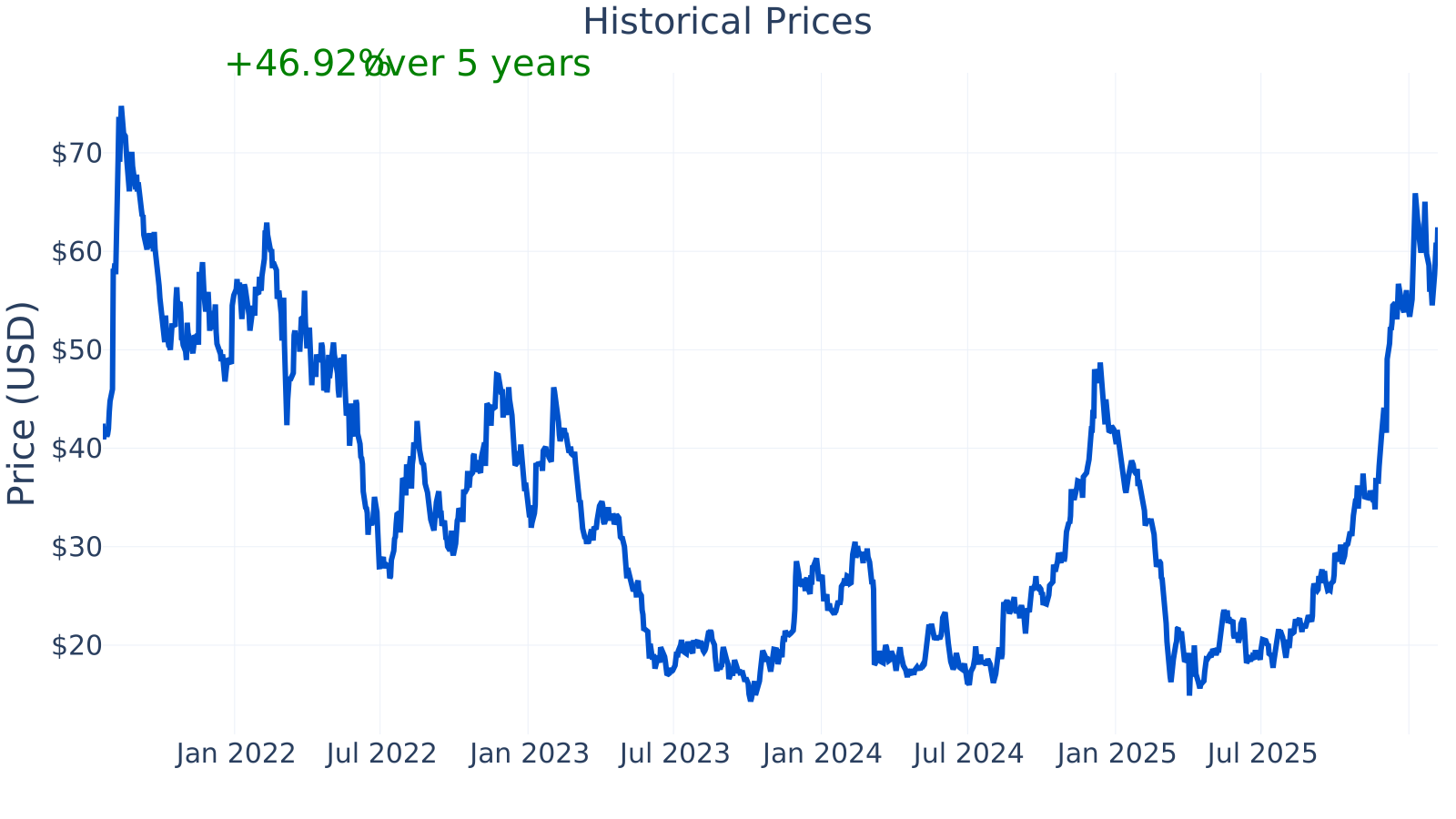
VSCO’s market capitalization is about $5.0B. The stock’s beta (~2.29) suggests it has historically been much more volatile than the broader market. On profitability, the company’s profit margin (~2.66%) is below the industry median (~8.42%), while its year-over-year revenue growth (~9.3%) is slightly above the industry median (~7.3%). Leverage stands out: debt-to-equity (~488%) is far above the industry median (~105%). Trailing twelve-month free cash flow is ~$309M, indicating the business has recently generated meaningful cash after operating needs and capital spending.
Growth (Medium)
Victoria’s Secret operates in the apparel retail and intimates categories, which tend to be mature and highly competitive rather than structurally “high-growth.” Demand is influenced by consumer spending, fashion cycles, and promotional intensity across the sector. Because of that, growth often comes from execution: product innovation, brand positioning, improving full-price selling, store productivity, and building digital sales—rather than from a rapidly expanding end market.
The year-over-year revenue trend shows a period of declines through 2022–2023, followed by stabilization and a return to growth in several more recent quarters (including a higher positive reading near the latest point shown). For a retailer, this kind of swing often reflects changes in traffic, conversion, merchandising success, and promotion levels.
Free cash flow fell from about $682M (FY2021) to $133M (FY2023), then improved to roughly $247M (FY2024). The latest trailing figure is about $309M. In practical terms, stronger free cash flow can give a retailer more flexibility for debt paydown, share repurchases (if authorized), and investments in stores, supply chain, and digital capabilities—though it can also vary significantly year to year with inventory and earnings.
Potential catalysts typically discussed in company materials for apparel retailers include: sustained improvement in merchandise acceptance, better inventory discipline (reducing markdowns), improved traffic trends, and operating cost control. For VSCO specifically, the ability to lift profitability closer to industry norms can be an important driver of long-term outcomes, since small changes in margins can materially change earnings for a company with multi-billion-dollar revenue.
Risks (High)
This article is for informational purposes only and does not constitute financial advice. Some content is AI-generated. See Disclaimer


