Stock Analysis · Viavi Solutions Inc (VIAV)
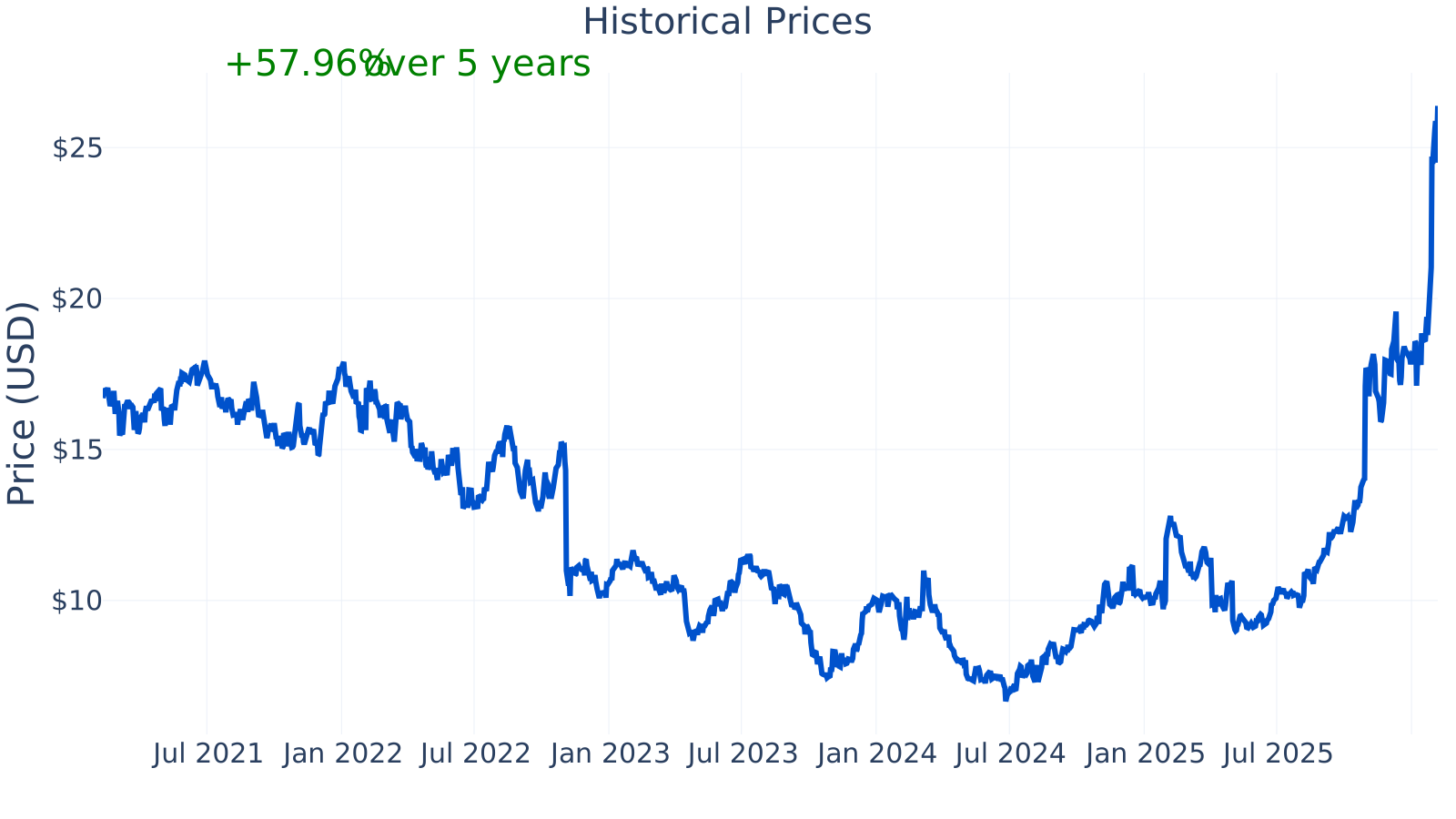
Overview
Viavi Solutions Inc (VIAV) is a technology company that builds instruments and software used to test, measure, and monitor communication networks and high-precision optical components. In simple terms, its tools help network operators, equipment makers, and other customers verify that fiber and wireless networks work as expected, and help manufacturers check performance and quality during production.
Its activities are typically described across two main areas: (1) Network Enablement (test and measurement solutions for telecom and related markets) and (2) Optical Security & Performance Products (specialized optical components, including security and anti-counterfeiting features). These product families are discussed in the company’s annual report filings, along with the main customer groups and end markets.
Public filings describe revenue by business segment; the exact segment split and percentages can change over time and by reporting period. A common high-level way to think about revenue sources is:
- Network test & measurement (telecom and network equipment ecosystem)
- Optical products (security/anti-counterfeiting features and performance optical components)
Profit structure snapshot (FY trend): Over the last several fiscal years, total revenue moved from about $1.20B (FY2021) to $1.08B (FY2025). Gross profit remained a large portion of revenue, while operating expenses (notably R&D and selling/administrative costs) stayed significant, which helps explain why net income has been inconsistent year to year.
From FY2021 to FY2025, revenue and gross profit fluctuated rather than rising steadily. Research and development spending stayed relatively stable in the low-$200M range each year, highlighting an ongoing commitment to product development, while selling/general/administrative costs were also substantial. This cost structure can support innovation, but it can also limit bottom-line profitability when demand is soft or when customers delay spending.
Key Figures
| Metric | Value | Industry ⓘ |
|---|---|---|
| Date | Feb 08, 2026 | |
| Context | ||
| Sector | Technology | |
| Industry | Communication Equipment | |
| Market Cap ⓘ | $6.10B | |
| Beta ⓘ | 0.96 | |
| Fundamental | ||
| P/E Ratio ⓘ | N/A | 39.43 |
| Profit Margin ⓘ | -3.38% | 4.65% |
| Revenue Growth ⓘ | 16.60% | 14.10% |
| Debt to Equity ⓘ | 159.39% | 59.08% |
| PEG ⓘ | 2.41 | |
| Free Cash Flow ⓘ | $78.70M | |
At the latest point shown, Viavi’s market capitalization is about $6.1B and the stock’s beta is about 0.96, which is close to the broader market’s typical sensitivity. The company’s profit margin is about -3.4% versus an industry median near 4.7%, indicating recent profitability has lagged many peers. At the same time, year-over-year revenue growth is about 16.6%, slightly above the industry median near 14.1%, suggesting top-line momentum improved in the most recent period shown. Debt-to-equity is about 159% versus an industry median near 59%, meaning leverage is higher than typical for its peer group. Trailing twelve-month free cash flow is about $78.7M, reflecting positive cash generation even with uneven accounting earnings.
Growth (Medium)
Viavi operates in markets tied to long-term communication infrastructure needs: higher data usage, ongoing fiber deployment, upgrades in wireless networks, and continued complexity in network architectures. In general, as networks become faster and more software-driven, the need for testing, visibility, and performance assurance remains important across buildouts and ongoing maintenance.
Strategy-wise, Viavi’s emphasis on R&D (kept at a meaningful level across multiple years) aligns with an industry where customers expect tools to keep pace with new standards, higher speeds, and evolving network designs. For long-term growth, the most relevant catalysts are typically:
- Carrier and cloud/network investment cycles (when major customers accelerate or delay network upgrades)
- Technology transitions that require new testing approaches (e.g., higher-capacity optical links and more advanced wireless deployments)
- Expansion in optical security/performance applications where specialized optical components can command differentiated value
The pattern in year-over-year revenue growth shows a pronounced downturn in 2023 (negative growth), followed by a gradual recovery that turns positive in late 2024 and strengthens through 2025 (reaching the mid-to-high double digits by the last point shown). This type of swing often reflects customer spending cycles rather than purely company execution, which can matter for expectations about steadiness.
Free cash flow over the periods shown remains positive, but it has generally trended lower from 2021 to 2025 (from roughly $173M to roughly $66M at the last point shown). Positive cash flow can support reinvestment and balance-sheet flexibility, but the decline suggests that either profitability, working capital needs, or investment levels have been less favorable versus earlier years.
Risks (High)
This article is for informational purposes only and does not constitute financial advice. Some content is AI-generated. See Disclaimer


