Stock Analysis · ViaSat Inc (VSAT)
Overview
Viasat, Inc. is a satellite communications company. In simple terms, it builds and operates satellite-based networks and also sells the equipment and services needed to connect to those networks. Its offerings are used to deliver broadband connectivity and related communications services in places where terrestrial networks (fiber/cable/mobile) can be limited or unavailable, such as on aircraft, ships, remote locations, and for certain government and defense uses.
In its SEC reporting, Viasat generally describes revenue across three operating segments:
- Satellite Services (connectivity services delivered over Viasat’s satellite networks, including mobility and other service plans)
- Commercial Networks (satellite ground systems, network infrastructure, and related products/services sold to commercial and government customers)
- Government Systems (secure communications and related solutions sold primarily to government and defense customers)
Because segment mix can shift over time (including after acquisitions and integration activities), the most reliable percentage breakdown is the company’s segment reporting in its most recent Form 10-K / 10-Q.
Across the most recent multi-year view shown, total revenue rose materially (from about $1.9B in FY2021 to about $4.5B in FY2025). Over the same period, operating expenses and interest expense increased sharply, and net income turned negative in the last two fiscal years displayed. This combination typically signals that scale and integration benefits have not yet fully offset higher operating costs and financing costs.
Key Figures
| Metric | Value | Industry ⓘ |
|---|---|---|
| Date | Feb 16, 2026 | |
| Context | ||
| Sector | Technology | |
| Industry | Communication Equipment | |
| Market Cap ⓘ | $6.64B | |
| Beta ⓘ | 1.45 | |
| Fundamental | ||
| P/E Ratio ⓘ | N/A | 40.50 |
| Profit Margin ⓘ | -7.34% | 4.65% |
| Revenue Growth ⓘ | 3.00% | 14.10% |
| Debt to Equity ⓘ | 157.96% | 60.64% |
| PEG ⓘ | 94.32 | |
| Free Cash Flow ⓘ | $906.60M | |
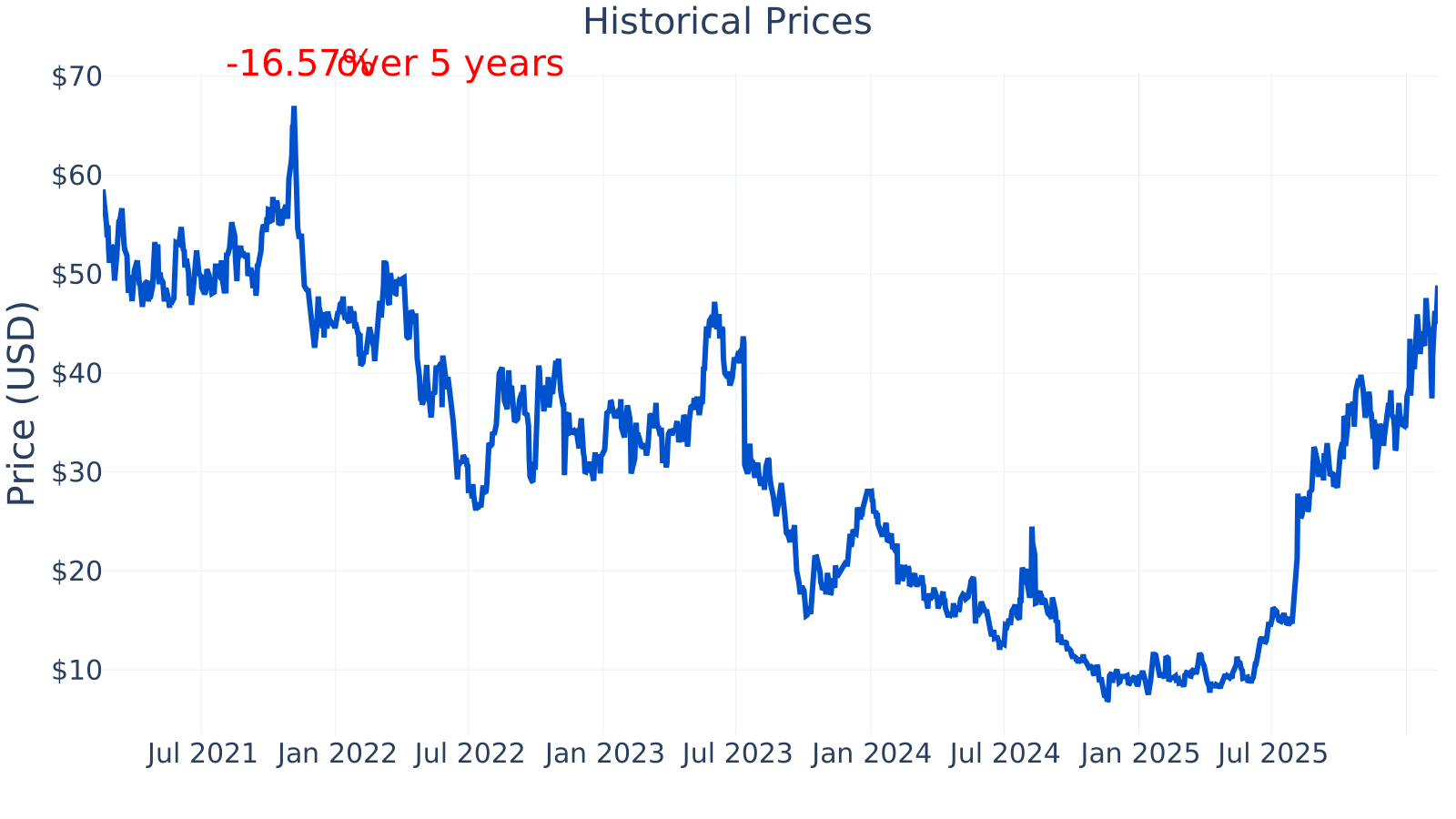
Based on the latest snapshot, Viasat’s market capitalization is about $6.6B and the stock has a beta of ~1.45, which is often associated with larger price swings than the broader market. The company’s profit margin is about -7.3% versus an industry median near +4.7%, reflecting recent losses. Year-over-year revenue growth is about 3.0% versus an industry median near 14.1%, indicating slower recent top-line momentum than many peers. The debt-to-equity ratio is ~158% versus an industry median near 61%, pointing to a more leveraged balance sheet than typical within its peer group. Free cash flow (TTM) is shown as ~$906.6M, while the longer trend in the free-cash-flow chart (below) provides important context on how cash generation has moved across periods.
Growth (Medium)
Viasat operates in satellite communications—an industry supported by long-term demand drivers such as persistent connectivity needs, the growth of connected aircraft and ships, and government requirements for resilient communications. From a “big picture” perspective, satellites can be an essential layer of communications infrastructure because they can serve wide geographic areas and hard-to-reach locations.
Strategically, Viasat’s positioning spans both service revenue (ongoing connectivity plans) and systems/equipment revenue (ground networks, terminals, and communications systems). This mix can be helpful because services can create recurring revenue over time, while systems can drive large contract wins—though both areas can be cyclical and dependent on customer budgets and deployment timelines.
The revenue growth pattern shown is uneven: growth accelerated strongly in several quarters (including very high year-over-year comparisons), then moderated and recently settled into low single digits (around 3% in the most recent period displayed). For long-term expectations, that shift matters because it suggests the company may be moving from a phase of rapid expansion (including integration effects) toward a phase where execution, retention, pricing, and cost control become more important drivers of outcomes than headline growth alone.
The free cash flow trend is also important for a capital-intensive satellite business. The chart shows trailing twelve-month free cash flow was negative for multiple years (for example, around -$851M in FY2024 and about -$122M in FY2025 based on the time points shown). This history indicates that the business has required substantial cash investment and/or experienced cash pressure, which can be normal during heavy buildout phases but still raises the bar for future execution.
Potential catalysts in this type of business are typically tied to operational milestones (network capacity utilization improving, cost reductions, integration benefits) and contract momentum in aviation, maritime, and government. Whether these translate into durable earnings depends on how efficiently the company converts revenue into operating profit and cash generation.
Risks (High)
This article is for informational purposes only and does not constitute financial advice. Some content is AI-generated. See Disclaimer


