Stock Analysis · Pursuit Attractions and Hospitality Inc (PRSU)
Overview
Pursuit Attractions and Hospitality, Inc. (PRSU) operates experiences and hospitality businesses focused on iconic travel destinations. In plain terms, it earns money by serving travelers through a mix of attractions and related visitor services (for example, sightseeing experiences) as well as lodging and hospitality offerings (such as hotels and similar guest accommodations). Because much of its demand is tied to leisure travel, results can vary meaningfully by season and by broader travel conditions.
In its SEC reporting, the company groups its operations into business lines that reflect how it runs the organization internally. Over time, the mix can change depending on portfolio adjustments (such as buying/selling assets), pricing, and visitor volumes.
Main sources of revenue (typical categories used in company reporting) include:
- Attractions / experiences (admission tickets and related guest spending)
- Hospitality / lodging (room nights and related services)
- Other visitor spend (food & beverage, retail, and ancillary services tied to the destination experience)
Percentages by revenue category are not included here because they can vary by reporting period and are best taken directly from the most recent annual report segment and revenue disclosures.
Across 2021–2024, total revenue decreased from about $507.3M (2021) to $299.3M (2022), then rebuilt to about $350.3M (2023) and $366.5M (2024). Profitability, however, shows large swings: net income moved from a loss in 2021 to positive in 2022 and 2023, and then spiked sharply in 2024 even though operating income was negative in 2024. That pattern suggests that non-operating items (items outside “core operations”) had an unusually large impact on reported 2024 net income, which long-term readers typically verify in the company’s annual report notes and MD&A.
Key Figures
| Metric | Value | Industry ⓘ |
|---|---|---|
| Date | Feb 08, 2026 | |
| Context | ||
| Sector | Consumer Cyclical | |
| Industry | Travel Services | |
| Market Cap ⓘ | $1.06B | |
| Beta ⓘ | 1.43 | |
| Fundamental | ||
| P/E Ratio ⓘ | N/A | 21.78 |
| Profit Margin ⓘ | 82.54% | 10.37% |
| Revenue Growth ⓘ | 32.20% | 10.60% |
| Debt to Equity ⓘ | 32.96% | 96.47% |
| PEG ⓘ | 2.14 | |
| Free Cash Flow ⓘ | -$43.06M | |
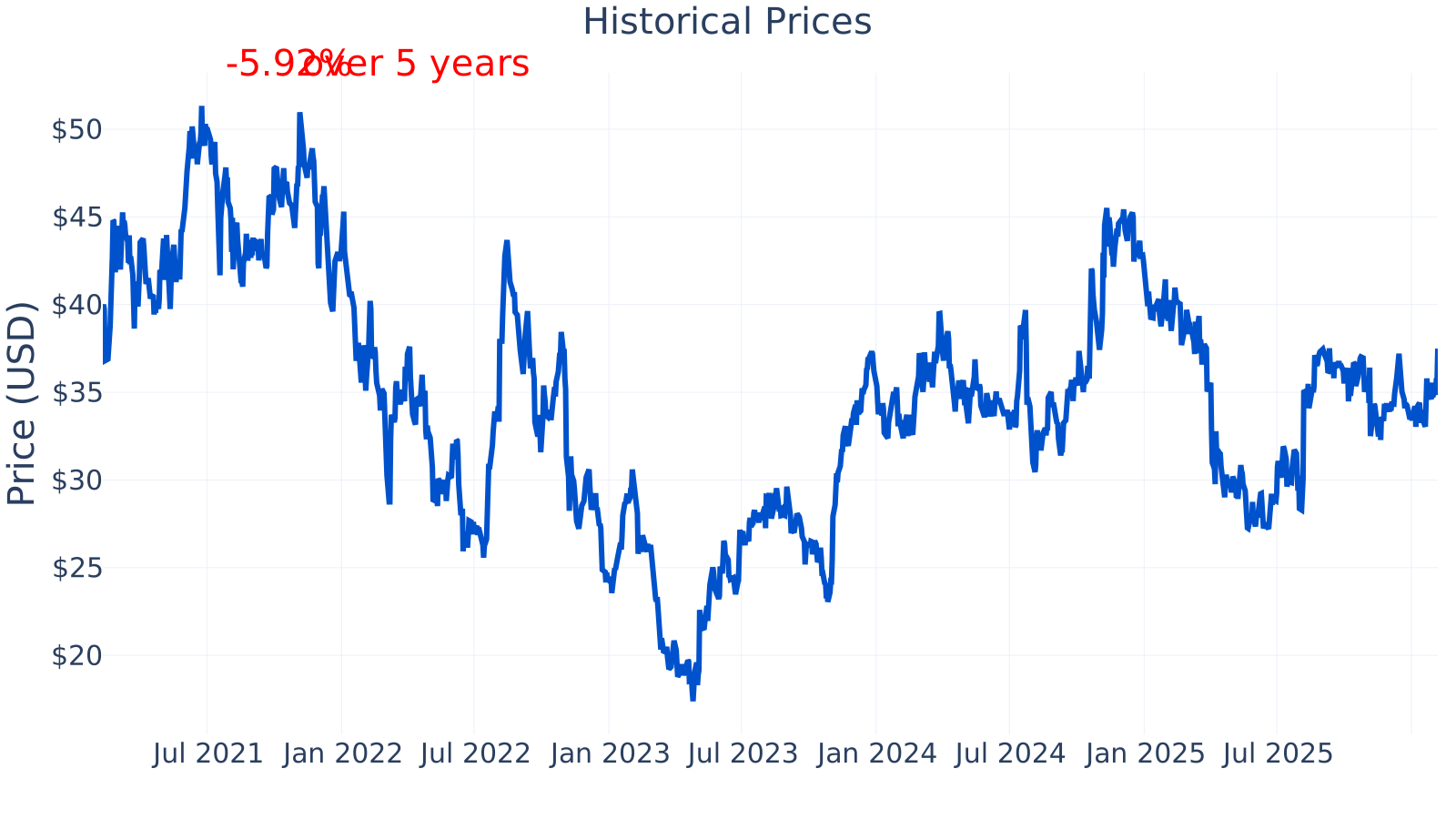
The company’s market capitalization is about $1.06B and the stock has a beta of 1.43, which indicates the share price has tended to move more than the broader market. The latest profit margin shown is 82.54% versus an industry median near 10.37%, which is unusually high and may be influenced by non-recurring items; it is consistent with the unusually large 2024 net income relative to operating income seen in the income statement flow. Year-over-year revenue growth is listed at 32.20% versus an industry median near 10.60%, while debt-to-equity is about 32.96% versus an industry median near 96.47%. Free cash flow (TTM) is -$43.06M, meaning cash generated after capital spending has been negative over the trailing twelve months despite periods of positive accounting earnings.
Growth (Medium)
The company operates in travel services, which is closely tied to leisure travel demand. Over long periods, demand for experiences and destination-based travel tends to rise with consumer incomes and travel participation, but it remains highly cyclical: it can weaken quickly in recessions, during disruptions to travel, or when consumers shift spending away from discretionary items.
From an operating perspective, a straightforward growth logic for a destination-experiences operator is: increase visitor volumes, raise per-guest spending (pricing, add-ons, bundled offerings), and improve utilization of fixed assets (hotels/attractions have meaningful fixed-cost structures). Portfolio actions—adding, upgrading, or selling properties—can also change growth and margin profiles year to year.
Revenue growth has been volatile. After extremely high growth rates in 2021–2022 (which can happen when comparing against depressed prior periods), the more recent quarters include both positive and negative year-over-year changes, including some very large declines. This reinforces that reported growth is not steady and may be affected by one-time comparisons, portfolio changes, and the timing of travel demand.
Free cash flow improved materially from deeply negative levels in 2021 to near break-even/positive in 2024, but it turned negative again in 2025 (TTM shown as -$43.06M). For a business with physical assets (attractions and lodging), reinvestment needs can be meaningful, so sustained positive free cash flow is often an important confirmation that earnings are translating into cash.
Risks (High)
A primary risk is cyclicality. Because the business depends on discretionary travel spending, it can be pressured by weak consumer confidence, higher travel costs, adverse weather affecting peak seasons, and broader disruptions that reduce travel volumes. Seasonality can also make quarterly results uneven, which can amplify short-term volatility in reported performance.
Another key risk is that accounting profitability can diverge from cash generation. The combination of unusually large net income in 2024 alongside negative operating income (as reflected in the income statement flow) and currently negative free cash flow increases the importance of understanding what drove earnings (for example, gains, accounting adjustments, or other non-operating factors described in filings).
Leverage appears lower recently than the industry median (about 33% debt-to-equity versus about 96% for the industry median). However, the historical series shows extremely large and sometimes negative values in earlier periods, which can happen when equity becomes very small or negative due to losses or accounting changes. That history signals that balance-sheet structure has shifted materially over time, and readers typically confirm the underlying drivers in the annual report.
Profit margins have also been highly volatile: they were negative in 2021 and early 2022, became modestly positive through much of 2023–2024, then show extreme swings (very high in late 2024 and strongly negative in 2025). Such large movements often indicate that non-recurring items are materially affecting net income in certain periods rather than reflecting steady operating profitability.
Competition is another risk. The company competes for travelers’ time and spending against a wide set of alternatives: other destination attractions and tour operators, hospitality providers (hotels/resorts), and large integrated travel-and-entertainment brands. Many competitors may have larger scale, broader geographic reach, stronger loyalty ecosystems, or more diversified revenue streams. Pursuit’s potential advantages may include concentrated destination positioning and curated experiences, but leadership and pricing power vary by specific destination and asset, which is why company filings typically emphasize property-level performance and destination dynamics.
Valuation
The P/E ratio shown over time has moved widely, from elevated levels in some periods to very low levels more recently (around ~2 in 2025 points on the chart), while the industry median has been around the low 20s in the same timeframe. A very low P/E can occur when earnings are unusually high (including from one-time gains) rather than from durable operating profit, so it is important to interpret the multiple alongside the quality and repeatability of earnings and alongside cash flow.
Another valuation reference in the metrics table is the PEG ratio (about 2.14). PEG attempts to relate valuation to growth, but it can be less informative when earnings and growth rates are volatile or distorted by one-time items. In this case, the combination of volatile revenue growth, unstable profit margins, and negative trailing free cash flow suggests that simple single-number valuation measures may not capture the full picture without reading the company’s annual report disclosures explaining the drivers of earnings and cash usage.
Conclusion
Pursuit operates in a recognizable, consumer-facing part of the economy—destination experiences and hospitality—where long-run demand is supported by leisure travel but where results can be cyclical and seasonal. Recent revenue has recovered from the 2022 level and has continued higher into 2024, but growth has not been consistent quarter to quarter.
The company’s reported profitability and valuation signals are difficult to interpret at face value because margins and earnings have swung sharply, including a period where net income was exceptionally high while operating income was negative. At the same time, free cash flow is currently negative on a trailing basis. Balance-sheet leverage appears moderate relative to industry median in the latest snapshot, but historical leverage ratios show large swings that warrant context from filings.
Overall, the long-term picture depends heavily on how sustainable operating performance and cash generation are through a full travel cycle, rather than on any single year of earnings. The most decision-relevant confirmations typically come from the annual report discussion of segment performance, one-time items affecting net income, capital spending plans, and how consistently the business converts earnings into free cash flow.
Sources:
- SEC EDGAR — Pursuit Attractions and Hospitality, Inc. filings (Form 10-K, Form 10-Q, Form 8-K)
- Pursuit Attractions and Hospitality, Inc. — Investor Relations materials and press releases (company-hosted)
- Wikipedia — “Pursuit Attractions and Hospitality” (basic background only)
This article is for informational purposes only and does not constitute financial advice. Some content is AI-generated. See Disclaimer


