Stock Analysis · Vertex (VERX)
Overview
Vertex, Inc. (VERX) is a software company focused on tax technology. In simple terms, it helps businesses calculate, apply, and report taxes (such as sales and use tax, value-added tax, and other transaction-based taxes) across many locations and jurisdictions. This matters because tax rules can be complicated, change frequently, and vary by state, country, and even city—especially for companies selling across many channels (online, in-store, marketplaces, business-to-business).
The company primarily sells software and services that connect to business systems (such as enterprise resource planning and e-commerce platforms) so taxes can be handled automatically during invoices, checkout, and compliance processes. Vertex generally operates with a model designed for ongoing usage, where customers pay for access to the platform and related services over time.
In its filings, Vertex reports revenue in broad categories (for example, subscription-based offerings and professional services). A simplified view of the typical revenue mix is:
- Recurring software subscriptions (the largest share): ongoing access to Vertex’s cloud and software solutions
- Professional services (smaller share): implementation, configuration, and related customer support work
Because the exact percentages can shift by period and depend on how the company reports in a specific filing, the most reliable way to confirm the latest mix is the revenue footnotes and segment/disaggregation tables in Vertex’s most recent Form 10-K or 10-Q.
From 2021 to 2024, total revenue increased meaningfully (from about $426M to about $667M). Over the same period, operating expenses also rose, and while operating income turned positive in 2024, net income was negative—showing that profitability has not been consistent even as the business has scaled.
Key Figures
| Metric | Value | Industry ⓘ |
|---|---|---|
| Date | Feb 08, 2026 | |
| Context | ||
| Sector | Technology | |
| Industry | Software - Application | |
| Market Cap ⓘ | $2.51B | |
| Beta ⓘ | 0.59 | |
| Fundamental | ||
| P/E Ratio ⓘ | N/A | 27.79 |
| Profit Margin ⓘ | -7.32% | 6.02% |
| Revenue Growth ⓘ | 12.70% | 15.80% |
| Debt to Equity ⓘ | 132.86% | 25.15% |
| PEG ⓘ | N/A | |
| Free Cash Flow ⓘ | $71.83M | |
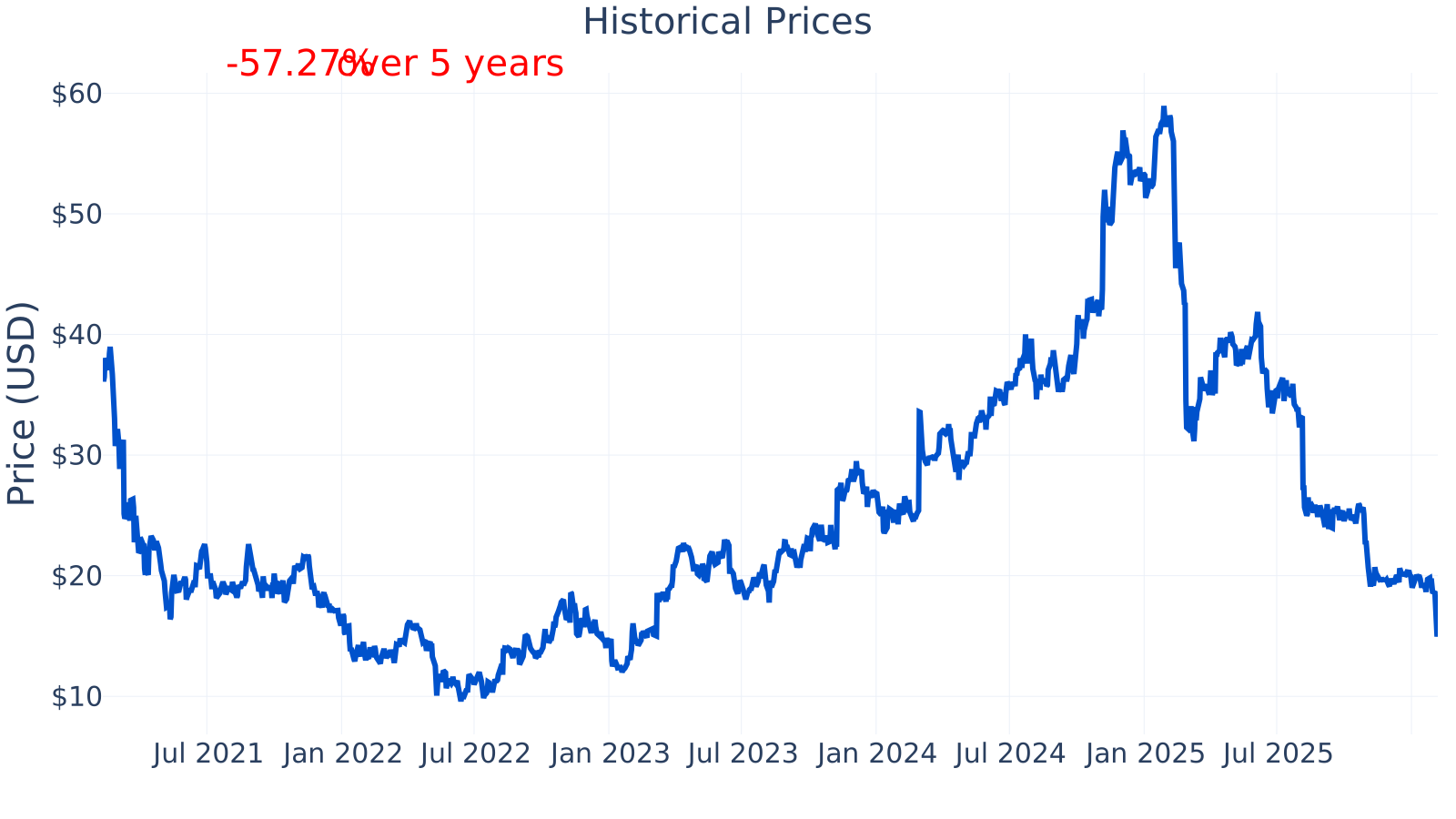
Vertex’s market capitalization is about $2.51B, and its beta of about 0.59 suggests the stock has historically moved less than the broader market on average. The company’s latest profit margin is about -7.3%, below the industry median (about +6.0%), indicating that Vertex is currently less profitable than many peers. Revenue growth is about 12.7% year over year, slightly below the industry median (about 15.8%). Debt-to-equity is about 133%, which is materially higher than the industry median (about 25%). Trailing twelve-month free cash flow is about $71.8M, showing the business has recently generated cash even while reported earnings remain negative.
Growth (Medium)
Vertex operates in an area with long-term demand drivers: commerce continues to become more multi-channel and cross-border, and tax rules continue to evolve. As businesses sell into more jurisdictions, the cost of getting tax wrong (penalties, audits, reputational issues, and operational disruption) can rise, which supports ongoing spending on automation and compliance-focused software.
Strategically, Vertex’s approach centers on embedding tax calculation and compliance workflows into day-to-day business processes. If implemented deeply in a company’s billing and checkout systems, tax software can become “sticky” because switching providers may require re-integration, retesting, and process changes. That stickiness can support renewal rates over time, though the strength of that effect depends on customer satisfaction, product performance, and competitive pricing.
A practical growth catalyst for companies in this space is continued regulatory change and expanding digital taxation requirements, which can push more organizations toward dedicated solutions rather than manual processes. Another potential catalyst is broader adoption among mid-market firms and global enterprises that are modernizing finance and commerce systems, where automated tax tools may be added during system upgrades.
Year-over-year revenue growth has generally been in the low-to-high teens over the periods shown, with the most recent value around 12.7%. That pace is solid but not exceptionally high for application software, and it is somewhat below the industry median shown alongside it.
Free cash flow over the trailing twelve months has been positive in the periods shown and most recently is about $71.8M. The path has not been perfectly smooth (notably dipping in 2023), but positive free cash flow can provide flexibility to reinvest in product development, customer acquisition, and operations without relying entirely on external financing.
Risks (Medium-High)
This article is for informational purposes only and does not constitute financial advice. Some content is AI-generated. See Disclaimer