Stock Analysis · Veeco Instruments Inc (VECO)
Overview
Veeco Instruments Inc (VECO) designs and sells specialized manufacturing equipment used to make advanced electronics. In simple terms, it builds high-precision tools that help customers deposit thin layers of materials, process surfaces, and improve manufacturing yield for devices such as semiconductors and compound-semiconductor components (often used in areas like power electronics, RF/front-end communications, and certain sensing/laser applications). The company primarily sells these systems to industrial and semiconductor-focused customers, and it also generates ongoing revenue from service, parts, and upgrades tied to its installed base of tools.
From a business-model perspective, Veeco’s revenue typically comes from a mix of (1) new equipment sales and (2) recurring or semi-recurring aftermarket activity (service, spare parts, and upgrades). In many semiconductor equipment companies, new tools can be cyclical (rising and falling with customer capital spending), while services tend to be steadier because customers must maintain and optimize tools they already use.
Main sources of revenue (high-level categories commonly used by the company):
- Equipment / Systems (sales of manufacturing tools)
- Services / Aftermarket (spares, service contracts, field service, and upgrades)
Exact percentages can vary by year and are typically detailed in the company’s annual report by segment and/or end market.
Over the last several years, total revenue increased from about $583M (2021) to about $717M (2024). Profitability has been uneven across the period, including a loss in 2023 followed by a return to positive net income in 2024. Operating expenses also rose over time, including ongoing spending in research and development, which is common for equipment makers competing on tool performance and process results.
Key Figures
| Metric | Value | Industry ⓘ |
|---|---|---|
| Date | Feb 08, 2026 | |
| Context | ||
| Sector | Technology | |
| Industry | Semiconductor Equipment & Materials | |
| Market Cap ⓘ | $1.85B | |
| Beta ⓘ | 1.17 | |
| Fundamental | ||
| P/E Ratio ⓘ | 36.98 | 47.44 |
| Profit Margin ⓘ | 7.23% | 9.40% |
| Revenue Growth ⓘ | -10.20% | 9.90% |
| Debt to Equity ⓘ | 29.96% | 20.73% |
| PEG ⓘ | 0.53 | |
| Free Cash Flow ⓘ | $54.84M | |
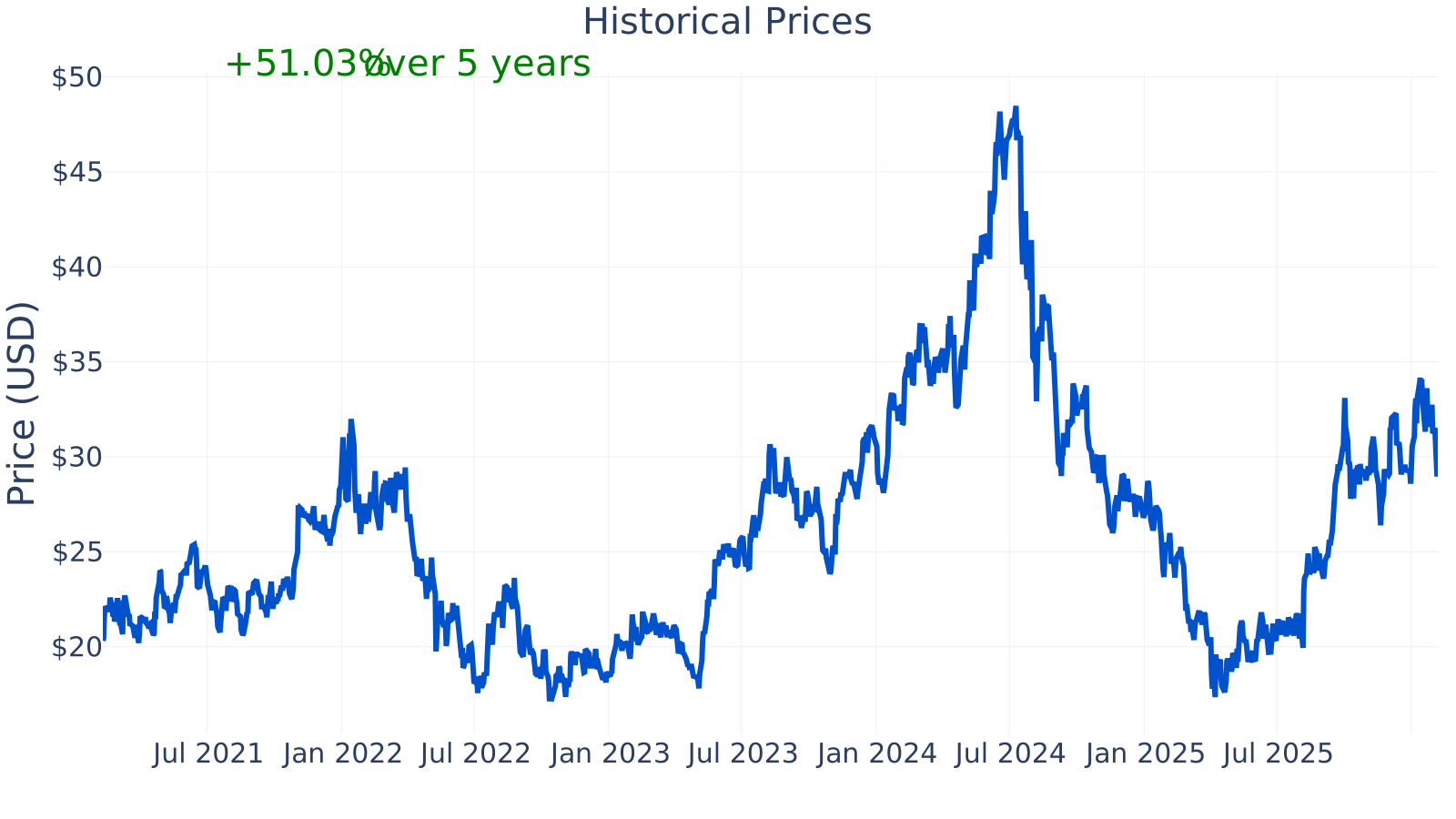
Veeco’s market capitalization is about $1.85B, placing it in the small-to-mid cap range. The stock’s beta (~1.17) suggests it has historically moved somewhat more than the broader market. On profitability, the latest net profit margin is ~7.2% versus an industry median around 9.4%, indicating the company has recently been somewhat less profitable than the typical peer in its category. Growth has also been mixed: latest year-over-year revenue growth is about -10.2% compared with an industry median around +9.9%. Financial leverage is moderate: debt-to-equity ~30% versus an industry median around 21%. Trailing twelve-month free cash flow is roughly $54.8M, and the listed PEG ratio (~0.53) indicates that, when using certain growth assumptions, the price paid per unit of growth appears lower than 1 (though PEG depends heavily on the growth estimate used).
Growth (Medium)
Veeco operates within the semiconductor equipment ecosystem, where long-term demand is linked to ongoing technology upgrades and the need for more capable chips and electronic components. Over long horizons, this space benefits from trends such as increasing device complexity, electrification, communications infrastructure upgrades, and efficiency improvements in manufacturing. However, demand for equipment is typically cyclical: customers can slow or pause tool purchases during downturns, then accelerate spending when conditions improve.
The company’s strategy for growth generally depends on winning tool “positions” in customer production flows (being selected for high-volume manufacturing steps) and expanding its footprint in attractive end markets. For equipment businesses, catalysts often include: qualification wins at major customers, transitions from pilot lines to volume production, and technology shifts that make a vendor’s tool more necessary (for example, tighter process control requirements).
Recent quarterly year-over-year revenue growth has been volatile. After periods of positive growth (including low double-digits during parts of 2024), growth turned negative in 2025, reaching roughly -10% most recently. This pattern is consistent with the “lumpy” nature of equipment shipments and customer order timing, but it also means future progress depends on regaining consistent demand and execution.
Free cash flow has remained positive over the periods shown, but it fluctuated meaningfully (roughly from the low $30M range up to about $77M, and most recently around $55M). For long-term observers, sustained positive free cash flow can be important because it supports reinvestment (R&D), balance-sheet flexibility, and resilience during industry slowdowns.
Risks (High)
This article is for informational purposes only and does not constitute financial advice. Some content is AI-generated. See Disclaimer


