Stock Analysis · Varonis Systems (VRNS)
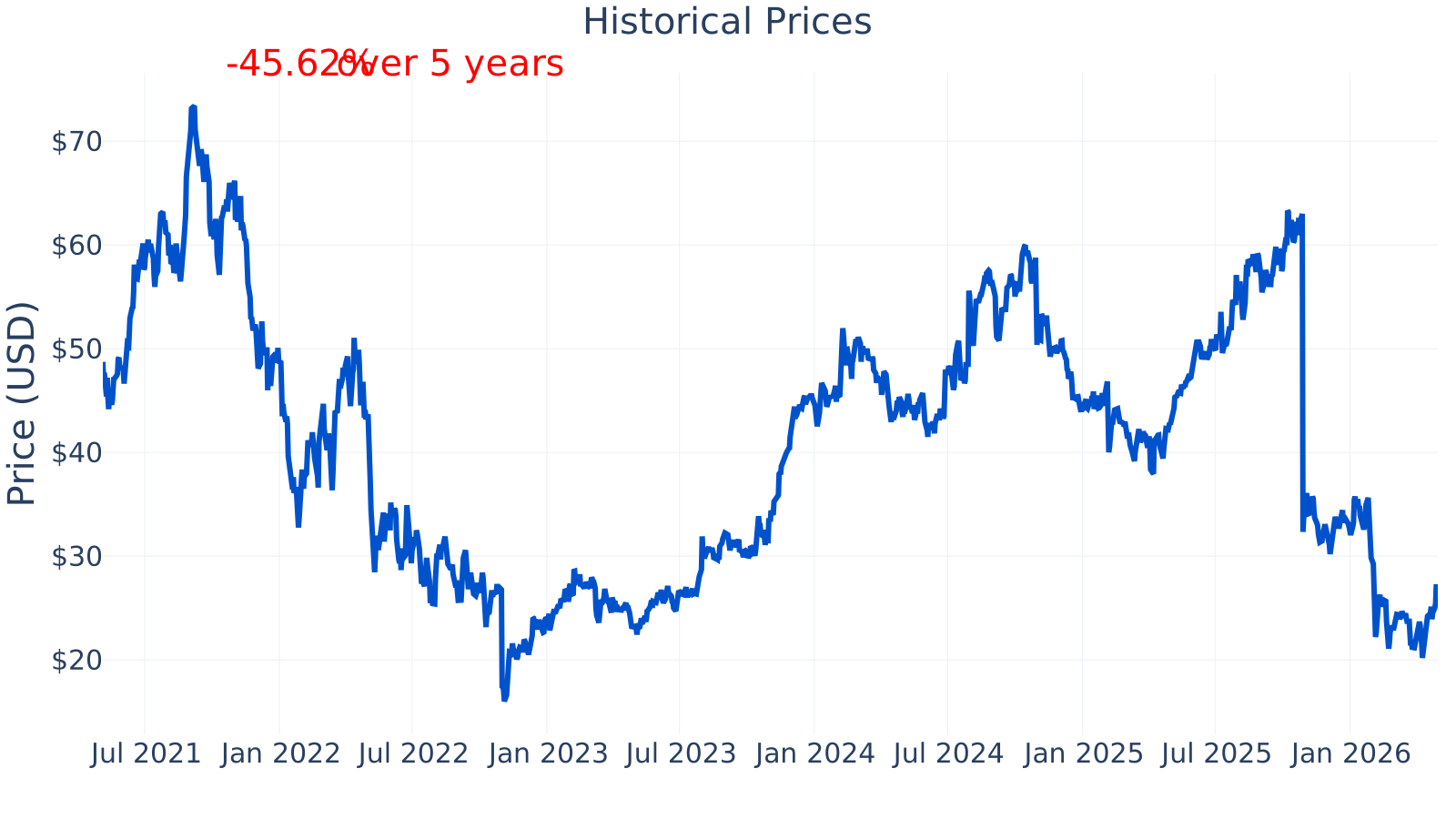
Overview
Varonis Systems (VRNS) develops software that helps organizations find, understand, and protect their data—especially the large amount of information stored in file shares, collaboration tools, and other “unstructured” locations that tend to be difficult to monitor. In practical terms, the company’s products are used to discover where sensitive data lives, control who can access it, and detect suspicious behavior that could signal misuse, ransomware, or a data breach.
Varonis generally sells its software and related services to businesses and institutions. Over time, the company has emphasized a shift toward a subscription model (rather than one-time licenses), which typically aims to make revenue more recurring and predictable.
In its filings, Varonis reports revenue by broad categories rather than breaking it down by individual products. The main sources are typically:
- Subscription revenue (software subscriptions that renew over time)
- Term license revenue (time-based licenses, depending on contract structure)
- Maintenance and services (support, and professional services such as deployment help)
Exact percentages can change by year and quarter and are detailed in the company’s annual report and quarterly filings.
Across the years shown, revenue rises from about $390M (2021) to about $624M (2025). Gross profit increases as well, but operating expenses remain high—especially research and development—so operating income and net income stay negative in each year displayed.
Key Figures
| Metric | Value | Industry ⓘ |
|---|---|---|
| Date | May 04, 2026 | |
| Context | ||
| Sector | Technology | |
| Industry | Software - Infrastructure | |
| Market Cap ⓘ | $3.11B | |
| Beta ⓘ | 0.68 | |
| Fundamental | ||
| P/E Ratio ⓘ | N/A | 29.58 |
| Profit Margin ⓘ | -19.75% | 6.71% |
| Revenue Growth ⓘ | 26.90% | 18.30% |
| Debt to Equity ⓘ | 112.72% | 24.92% |
| PEG ⓘ | 7.38 | |
| Free Cash Flow ⓘ | $119.54M | |
Varonis’ market capitalization is about $3.11B, and its beta of ~0.68 suggests the stock has historically moved less than the broader market on average (though individual periods can still be volatile). Profit margin is about -19.75%, below the industry median of about +6.71%, indicating the company is still unprofitable on a net-income basis. Revenue growth is about 26.9% year-over-year, above the industry median of about 18.3%. Debt-to-equity is about 112.7%, higher than the industry median of about 24.9%. Free cash flow over the trailing twelve months is about $119.5M, showing cash generation even while net income is negative.
Growth (medium)
Varonis operates within the data security and governance segment of cybersecurity. This area is supported by long-term trends: organizations continue to create more data, store it in more places (including cloud services), and face increasing pressure to limit internal misuse and prevent external theft. As a result, tools that improve visibility into where sensitive information is located and who is using it tend to remain relevant even as IT environments change.
A key strategic idea for future growth is the industry-wide shift toward recurring subscriptions and cloud-oriented delivery. For many software companies, subscriptions can reduce dependence on large, one-time deals and may improve long-term revenue stability once customer renewals become a larger share of the business. The company’s filings describe this transition and its impact on reported revenue timing (subscription transitions can sometimes change how quickly revenue is recognized, even when customer adoption is progressing).
The year-over-year revenue growth rate has fluctuated: it was strong in 2021, slowed markedly through parts of 2023 (including a brief negative quarter), and then improved again, reaching about 26.9% in the most recent period shown. This pattern can matter for long-term monitoring because it highlights that growth has not been linear.
Free cash flow trends upward over the periods shown, moving from slightly negative (2022) to about $119.5M most recently. For a software company that is still reporting net losses, sustained positive free cash flow can be an important sign that the operating model is capable of generating cash, even if accounting profitability has not yet been reached.
Risks (high)
The largest recurring risk is that Varonis remains unprofitable on a net-income basis. The company spends heavily on operating costs (including research and development), and if revenue growth slows or expenses rise faster than revenue, losses could persist longer than expected. In cybersecurity, customers can be cautious with spending during uncertain IT budget cycles, which can affect deal timing and renewals.
The profit margin remains negative throughout the periods shown and sits around -19.75% most recently, while the industry median has improved into positive territory (about +6.95% in the most recent point shown). This gap indicates that, relative to many peers in its industry grouping, Varonis has more work to do to translate revenue into net earnings.
Balance-sheet structure is another consideration. Higher leverage can reduce flexibility if business conditions weaken, and it can raise the importance of maintaining steady cash generation.
Debt-to-equity rises significantly in 2024–2025 (peaking above 200% in mid-2025 in the chart) and is about 112.7% most recently, compared with an industry median around 18.5% at the same time. While the ratio can move for multiple reasons (changes in debt levels and/or equity), the overall level is meaningfully above typical peer medians, which increases financial risk sensitivity.
Competition is also a central risk. Varonis operates in a crowded security software landscape where large platform vendors and specialized security providers can overlap in capabilities. Competitive pressure can show up as pricing pressure, higher sales and marketing needs, or slower customer acquisition. Commonly referenced competitors in data security and adjacent categories include large security and cloud providers as well as established security software companies; in practice, competitive position often depends on how a customer prioritizes features like data discovery, access governance, monitoring, and integration with existing tools.
Regarding competitive advantages, Varonis positions itself around deep visibility into unstructured data and ongoing monitoring of access and behavior. Whether that translates into durable advantage depends on execution, product outcomes, and the pace at which competing platforms match or bundle similar functionality.
Valuation
A traditional price-to-earnings (P/E) comparison is limited here because the company has negative net income, which typically makes P/E not meaningful (and it may not appear on the chart for that reason). In contrast, the industry median P/E shown sits around the high-20s to low-30s over time. For companies without positive earnings, valuation discussions often shift toward other lenses (such as revenue multiples or cash flow measures), but those are not provided in the metrics shown.
The PEG ratio shown (~7.38) is also difficult to interpret cleanly in isolation, especially when earnings are negative or when growth and profitability are in transition. In this context, a more practical way to frame valuation is descriptively: the company combines above-median revenue growth with negative margins and elevated leverage versus industry medians. That mix tends to place more weight on future execution (sustaining growth, expanding margins, and maintaining cash generation) when market participants assess pricing.
Conclusion
Varonis Systems is a cybersecurity software company focused on finding and protecting business data, with an emphasis on ongoing visibility and monitoring in complex real-world environments. Over the years shown, revenue has increased meaningfully, and free cash flow has improved to a clearly positive level, which can be an important operational milestone.
At the same time, net profitability remains negative, profit margins trail the industry median, and debt-to-equity is notably higher than typical peer medians—factors that raise the overall risk profile and make long-term outcomes more dependent on continued execution. From a valuation perspective, standard earnings-based measures are less informative while losses persist, so interpretation tends to revolve around whether growth, cash generation, and future margin improvement can be sustained over time.
Sources:
- SEC EDGAR — Varonis Systems, Inc. filings (Form 10-K and Form 10-Q)
- Varonis Investor Relations — Annual Report (Form 10-K) and quarterly reports/press releases (as hosted by the company)
- Wikipedia — “Varonis Systems” (basic company background)
This article is for informational purposes only and does not constitute financial advice. Some content is AI-generated. See Disclaimer


