Stock Analysis · Vail Resorts Inc (MTN)
Overview
Vail Resorts, Inc. is a mountain resort company best known for operating destination ski areas and related lodging, dining, ski school, and retail activities. The business is highly seasonal, with a large portion of activity tied to the winter ski and snowboard season, while summer operations (such as sightseeing, mountain biking, and other warm-weather activities) provide additional but generally smaller demand.
Vail Resorts reports its business mainly through three segments that also reflect its main revenue sources:
- Mountain: lift tickets and season passes, ski school, dining, retail/rentals, and other on-mountain activities.
- Lodging: owned and managed hotels, condos, and vacation rentals.
- Real Estate: property sales and development-related activity (this can vary significantly year to year).
A notable feature of the model is the emphasis on advance commitment products (such as season passes), which can shift some demand from “day-of” purchases toward pre-season sales and can help visibility into the season.
Across the periods shown, total revenue rose from about $1.91B (FY2021) to about $2.96B (FY2025). Over the same span, operating income and net income moved up and down, highlighting how profitability can fluctuate with costs (labor, operations, and maintenance) and season-to-season conditions, even when revenue is relatively steady.
Key Figures
| Metric | Value | Industry ⓘ |
|---|---|---|
| Date | Feb 08, 2026 | |
| Context | ||
| Sector | Consumer Cyclical | |
| Industry | Resorts & Casinos | |
| Market Cap ⓘ | $4.98B | |
| Beta ⓘ | 0.79 | |
| Fundamental | ||
| P/E Ratio ⓘ | 19.95 | 22.13 |
| Profit Margin ⓘ | 8.96% | 6.12% |
| Revenue Growth ⓘ | 4.10% | 4.30% |
| Debt to Equity ⓘ | 2185.82% | 525.78% |
| PEG ⓘ | 2.00 | |
| Free Cash Flow ⓘ | $352.54M | |
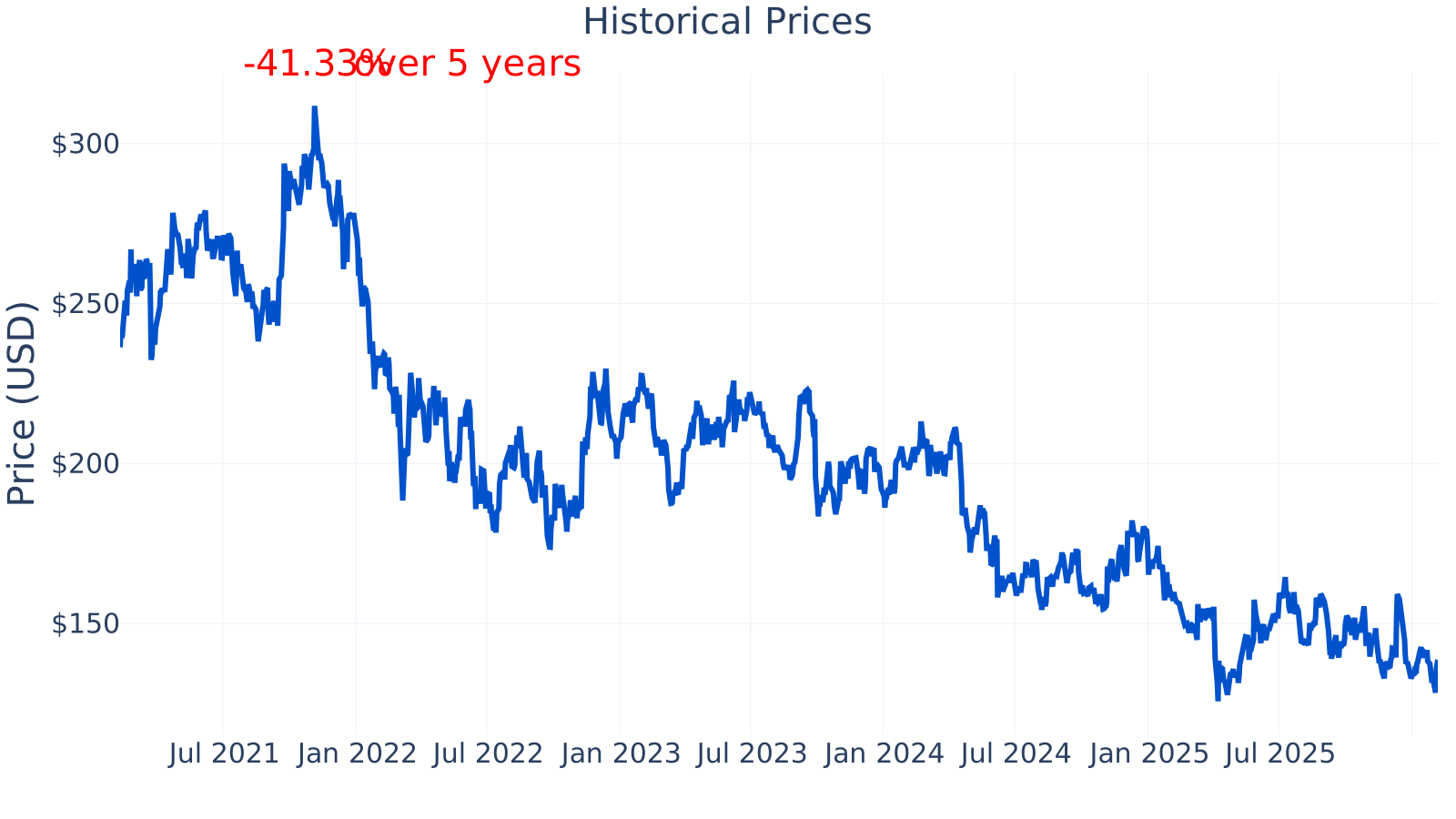
Vail Resorts’ market capitalization is about $5.0B and the stock’s beta of 0.79 suggests it has historically moved less than the broader market on average (though that does not prevent meaningful price swings). The company’s P/E ratio is ~19.95 versus an industry median around 22.13. Profitability appears higher than the industry median on this snapshot, with a profit margin of ~9.0% versus an industry median near 6.1%. Year-over-year revenue growth is about 4.1%, roughly in line with the industry median shown. A key point in the table is leverage: debt-to-equity is ~2,186%, well above the industry median near 526%. Trailing twelve-month free cash flow is about $353M.
Growth (Medium)
Vail Resorts operates in the leisure and travel category, where demand tends to be influenced by consumer spending, household budgets, and travel patterns. The “ski resort” niche also has structural constraints: there are only so many suitable mountains, permitting is complex, and building large new resorts from scratch is difficult. That limitation can reduce the risk of rapid new supply, but it also means long-term growth is often driven by increasing revenue per guest, expanding ancillary spending (lessons, food, rentals, retail), growing pass programs, and improving year-round utilization.
Strategically, a large multi-resort network can encourage repeat visits and pass renewals by offering variety across locations, and it can support marketing at scale. The advance-sale nature of pass products can also reduce dependence on day-ticket demand in a single week or weekend, although weather and conditions still matter for overall visitation and guest spending.
The year-over-year revenue growth pattern shows a strong rebound earlier in the period (when comparisons were coming off unusually weak prior-year levels), then a return to low single-digit growth more recently, ending around 4%. This is consistent with a mature operator where growth can be incremental rather than rapid, and where results depend on both visitation and pricing.
Trailing free cash flow is positive but has varied over time (roughly $501M in early 2022 down to the $350M–$400M range more recently). For a resort operator, free cash flow matters because the business typically requires ongoing spending on lifts, snowmaking, lodging upkeep, and other infrastructure to maintain the guest experience.
Risks (High)
This article is for informational purposes only and does not constitute financial advice. Some content is AI-generated. See Disclaimer