Stock Analysis · VF Corporation (VFC)
Overview
VF Corporation (VFC) is a global apparel and footwear company. It designs, markets, and sells branded products, with a business model that combines wholesale distribution (selling to retailers) and direct-to-consumer channels (brand stores and e-commerce). Its portfolio includes well-known lifestyle and performance-oriented brands such as The North Face, Vans, Timberland, and Dickies. The company manages product creation, brand marketing, and distribution, while much of manufacturing is typically sourced through a network of suppliers (a common model in branded apparel).
VF’s revenue is primarily generated by selling branded apparel, footwear, and accessories across multiple geographies. In recent years, the company has emphasized brand-led demand creation and a larger mix of direct-to-consumer sales, which can offer closer consumer relationships but also requires strong execution in inventory and promotions.
In VF’s reporting, revenue is commonly described by brand (and sometimes also by channel and region). The largest revenue contributors have generally been its core brands. A typical ranking by brand importance (exact percentages vary by fiscal year) is:
- The North Face (largest contributor in recent years)
- Vans
- Timberland
- Dickies
- Other brands / other activities
Overall scale (for context): VF reported about $9.5B in total revenue for the fiscal year ending March 31, 2025.
Across the last several fiscal years shown, revenue peaked around fiscal 2022 (about $11.8B) and then declined to about $9.5B by fiscal 2025. Operating income also fell sharply from fiscal 2022 levels, while interest expense increased versus earlier periods, highlighting how weaker operating performance can be amplified when a company carries meaningful debt.
Key Figures
| Metric | Value | Industry ⓘ |
|---|---|---|
| Date | Feb 07, 2026 | |
| Context | ||
| Sector | Consumer Cyclical | |
| Industry | Apparel Manufacturing | |
| Market Cap ⓘ | $7.96B | |
| Beta ⓘ | 1.67 | |
| Fundamental | ||
| P/E Ratio ⓘ | 35.68 | 22.80 |
| Profit Margin ⓘ | 2.33% | 4.94% |
| Revenue Growth ⓘ | 1.50% | 1.60% |
| Debt to Equity ⓘ | 299.18% | 99.72% |
| PEG ⓘ | 0.14 | |
| Free Cash Flow ⓘ | -$665.70M | |
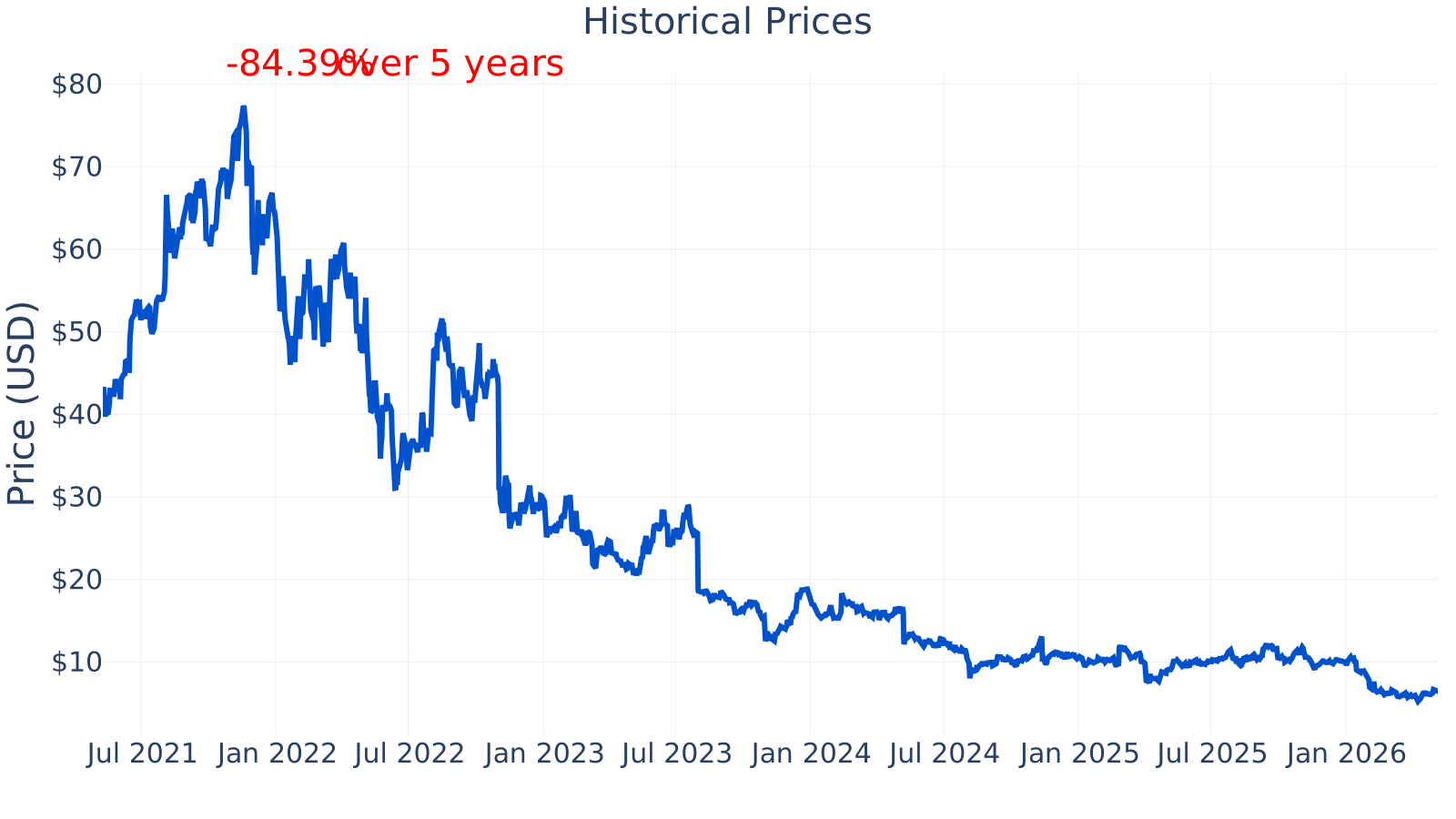
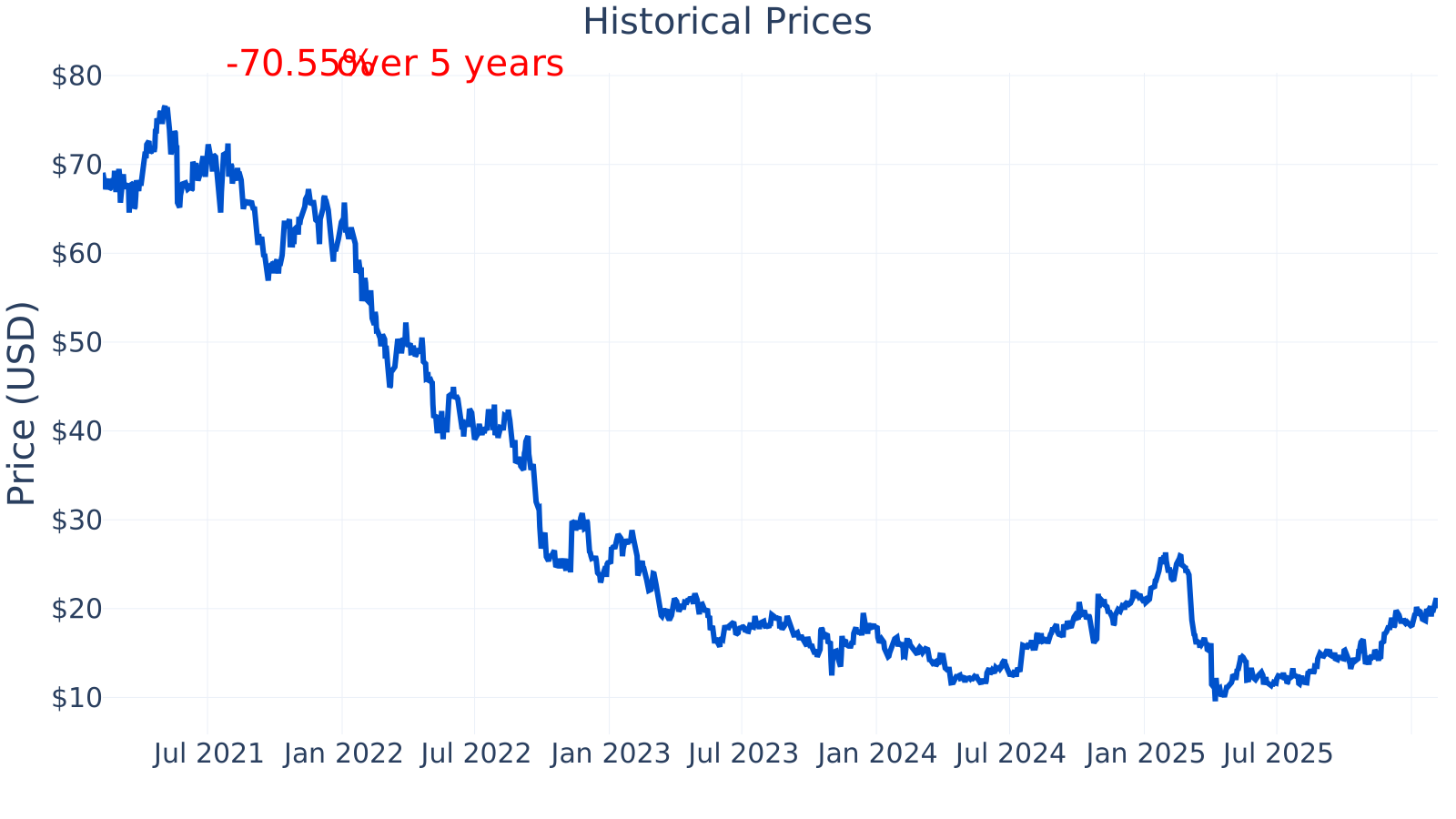
VF’s market capitalization is about $8.0B. The stock’s beta of 1.67 suggests the share price has tended to move more than the broader market (higher volatility). The company’s P/E ratio is ~35.7, above the industry median of ~22.8, while its profit margin is ~2.3%, below the industry median of ~4.9%. Revenue growth is modest at roughly 1.5% year-over-year (close to the industry median). The balance sheet stands out: debt-to-equity is ~299% versus an industry median near 100%. Free cash flow over the trailing twelve months is negative (about -$666M), indicating cash outflows exceeded cash generated after capital spending over that period.
Growth (Medium)
VF operates in global apparel and footwear—large categories with long-term demand, but typically not “fast structural growth” industries. Demand is influenced by consumer spending, fashion cycles, brand relevance, and retailer inventory behavior. In this type of industry, strong brands can still grow over time, but results can also swing with product momentum and promotional intensity.
VF’s strategy has often emphasized building brand strength, expanding direct-to-consumer, and improving operational execution (inventory discipline, product assortment, and supply chain efficiency). For future growth, the practical catalysts usually come from a combination of (1) brand turnarounds (especially when a major brand has lost momentum), (2) better inventory and fewer discounts, and (3) cost and working-capital improvements that translate into healthier cash generation.
The year-over-year revenue pattern has been uneven. After very strong growth in 2021 (including a period above 100%, consistent with a rebound effect), growth cooled and turned negative through much of 2022–2024. The most recent quarters shown return to small positives (around 1–2%), indicating stabilization rather than strong expansion.
Free cash flow has also been volatile. It moved from positive levels in fiscal 2021 (about $1.0B) to negative in fiscal 2023 (about -$890M), then back to positive in fiscal 2024 (about $807M) and still positive in fiscal 2025 (about $355M). However, the latest metrics indicate negative trailing twelve-month free cash flow, which can be a sign of ongoing working-capital pressure, restructuring impacts, or weaker earnings quality—factors that matter for a leveraged company.
Risks (High)
VF’s risks are closely tied to brand execution and financial flexibility. In branded apparel, demand can change quickly if products miss trends or if competitors gain share. When demand weakens, companies often lean on discounts, which can compress margins and make it harder to generate cash.
A major risk highlighted by the current metrics is leverage. Higher debt can reduce flexibility during slowdowns because interest costs must be paid regardless of sales performance. It can also limit room for investment in product, marketing, and distribution if cash generation is pressured.
VF’s debt-to-equity has been elevated for several years and reached especially high levels in 2024–2025. The latest value is about 299%, materially higher than the apparel manufacturing industry median near 100%. This increases sensitivity to weaker operating results and interest-rate conditions (through refinancing costs over time).
Profitability is another key risk area. Even if revenue stabilizes, long-term outcomes depend on whether the company can rebuild sustainable margins through better product mix, lower promotions, and cost control.
VF’s profit margin deteriorated from double-digit levels in 2021 to negative territory through much of 2023–2024, then improved to a small positive level by the latest period (about 2.3%). This remains below the industry median (about 4.5% most recently), suggesting VF is still in a recovery phase versus peers on profitability.
On competitive positioning, VF owns brands with broad recognition, which can be a durable advantage when product and marketing are executed well. However, the company is not the only large, scaled player in global apparel and footwear. Competition is intense across performance/outdoor and lifestyle categories, with major rivals including Nike, Adidas, PVH, Ralph Lauren, Levi Strauss, and outdoor-focused groups such as Columbia Sportswear. In practice, VF’s position varies by brand and category: some segments face competition from global athletic leaders, while others compete with heritage lifestyle labels and fast-moving streetwear trends.
Valuation
Valuation is commonly framed as “how much is being paid for current earnings and cash generation,” while also considering risk. At present, VF shows a higher P/E ratio than its industry median despite below-median profit margin and an elevated debt load. This combination often means the market price is sensitive to whether earnings and cash flow improve meaningfully over time.
The current P/E is about 35.7 versus an industry median near 22.8. Historically, VF’s P/E has fluctuated significantly, including periods of much higher multiples (often occurring when earnings were temporarily depressed) and periods closer to the industry range. Interpreting VF’s P/E requires caution because when profits are low or unstable, the P/E ratio can move sharply and may not reflect normalized earning power.
Given the company’s recent margin pressure and leverage, a valuation discussion often comes down to whether operational improvements (margin recovery, fewer promotions, tighter inventory, and better cash generation) become consistent enough to support stronger, more durable earnings.
Conclusion
VF Corporation is a large branded apparel and footwear company with globally recognized names and meaningful scale. The long-term case for the business typically centers on brand strength and the potential for operational recovery—improving product momentum, restoring healthier margins, and rebuilding consistent free cash flow.
At the same time, the facts visible in the financial profile point to a company still working through a challenging period: revenue has been uneven, profitability has only recently turned modestly positive, and leverage is high relative to peers. These factors make outcomes more dependent on execution and reduce tolerance for setbacks. The current valuation metrics also suggest the stock price embeds expectations of improvement, making forward results—especially cash flow and margins—important to watch.
Sources:
- SEC EDGAR — VF Corporation Form 10-K (Annual Report) (Fiscal year ended March 31, 2025)
- SEC EDGAR — VF Corporation Form 10-Q (Quarterly Reports) (most recent filings)
- VF Corporation — Investor Relations materials (Annual Report / Form 10-K download, presentations)
- Wikipedia — “VF Corporation” (basic company background and brand overview)
This article is for informational purposes only and does not constitute financial advice. Some content is AI-generated. See Disclaimer