Stock Analysis · Urban Outfitters Inc (URBN)
Overview
Urban Outfitters, Inc. (URBN) is a specialty retailer focused on fashion apparel, accessories, and home products. The company operates a portfolio of distinct brands that target different customer groups, including Urban Outfitters, Anthropologie, Free People, FP Movement, and a subscription-based rental service called Nuuly. Products are sold through a mix of physical stores and digital channels (brand websites and apps), with an emphasis on frequently refreshed assortments and brand-led merchandising.
Across retail, a key economic reality is that a large share of revenue is used to pay for the products themselves (inventory) and for operating the business (store and corporate costs). Over the last several fiscal years, URBN’s total revenue increased meaningfully, and net income also grew overall, though profitability can move up and down as merchandising conditions (promotions, product costs, and demand) change.
From fiscal 2022 to fiscal 2026 (year ended January 31), revenue rose from about $4.55B to $6.17B, while net income increased from about $311M to about $465M. Over the same period, operating income grew from about $406M to about $597M, showing that operating performance improved alongside revenue growth (even though selling and administrative costs also increased).
URBN’s revenue is reported by business segment/brand in its official filings. Because the exact mix can change year to year and the percentages are not provided here, the breakdown below is listed by major brand group (largest-to-smallest can vary by year):
- Anthropologie Group (Anthropologie, Anthropologie Weddings, Terrain)
- Urban Outfitters
- Free People Group (Free People, FP Movement)
- Nuuly (subscription rental)
- Wholesale segment (select brands sold to third parties)
Key Figures
| Metric | Value | Industry ⓘ |
|---|---|---|
| Date | Mar 09, 2026 | |
| Context | ||
| Sector | Consumer Cyclical | |
| Industry | Apparel Retail | |
| Market Cap ⓘ | $5.75B | |
| Beta ⓘ | 1.21 | |
| Fundamental | ||
| P/E Ratio ⓘ | 12.66 | 14.87 |
| Profit Margin ⓘ | 7.54% | 8.32% |
| Revenue Growth ⓘ | 10.10% | 8.90% |
| Debt to Equity ⓘ | 43.53% | 92.83% |
| PEG ⓘ | 1.08 | |
| Free Cash Flow ⓘ | $445.13M | |
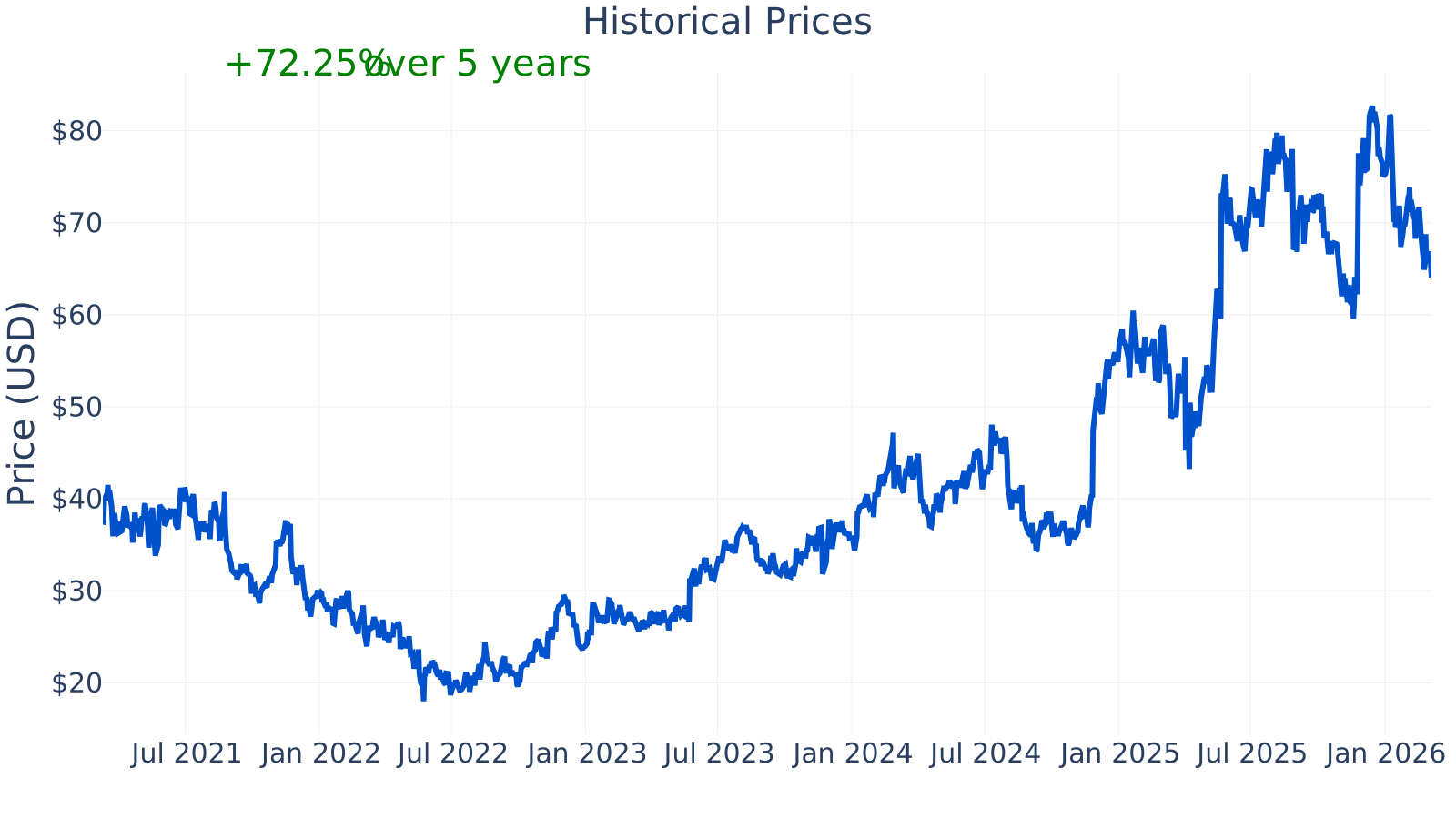
URBN’s market capitalization is about $5.75B. The stock’s beta of about 1.21 suggests it has tended to move more than the overall market (up or down). The P/E ratio is about 12.66 versus an industry median near 14.87, meaning the company is valued at a lower earnings multiple than the middle of its apparel retail peer group. Profit margin is about 7.54% versus an industry median around 8.32%, while revenue growth year-over-year is about 10.1% versus an industry median around 8.9%. Debt-to-equity is about 43.5% versus an industry median near 92.8%, indicating lower leverage than many peers. Trailing twelve-month free cash flow is about $445M.
Growth (medium)
Apparel retail is a mature and highly competitive industry, but it continues to evolve with long-term shifts toward online shopping, faster product cycles, and more personalized brand experiences. For multi-brand operators like URBN, growth often depends less on overall industry expansion and more on brand relevance, merchandising execution, and the ability to gain share or expand into adjacent categories (such as activewear or home).
URBN’s recent revenue growth trend shows a moderation from very high growth rates earlier in the period to steadier mid-to-high single-digit and low double-digit growth more recently, including roughly 10% year-over-year at the latest point shown. In apparel retail, consistent positive growth often reflects a combination of store productivity, digital performance, and brand momentum, but it can also be affected by broader consumer spending cycles.
Free cash flow has improved substantially from negative territory (around fiscal 2023) to a much higher level more recently (about $445M at the latest point shown). For long-term shareholders, sustained free cash flow can matter because it is the cash available after operating needs and capital spending, which can support reinvestment, balance sheet resilience, and potential capital returns (depending on management decisions disclosed in filings).
Potential long-term catalysts for URBN tend to be company-specific rather than industry-wide: scaling newer concepts (such as Nuuly), expanding higher-growth categories (for example, activewear under FP Movement), improving digital profitability, and maintaining brand differentiation across its portfolio. The strength of a multi-brand model is that it can reduce reliance on a single fashion trend, but execution remains critical.
Risks (medium)
URBN faces the core risks typical of apparel retail: shifting consumer preferences, fashion misses, promotional pressure (discounting), and cost volatility (product costs, freight, and labor). Demand can weaken quickly in economic slowdowns, especially for discretionary purchases. Store-based retail also brings lease commitments and traffic sensitivity, while e-commerce introduces competition with low switching costs and ongoing spending needs (technology, fulfillment, and marketing).
The company’s debt-to-equity ratio has declined materially over time (from the mid-80% range earlier in the series to about 43.5% most recently) and remains below the industry median (about 92.8%). Lower leverage can reduce financial risk, but it does not remove operating risk from swings in consumer demand or margins.
Profit margin has improved significantly from the low levels seen around fiscal 2023 (roughly 3–4%) to about 7.5% most recently, though it remains slightly below the industry median near 8.3%. In retail, even small margin changes can have an outsized impact on earnings because fixed costs are meaningful; margins can compress if promotions rise or if inventory is not well matched to demand.
Competitive advantages in this space usually come from brand strength, merchandising, and customer loyalty rather than from hard-to-replicate technology. URBN’s portfolio approach (several differentiated brands) and its combination of stores plus digital can be strengths, but the company is not the overall “category leader” across all apparel retail. Its positioning is best understood as a specialty player with strong brands in specific niches (contemporary, bohemian, home, and emerging resale/rental), competing against both specialty retailers and large online-first platforms.
Key competitors typically include specialty apparel retailers and multi-brand lifestyle concepts, along with larger fast-fashion and broadline players competing for the same discretionary wallet. The intensity of competition is structurally high because consumers can change preferences quickly and competitors can adjust pricing and product frequently.
Valuation
URBN’s current P/E ratio is about 12.66, below the industry median of about 14.87 at the same point in time. Historically in the period shown, URBN’s P/E has usually been in the low-to-mid teens, with the peer median often higher but also variable. A lower-than-median P/E can reflect differences in expected growth, perceived risk, or business mix; it can also reflect the market’s view on how durable current profitability is in a cyclical retail environment.
Valuation is easier to interpret alongside operating fundamentals. URBN shows (1) solid recent revenue growth (about 10% year-over-year), (2) improved profitability versus earlier periods, (3) meaningful recent free cash flow generation, and (4) lower leverage than many peers. At the same time, the company operates in a category where earnings can fluctuate with fashion cycles and promotional intensity, which can limit how much certainty the market assigns to current earnings levels.
Conclusion
Urban Outfitters, Inc. is a multi-brand specialty retailer combining stores and digital channels across apparel, accessories, and home, with an additional growth-oriented concept in subscription rental. Over the past several fiscal years shown, the company increased revenue and improved profitability from a weaker period, while also generating substantially higher free cash flow more recently and maintaining comparatively lower leverage than the typical peer.
The main open questions for long-term ownership tend to revolve around durability: whether brand momentum can be sustained across cycles, whether margins can remain near recent levels without heavy discounting, and whether newer initiatives can scale without diluting returns. The company’s current earnings multiple sits below the peer median, which provides context for how the market is weighing these factors versus the recent operational improvement.
Sources:
- U.S. SEC EDGAR — Urban Outfitters, Inc. filings (Form 10-K, Form 10-Q, Form 8-K)
- Urban Outfitters, Inc. Investor Relations — Annual Report on Form 10-K (segment/brand reporting and business description)
- Wikipedia — “Urban Outfitters” (basic company background)
This article is for informational purposes only and does not constitute financial advice. Some content is AI-generated. See Disclaimer


