Stock Analysis · Urban Outfitters Inc (URBN)
Overview
Urban Outfitters, Inc. (URBN) is a specialty retail company focused on apparel, accessories, and home products. It operates a portfolio of distinct consumer brands, primarily targeting younger and lifestyle-driven customers. The company sells through a mix of physical stores and digital channels (brand websites and apps), and it also operates a wholesale business for some brands.
URBN’s revenue is largely generated from retail sales across its brand portfolio. Based on how the company reports results in its filings, the main sources of revenue are:
- Retail segment (majority of revenue): sales from stores and e-commerce across Urban Outfitters, Anthropologie, and Free People
- Nuuly segment (smaller but growing): subscription rental and resale
- Wholesale segment (smaller share): mainly Free People wholesale distribution
At a high level, URBN’s business model depends on brand relevance (merchandise that resonates with customers), disciplined inventory management (avoiding excessive discounting), and a smooth shopping experience across stores and online.
Over the last four fiscal years shown, revenue increased from about $4.55B (FY2022) to about $5.55B (FY2025). Profitability also improved from FY2023 to FY2025: operating income rose from about $223M to about $506M, and net income rose from about $160M to about $402M. Cost of goods sold remains the largest expense line, while selling, general, and administrative expenses also increased as the business scaled.
Key Figures
| Metric | Value | Industry ⓘ |
|---|---|---|
| Date | Feb 07, 2026 | |
| Context | ||
| Sector | Consumer Cyclical | |
| Industry | Apparel Retail | |
| Market Cap ⓘ | $6.50B | |
| Beta ⓘ | 1.21 | |
| Fundamental | ||
| P/E Ratio ⓘ | 13.73 | 17.99 |
| Profit Margin ⓘ | 8.15% | 8.42% |
| Revenue Growth ⓘ | 12.30% | 7.30% |
| Debt to Equity ⓘ | 43.79% | 104.73% |
| PEG ⓘ | 1.32 | |
| Free Cash Flow ⓘ | $510.23M | |
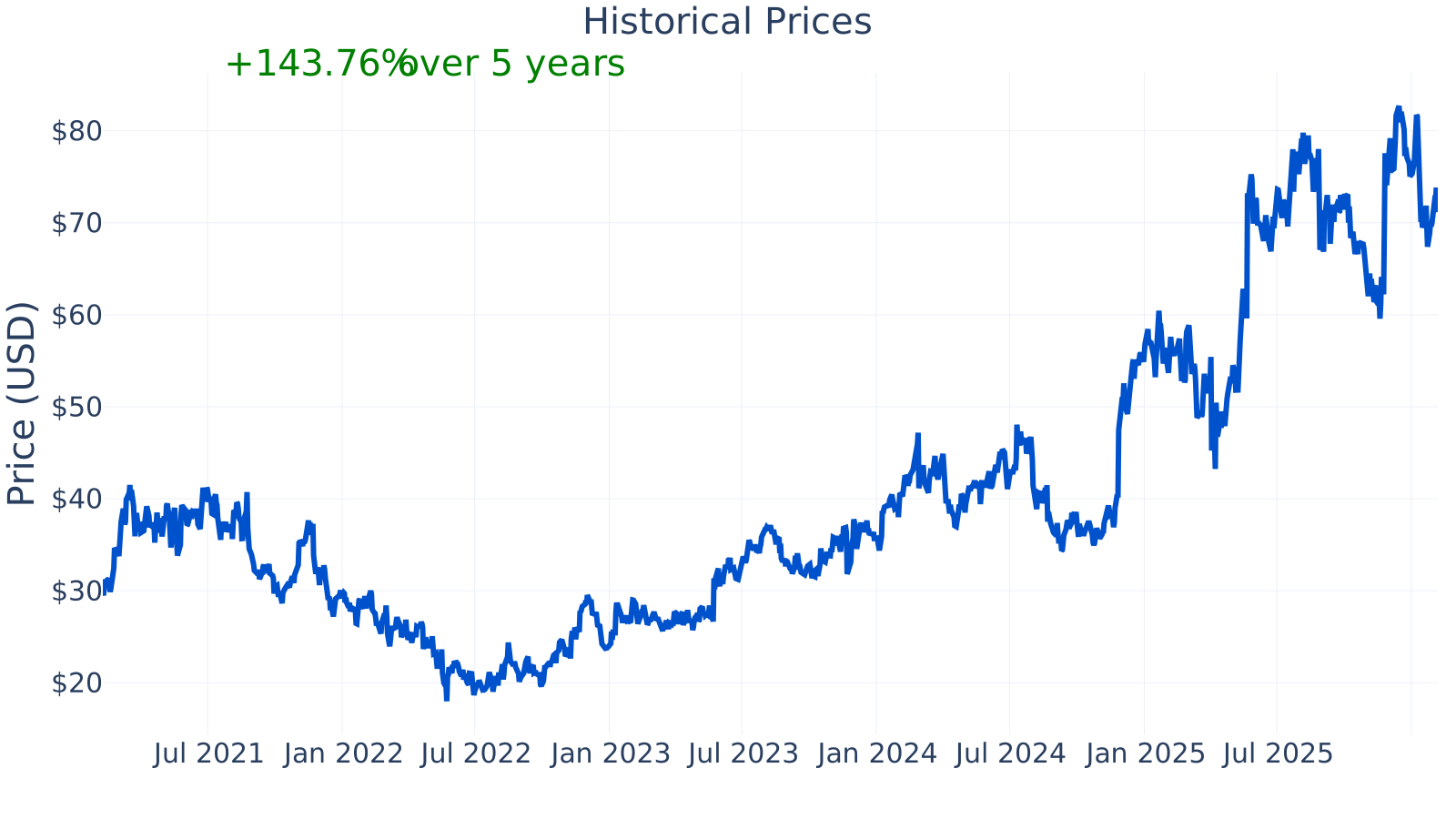
URBN’s market capitalization is about $6.5B. The stock’s beta of ~1.21 indicates it has tended to move more than the overall market. The company’s P/E ratio is ~13.7 versus an industry median of ~18.0 (within a peer set of apparel retail companies). URBN’s profit margin is ~8.15%, close to an industry median of ~8.42%. Recent year-over-year revenue growth is ~12.3%, above the industry median of ~7.3%. URBN’s debt-to-equity is ~43.8%, notably below the industry median of ~104.7%. Trailing twelve-month free cash flow is ~$510M.
Growth (medium)
Apparel retail is a mature and highly competitive industry, so long-term growth typically comes from taking share (winning customers from competitors), expanding into adjacent categories, improving digital capabilities, and operating efficiently. URBN’s multi-brand approach can help reduce reliance on a single fashion trend, while also allowing the company to tailor merchandising and marketing to different customer groups.
Recent revenue growth has been positive and has strengthened over the most recent periods shown, reaching roughly the low-double-digit range (about 12% year-over-year in the latest point on the chart). In a retail context, sustaining this kind of growth often depends on consistent product execution and avoiding heavy promotions that can inflate sales temporarily but hurt profitability.
Free cash flow (cash generated after operating costs and capital spending) has been uneven but improved meaningfully from the negative level shown for FY2023 to more solidly positive levels in FY2024 and FY2025, and sits around $510M on a trailing basis. For long-term business durability, this matters because free cash flow can support reinvestment (stores, technology, supply chain), strengthen the balance sheet, or be returned to shareholders (depending on company decisions).
Potential catalysts for continued growth generally include: (1) improved merchandise and inventory discipline (less markdown pressure), (2) scaling newer concepts such as Nuuly while maintaining profitability, and (3) continued shift toward higher-engagement digital experiences integrated with stores.
Risks (medium)
This article is for informational purposes only and does not constitute financial advice. Some content is AI-generated. See Disclaimer


