Stock Analysis · Upwork Inc (UPWK)
Overview
Upwork Inc. operates an online marketplace that connects businesses with independent professionals (“freelancers”) for project-based work and longer-term engagements. Companies use the platform to find talent, manage contracts, collaborate, and handle payments, while freelancers use it to find clients and get paid. In simple terms, Upwork sits in the middle of a work relationship and charges fees for enabling the match and the transaction.
In its SEC filings, Upwork describes its revenue as coming primarily from fees tied to the activity that happens on the platform. The biggest driver is typically fees related to “services” provided through the marketplace (the company’s take-rate on freelancer earnings and/or client spend), with additional revenue from “products” that help clients hire and manage talent (for example, subscriptions and other platform offerings). The company reports revenue by category in its annual filings; the exact mix can shift over time based on pricing, customer behavior, and product adoption.
As a high-level view of what generally makes up Upwork’s revenue in its filings:
- Marketplace / transaction-related fees (“Services” revenue) — fees tied to work performed and paid through the platform
- Subscriptions and other platform offerings (“Products” revenue) — paid features that support hiring, sourcing, and managing talent
The company’s recent financial profile also reflects a transition from earlier-stage investment (building the platform and marketing to grow) toward improved profitability and cash generation.
From 2021 to 2025, total revenue increased from about $503M to about $788M. Over the same period, operating results improved meaningfully: operating income moved from negative territory in 2021–2023 to positive in 2024–2025, while net income turned positive in 2023 and remained positive afterward (with some year-to-year variability).
Key Figures
| Metric | Value | Industry ⓘ |
|---|---|---|
| Date | Feb 13, 2026 | |
| Context | ||
| Sector | Communication Services | |
| Industry | Internet Content & Information | |
| Market Cap ⓘ | $1.74B | |
| Beta ⓘ | 1.02 | |
| Fundamental | ||
| P/E Ratio ⓘ | 15.61 | 15.97 |
| Profit Margin ⓘ | 14.65% | 10.23% |
| Revenue Growth ⓘ | 3.60% | 7.10% |
| Debt to Equity ⓘ | 58.62% | 10.16% |
| PEG ⓘ | 0.98 | |
| Free Cash Flow ⓘ | $233.60M | |
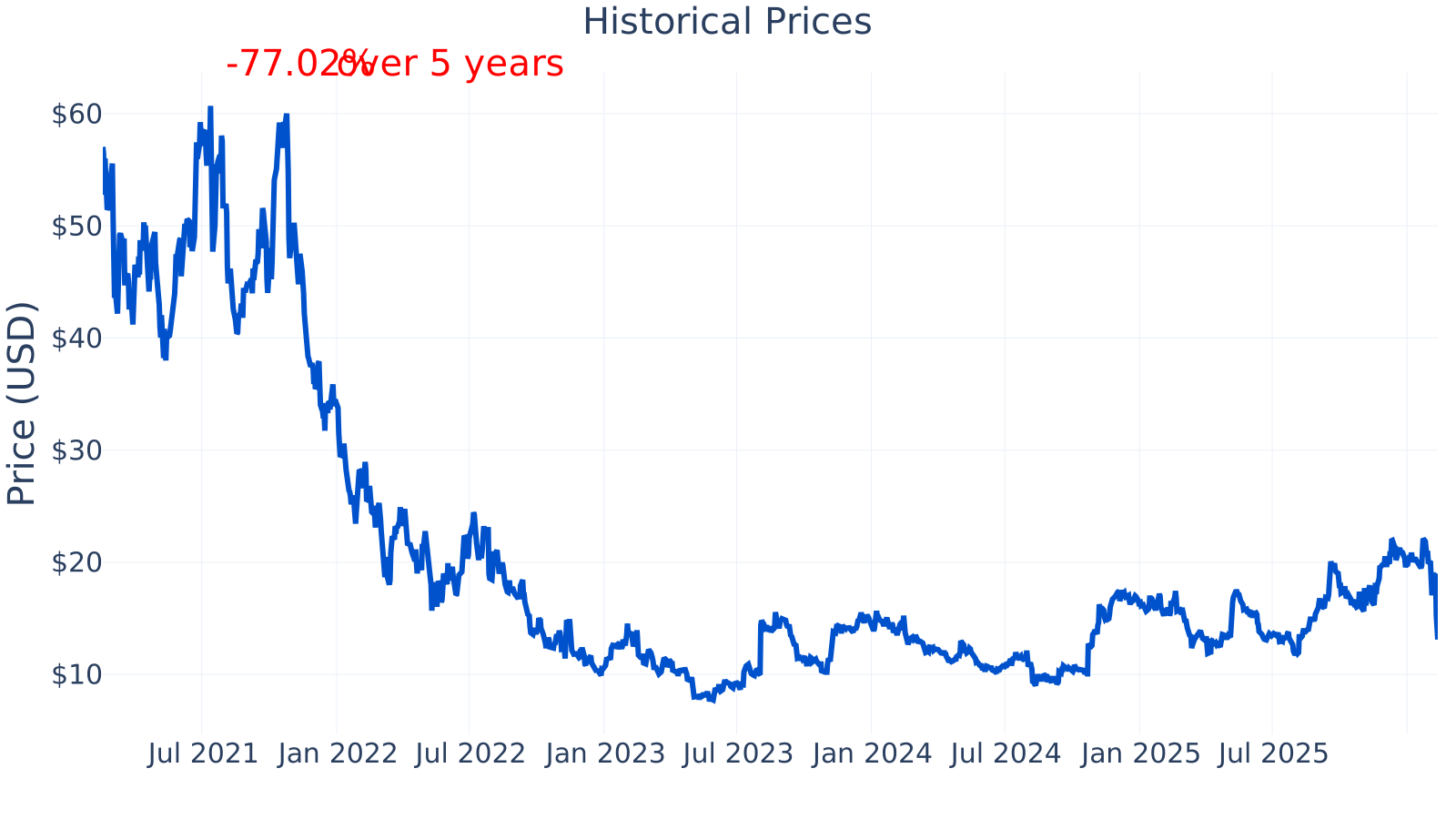
Upwork’s market capitalization is about $1.74B, placing it in the smaller-public-company range. The stock’s beta of ~1.02 suggests price swings that have been broadly similar to the overall market, although individual periods can still be volatile, as the historical price line indicates.
On profitability, the latest profit margin is ~14.65%, above the industry median shown (~10.23%). On growth, the latest year-over-year revenue growth is ~3.6%, below the industry median shown (~7.1%). Upwork also reports substantial recent cash generation, with TTM free cash flow of about $233.6M.
Balance-sheet leverage is an important watch item: the latest debt-to-equity is ~58.6%, which is notably higher than the industry median shown (~10.2%). This does not automatically imply stress, but it does mean financing structure and interest-rate sensitivity matter more than for lower-debt peers.
Growth (Medium)
Upwork operates in the broad shift toward more flexible staffing, remote collaboration, and project-based work. Over the long term, these trends can expand the pool of independent professionals and make it easier for businesses to source specialized skills on demand. Upwork’s strategy, as described in its filings, focuses on improving marketplace liquidity (more clients and talent that match efficiently), expanding client-friendly hiring and management tools, and increasing monetization through platform features.
Revenue growth has slowed materially compared with earlier years: the year-over-year growth rate was very high in 2021 (often above 30% in the quarterly pattern shown) and gradually cooled to low-single digits by 2025 (around 1%–4% in the most recent points). For long-term business outcomes, this shifts the story away from “rapid expansion” and more toward execution, product differentiation, and maintaining engagement and spend per customer.
Cash generation improved sharply over time. Free cash flow moved from near break-even/negative levels in 2022–2023 to strongly positive in 2024–2025, reaching about $157.8M by the 2025-03-31 point and about $233.6M on a trailing-twelve-month basis in the latest metrics table. For a platform business, sustained free cash flow can provide flexibility to reinvest in product, pay down debt, or absorb periods of weaker demand without needing external capital.
Potential catalysts referenced in company communications and filings typically include increased adoption of higher-value offerings (such as enterprise-oriented solutions), improvements in matching and trust/safety that raise successful hiring, and product enhancements that increase repeat usage. The durability of these catalysts depends on continued customer retention and on whether the platform can remain a default option for both sides of the marketplace.
Risks (High)
This article is for informational purposes only and does not constitute financial advice. Some content is AI-generated. See Disclaimer