Stock Analysis · Universal Display (OLED)
Overview
Universal Display Corporation (OLED) develops and licenses technology used to make OLED (organic light-emitting diode) displays and lighting. In simple terms, OLED is a display technology widely used in premium smartphones and increasingly used in TVs, tablets, laptops, monitors, wearables, and automotive screens. Universal Display’s role is not to assemble consumer electronics; instead, it focuses on two key building blocks that display manufacturers need: (1) specialized OLED materials (notably phosphorescent emitter materials) and (2) intellectual property (patents and know-how) that enables high-performance, energy-efficient OLED displays.
The company’s business model is often described as “materials + royalties.” When customers manufacture OLED panels, they typically buy OLED emitter materials from Universal Display and may also pay license fees and royalties tied to the use of its patented technology. This structure can scale well when OLED production volumes rise, but it can also be sensitive to customer production cycles and inventory adjustments.
In its filings, Universal Display generally reports revenue in two main categories (exact mix can vary by period):
- Material sales (sales of OLED emitter materials and related items)
- License and royalty fees (payments for the use of Universal Display’s intellectual property)
Because the precise percentages shift by quarter and year, the most consistent takeaway is that these two streams together drive nearly all revenue, with materials typically the larger portion and licensing/royalties providing a high-margin component (as described in company filings).
Across recent years shown above, total revenue has moved from about $554M (2021) to about $651M (2025). Gross profit remains a large share of revenue each year, reflecting the economics of proprietary materials and licensing. Research and development spending is also meaningful (over $100M annually in the periods shown), highlighting that ongoing innovation is a core part of staying relevant as OLED technology evolves.
Key Figures
| Metric | Value | Industry ⓘ |
|---|---|---|
| Date | Feb 23, 2026 | |
| Context | ||
| Sector | Technology | |
| Industry | Electronic Components | |
| Market Cap ⓘ | $4.95B | |
| Beta ⓘ | 1.65 | |
| Fundamental | ||
| P/E Ratio ⓘ | 22.43 | 43.04 |
| Profit Margin ⓘ | 37.21% | 6.11% |
| Revenue Growth ⓘ | 6.60% | 13.80% |
| Debt to Equity ⓘ | 1.17% | 39.00% |
| PEG ⓘ | 1.23 | |
| Free Cash Flow ⓘ | $154.36M | |
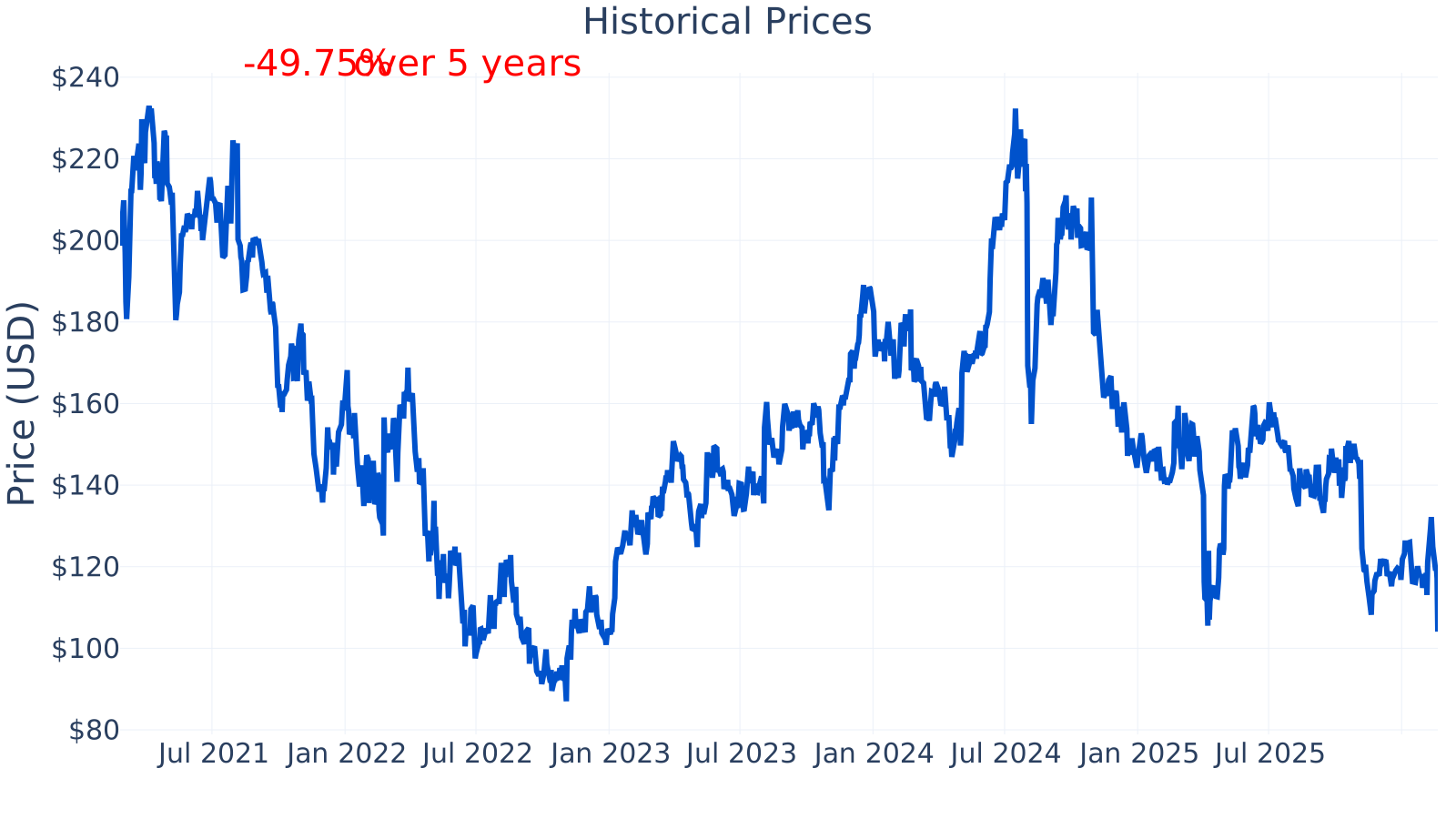
Universal Display’s market capitalization is about $4.95B. The stock’s beta of about 1.65 indicates it has historically moved more than the overall market (higher volatility). Profit margin is about 37%, which is substantially above the industry median shown (about 6%), consistent with a business that includes high-margin intellectual property and differentiated materials. Year-over-year revenue growth is about 6.6% versus an industry median of about 13.8%, suggesting the company is profitable but not currently growing as fast as the typical peer in the displayed industry set. Debt-to-equity is about 1.2%, far below the industry median of roughly 39%, indicating a balance sheet with very low leverage. Trailing free cash flow is about $154M. The P/E ratio is about 22.4, below the industry median shown (about 43.0).
Growth (Medium)
Universal Display operates in the broader display supply chain, where OLED adoption has been a multi-year trend. OLED’s value proposition—thin form factors, strong contrast, and power efficiency—has supported its use in high-end devices, and the technology has been expanding into additional screen sizes and use cases (for example, more IT displays and automotive applications). The company’s strategy is aligned with this: it aims to (1) deepen customer dependence on its emitter materials and (2) continue extending its patent portfolio and next-generation OLED technologies.
Revenue growth has been uneven quarter to quarter. The pattern shown includes periods of negative year-over-year growth (notably parts of 2023 and late 2025) as well as rebounds (notably in 2024). This variability is consistent with a supplier that can be affected by customer production ramps, slowdown periods, and inventory corrections. The most recent point shown (late 2025) returns to positive year-over-year growth (about 6.6%), but the path has not been linear.
Free cash flow over the trailing twelve months has also fluctuated, dropping into a lower range around 2023–2024 (as shown) and then recovering by 2025 to roughly $164M (and about $154M in the latest table). For a company built around licensing and specialized materials, sustained positive free cash flow can be an important indicator of resilience during industry cycles, even if results vary year to year.
Potential catalysts (in a factual, business-driver sense) typically include higher OLED panel production volumes at existing customers, OLED expansion into new device categories, and the commercialization of new emitter material systems that improve performance or efficiency. Whether and when these occur depends on end-market demand and customer manufacturing plans, which are outside Universal Display’s direct control.
Risks (High)
This article is for informational purposes only and does not constitute financial advice. Some content is AI-generated. See Disclaimer