Stock Analysis · Under Armour Inc C (UA)
Overview
Under Armour, Inc. designs, markets, and sells athletic apparel, footwear, and accessories. The company is known for performance-focused products and sells through a mix of wholesale partners (such as sporting goods retailers and department stores) and direct-to-consumer channels (brand stores and e-commerce). Under Armour reports results across geographic regions, with a significant presence in North America and additional business in international markets.
Revenue mainly comes from selling branded products across these categories:
- Apparel (typically the largest category)
- Footwear
- Accessories
Sales are also shaped by the route to the customer:
- Wholesale (selling to retail partners)
- Direct-to-consumer (company-owned stores and e-commerce)
At a high level, Under Armour’s business model depends on brand strength, product innovation, distribution reach, and disciplined inventory management—because apparel and footwear demand can shift quickly with fashion trends, consumer spending, and competition.
Across recent periods shown, total revenue trends downward from about $5.9B (2022–2023 range) to about $5.16B (2025 period shown). Operating profit also swings meaningfully, ending with a period showing operating loss and net loss, which highlights how sensitive results can be to volume, pricing/discounting, and operating costs.
Key Figures
| Metric | Value | Industry ⓘ |
|---|---|---|
| Date | Feb 08, 2026 | |
| Context | ||
| Sector | Consumer Cyclical | |
| Industry | Apparel Manufacturing | |
| Market Cap ⓘ | $3.21B | |
| Beta ⓘ | 1.80 | |
| Fundamental | ||
| P/E Ratio ⓘ | N/A | 22.80 |
| Profit Margin ⓘ | -10.44% | 4.94% |
| Revenue Growth ⓘ | -5.20% | 1.60% |
| Debt to Equity ⓘ | 156.55% | 109.04% |
| PEG ⓘ | 2.10 | |
| Free Cash Flow ⓘ | -$45.91M | |
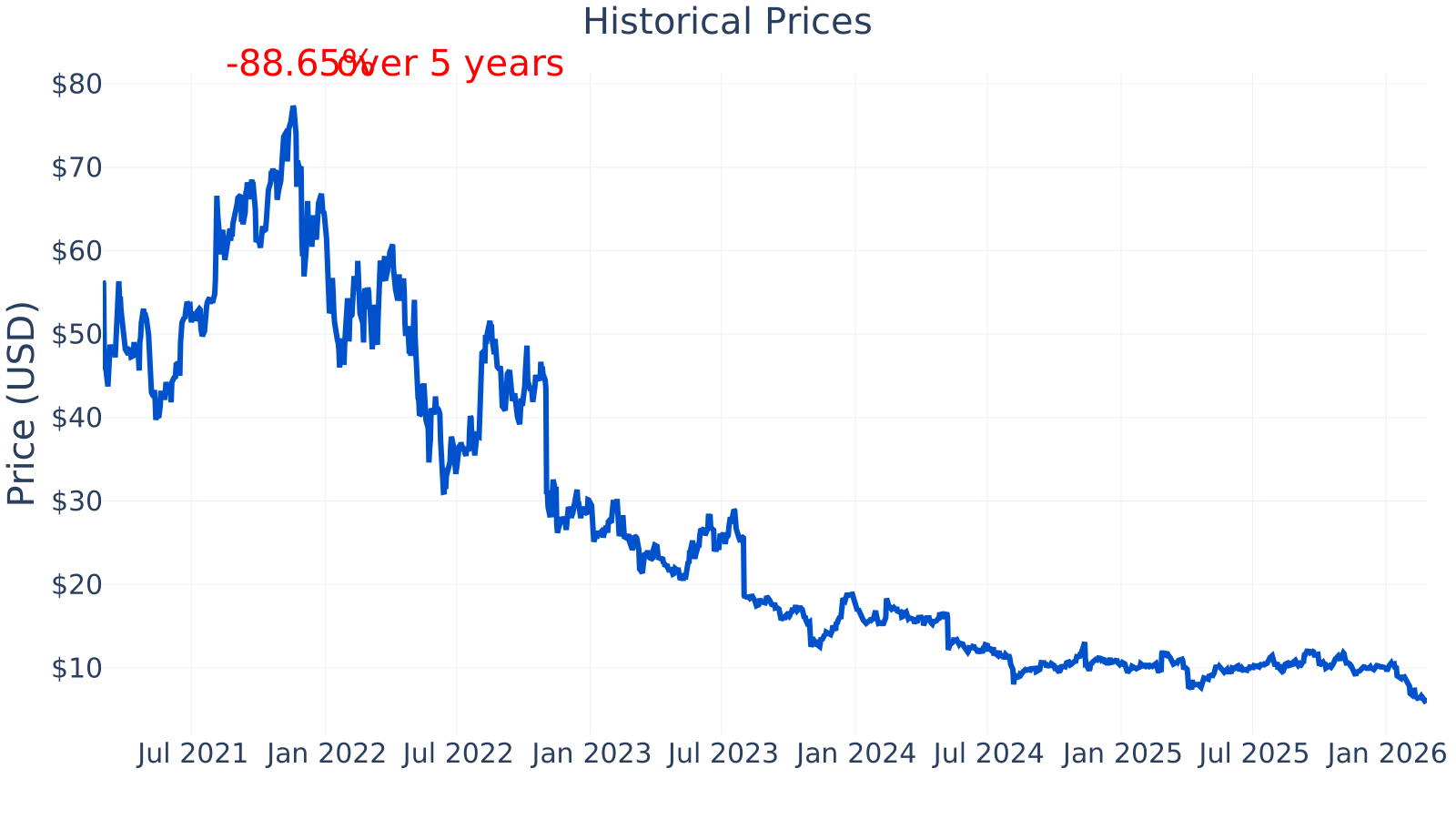
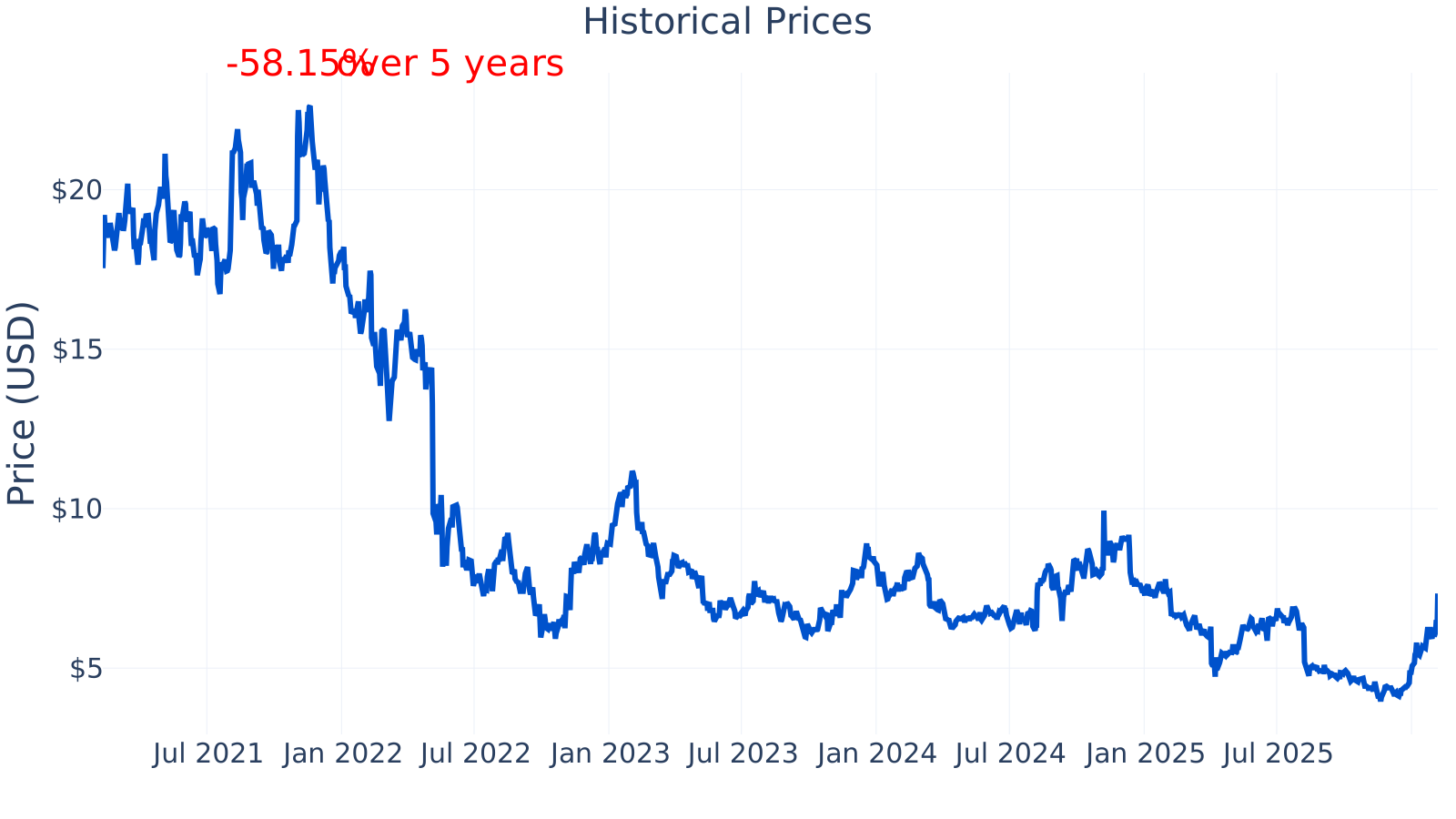
Under Armour’s market capitalization is about $3.21B, placing it in the small/mid-size range compared with the largest global sportswear brands. The stock’s beta of ~1.80 suggests it has historically moved more than the broader market (higher volatility). Current profitability is weak: the latest profit margin is about -10.44% versus an industry median near 4.94%. Recent top-line momentum is also weaker, with revenue down about 5.2% year over year compared with an industry median growth around 1.6%. Leverage is higher than the peer median, with debt-to-equity about 156.6% versus an industry median near 109.0%. Free cash flow over the trailing twelve months is negative (about -$45.9M), meaning cash generated after operating needs and capital spending has recently been insufficient.
Growth (Medium)
The athletic apparel and footwear market is a large, mature global consumer category, supported over time by broad participation in fitness, sports, and “athleisure” lifestyles. That said, it is also highly competitive and brand-driven, so long-term growth tends to favor companies that consistently win on product relevance, distribution execution, and marketing efficiency.
Under Armour’s growth outlook depends less on overall industry expansion and more on company-specific execution: refreshing product lines, improving merchandising (reducing heavy discounting), and balancing wholesale relationships with direct-to-consumer initiatives. In practice, that can translate into periods of slower revenue while the company attempts to improve the quality of sales (for example, emphasizing full-price sell-through and cleaner inventory).
The year-over-year revenue pattern is volatile. After very strong growth in 2021, growth slowed and turned negative in multiple quarters across 2023–2024, with the latest point shown around -4.7%. This kind of profile often indicates a business working through demand normalization, channel/inventory adjustments, or product and promotional resets.
Free cash flow also swings sharply: positive in 2021–2022, then turning negative in 2023, recovering in 2024, and turning negative again in 2025 (with one period shown around -$228M). For long-term business building, consistently positive free cash flow tends to matter because it supports reinvestment, balance-sheet flexibility, and resilience during weaker demand cycles.
Potential catalysts (in a factual, non-predictive sense) typically include: sustained improvement in profitability metrics, stabilization of revenue declines, and more consistent cash generation. These are measurable in future filings and earnings materials.
Risks (High)
This article is for informational purposes only and does not constitute financial advice. Some content is AI-generated. See Disclaimer