Stock Analysis · Ulta Beauty Inc (ULTA)
Overview
Ulta Beauty, Inc. is a U.S. specialty retailer focused on beauty products and services. It sells cosmetics, fragrances, skin care, and hair care through a large store footprint as well as digital channels. A typical Ulta store combines product shopping with in-store salon services, aiming to encourage repeat visits and a higher “basket” of purchases over time.
Ulta’s business model is built around offering a wide range of brands and price points (from mass-market to prestige), supported by merchandising, frequent product launches, and a loyalty program that helps drive repeat purchasing. The company reports results as a single operating segment, so the public breakdown of revenue is usually described at a high level rather than by many separate segments.
From its filings, Ulta’s revenue primarily comes from:
- Product sales (the large majority of revenue; includes cosmetics, fragrance, skin care, and hair care)
- Service sales (a smaller portion; primarily in-store salon services)
Over recent fiscal years, revenue increased from about $8.63B (FY2021) to about $11.30B (FY2024). Over the same period, operating income and net income remained substantial, while selling, general and administrative costs grew as the business scaled.
Key Figures
| Metric | Value | Industry ⓘ |
|---|---|---|
| Date | Feb 07, 2026 | |
| Context | ||
| Sector | Consumer Cyclical | |
| Industry | Specialty Retail | |
| Market Cap ⓘ | $30.96B | |
| Beta ⓘ | 0.83 | |
| Fundamental | ||
| P/E Ratio ⓘ | 26.52 | 23.78 |
| Profit Margin ⓘ | 9.93% | 6.27% |
| Revenue Growth ⓘ | 12.90% | 5.20% |
| Debt to Equity ⓘ | 97.78% | 103.28% |
| PEG ⓘ | 2.87 | |
| Free Cash Flow ⓘ | $1.04B | |
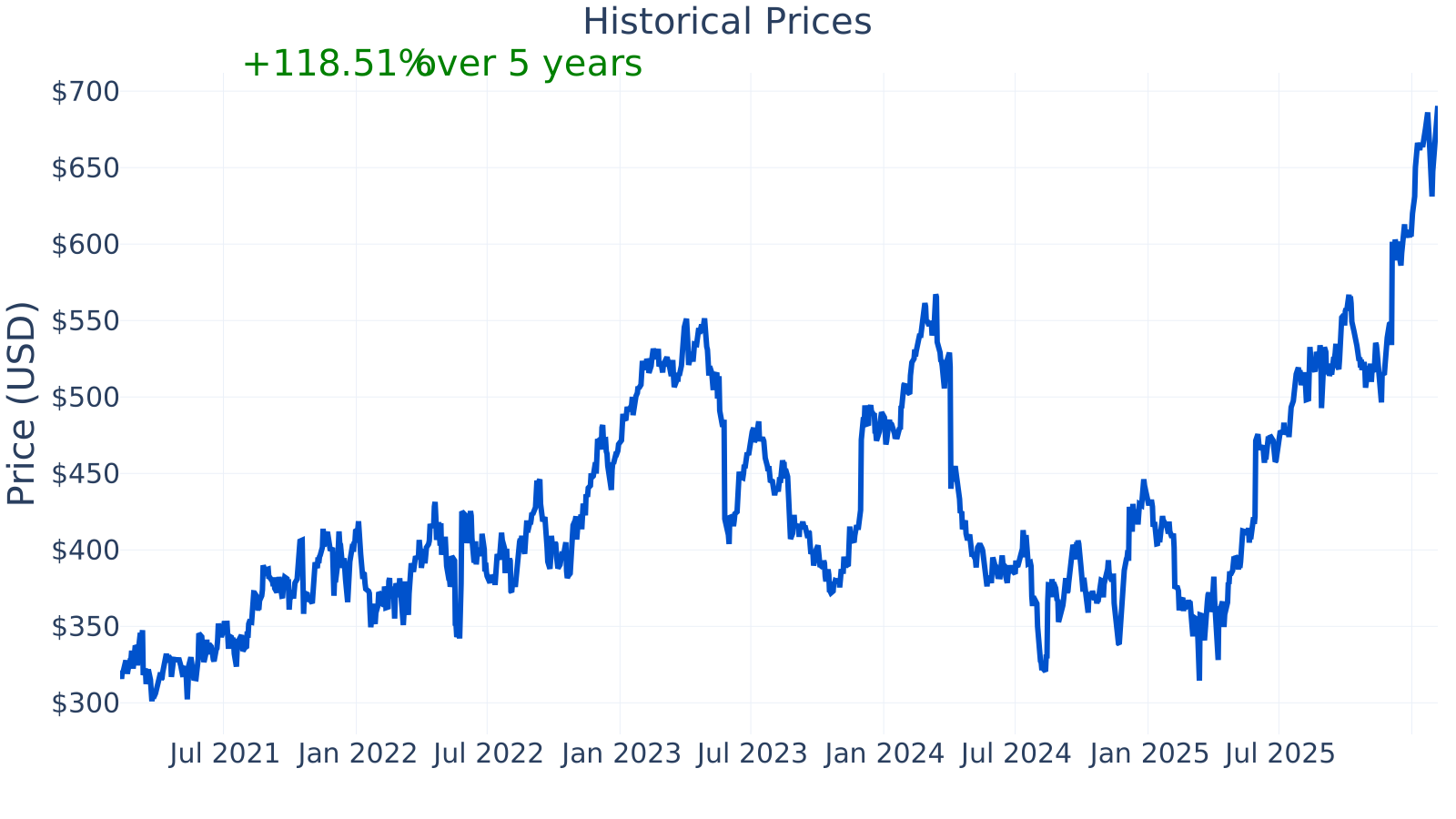
Ulta’s market capitalization is about $31.0B, and its beta (~0.83) suggests the stock has historically moved somewhat less than the broader market on average. The company’s P/E ratio (~26.5) is modestly above the industry median shown (~23.8). Profitability stands out versus the industry median, with a net profit margin of ~9.9% compared with an industry median near 6.3%. Recent year-over-year revenue growth (~12.9%) is also above the industry median (~5.2%). Debt relative to equity is shown near 97.8%, slightly below the industry median (~103.3%). Trailing twelve-month free cash flow is about $1.04B.
Growth (Medium)
Beauty is generally considered a resilient consumer category, supported by recurring replenishment purchases (skin care, hair care) and steady demand across a range of price points. For a retailer like Ulta, long-run growth tends to depend on a mix of store productivity (sales per store), digital growth, loyalty engagement, and disciplined cost management.
The year-over-year revenue growth pattern shows a normalization after the exceptionally high growth rates seen in 2021 (when comparisons were affected by earlier disruptions). Growth then moderated through 2023–2024, briefly turned slightly negative in early 2025, and later re-accelerated to about 12.9% most recently. This shape matters for long-term readers because it highlights that Ulta’s growth rate can fluctuate meaningfully with consumer demand, comparisons from prior periods, and competitive conditions.
Free cash flow has remained near the $1B level over the last several years (about $0.89B in early 2022, peaking around $1.17B in early 2023, and around $0.96B–$1.04B in the following years). Consistent free cash flow can provide flexibility for investments in stores, digital capabilities, supply chain, and returning cash to shareholders, although how that cash is allocated can vary by period.
Potential longer-term catalysts typically discussed in company materials for this kind of retailer include deepening loyalty engagement, improving omnichannel experiences (shopping across store and online), expanding or refreshing store formats, and keeping brand assortments relevant as consumer preferences shift.
Risks (Medium)
This article is for informational purposes only and does not constitute financial advice. Some content is AI-generated. See Disclaimer