Stock Analysis · Ubiquiti Networks Inc (UI)
Overview
Ubiquiti Networks Inc designs and sells networking equipment and related software used to connect devices to the internet and to each other. Its products are commonly used by small and medium-sized businesses, internet service providers (ISPs), and other organizations that need reliable wired and wireless networks without the cost and complexity often associated with large enterprise vendors. The company’s portfolio includes Wi‑Fi access points, switching, routing, broadband wireless links, and network management software that helps customers set up and monitor networks.
In its SEC filings, Ubiquiti describes its business around selling network communications equipment and platforms, with a model that emphasizes efficient operations, a relatively small direct sales footprint, and distribution through channel partners. Revenue is generally tied to shipments of hardware products, while software is typically used to manage and operate the installed base (software can support product stickiness, even when most dollars come from hardware sales).
In broad terms, the main revenue sources are typically grouped as follows (exact splits can vary by fiscal year and reporting format):
- Networking platforms and devices (core hardware such as Wi‑Fi, switching, routing, and related software platforms)
- Service provider and broadband wireless solutions (equipment used by ISPs and wireless internet operators)
- Other/adjacent offerings (smaller lines depending on the period and product mix)
One notable feature of the company’s economics is that operating expenses have historically been low relative to revenue for a hardware-focused business, which can translate into strong operating profitability when product demand is healthy and supply conditions are stable.
From the most recent fiscal-year snapshot shown (year ended June 30, 2025), revenue rose to about $2.57B and operating income increased to about $836M. Research and development spending was about $170M, while selling, general and administrative costs were about $111M, illustrating a cost structure that remains comparatively lean for the size of the revenue base.
Key Figures
| Metric | Value | Industry ⓘ |
|---|---|---|
| Date | Feb 07, 2026 | |
| Context | ||
| Sector | Technology | |
| Industry | Communication Equipment | |
| Market Cap ⓘ | $37.66B | |
| Beta ⓘ | 1.40 | |
| Fundamental | ||
| P/E Ratio ⓘ | 42.36 | 39.43 |
| Profit Margin ⓘ | 28.72% | 4.65% |
| Revenue Growth ⓘ | 33.30% | 14.10% |
| Debt to Equity ⓘ | 10.35% | 59.08% |
| PEG ⓘ | 0.82 | |
| Free Cash Flow ⓘ | $708.29M | |
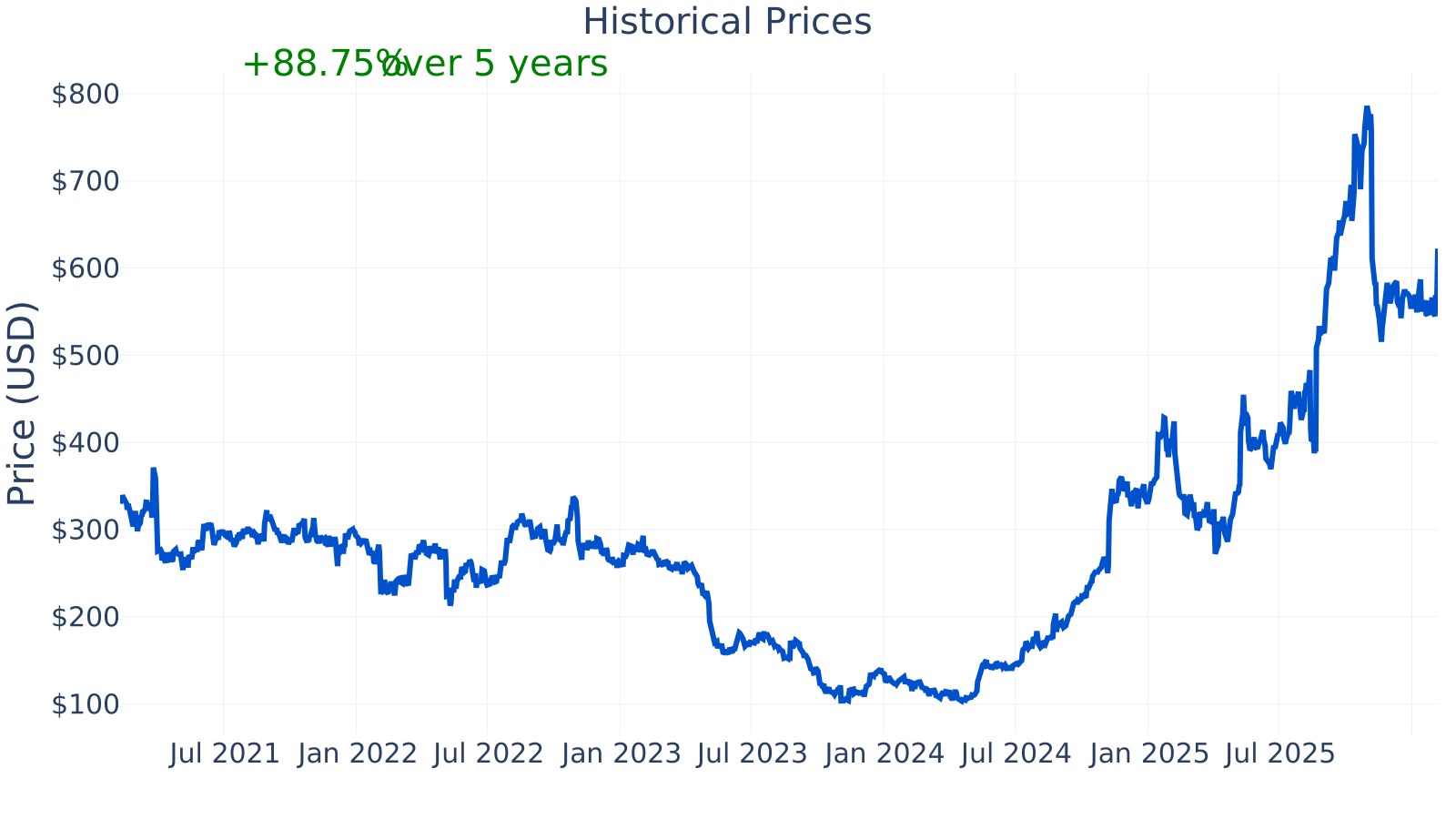
Ubiquiti’s market capitalization is about $37.7B, and the stock’s beta (~1.40) suggests it has tended to move more than the overall market. The company’s P/E ratio (~42.4) sits slightly above the industry median (~39.4) in Communication Equipment. Profitability stands out: the net profit margin (~28.7%) is far above the industry median (~4.7%), implying a business model that converts a larger share of revenue into profit than many peers. Recent growth is also stronger than the industry median, with year-over-year revenue growth (~33.3%) versus ~14.1% for the median peer set. Leverage appears modest on this snapshot, with debt-to-equity (~10.3%) versus an industry median (~59.1%). Free cash flow over the trailing twelve months is about $708M, indicating meaningful cash generation in the most recent period shown.
Growth (Medium)
Ubiquiti operates in networking infrastructure—an area supported by long-term demand drivers such as growing internet traffic, continued Wi‑Fi upgrades, more connected devices, and ongoing network buildouts by businesses and service providers. While the industry is mature in some segments, it continues to evolve with new Wi‑Fi standards, higher bandwidth needs, and expanding connectivity requirements in homes, offices, hospitality, education, and outdoor environments.
The company’s strategy, as described in its filings, focuses on delivering performance and features at price points that appeal to cost-conscious customers, paired with centralized software tools used to configure and manage networks. For long-term outcomes, this approach can matter because customers that standardize on an ecosystem of devices and management software can face switching friction, especially when maintaining many sites.
Revenue growth has been uneven over the period shown, including negative year-over-year quarters in 2021–2022 and again in late 2023, followed by a clear re-acceleration through 2024–2025. The latest points show growth in the ~33% to ~50% range, which is above the industry median level referenced in the key metrics table. This pattern suggests the business can experience cyclical swings (often influenced by demand timing, channel inventory, and supply conditions), even if the longer-term demand backdrop is constructive.
Free cash flow also shows a swing: it moved from positive levels in 2021–2022 to negative around 2023, then recovered strongly to roughly $732M by March 2025 (trailing twelve months), and remains high at about $708M in the latest metric snapshot. For a hardware-centric company, this rebound is notable because it can indicate improved working-capital dynamics (for example, inventory and receivables behavior) and/or stronger operating performance.
Potential catalysts that can influence results (without assuming any specific outcome) include product cycle execution (new Wi‑Fi generations and switching/routing upgrades), expansion of the installed base that drives follow-on device demand, and normalization of supply chain and channel inventory patterns when disruptions occur.
Risks (High)
This article is for informational purposes only and does not constitute financial advice. Some content is AI-generated. See Disclaimer