Stock Analysis · Uber Technologies Inc (UBER)
Overview
Uber Technologies Inc. operates a two-sided platform that matches people who need transportation or delivery with independent drivers and couriers. The company is best known for ride-hailing (trips booked through the Uber app), but it also runs a large delivery business (food and other items). In addition, Uber offers logistics services for shippers and carriers through its freight operations. Across these activities, Uber’s role is primarily to provide the marketplace, pricing and dispatch technology, payments, customer support, and safety features, while drivers/couriers typically supply the vehicles and perform the service.
Uber reports revenue mainly through its core business lines. In general terms, its revenue comes from:
- Mobility (ride-hailing): fees Uber collects from trips (its “take rate” and related fees).
- Delivery (Uber Eats and other delivery offerings): fees from delivery orders (including marketplace and delivery-related fees).
- Freight (logistics marketplace): revenue tied to matching shippers and carriers and facilitating freight transactions.
- Other / platform-related revenue (varies by period): may include advertising and certain service/technology fees, depending on how the company reports them in filings.
From a high-level profitability perspective, Uber’s recent years show a shift from losses to positive operating income and net income, alongside rising revenue and gross profit.
Over 2021–2025, total revenue rises from about $17.5B to about $52.0B, and operating income moves from a loss (about -$3.8B in 2021) to a profit (about $7.6B in 2025). This suggests that scale and cost discipline have mattered: operating expenses do not rise at the same pace as revenue over the period shown.
Key Figures
| Metric | Value | Industry ⓘ |
|---|---|---|
| Date | Feb 07, 2026 | |
| Context | ||
| Sector | Technology | |
| Industry | Software - Application | |
| Market Cap ⓘ | $155.93B | |
| Beta ⓘ | 1.21 | |
| Fundamental | ||
| P/E Ratio ⓘ | 15.81 | 27.79 |
| Profit Margin ⓘ | 19.33% | 6.02% |
| Revenue Growth ⓘ | 20.10% | 15.80% |
| Debt to Equity ⓘ | 49.81% | 25.15% |
| PEG ⓘ | 7.74 | |
| Free Cash Flow ⓘ | $9.76B | |
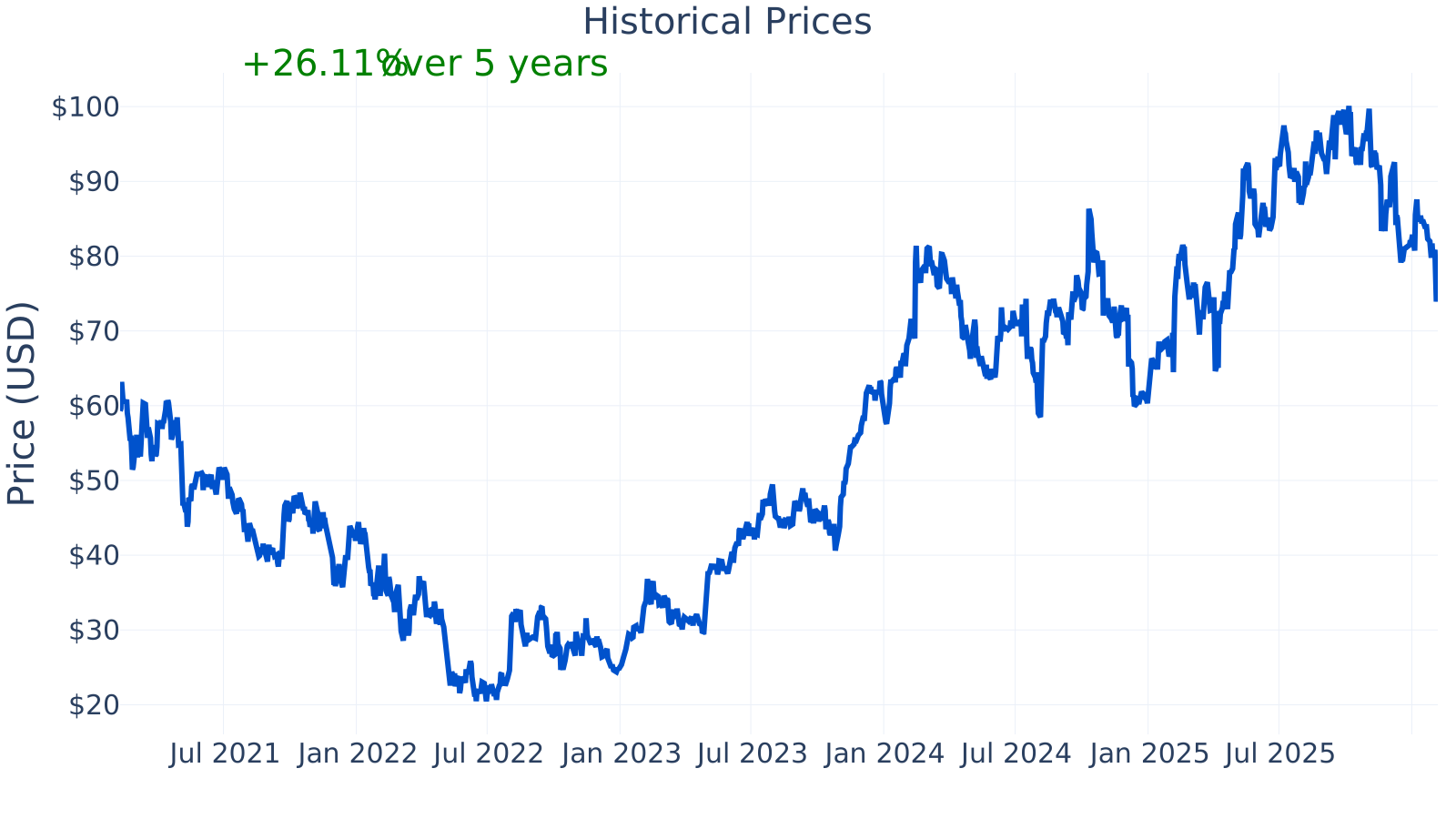
Uber’s market capitalization is about $155.9B, and its beta of about 1.21 indicates the stock has tended to move more than the overall market. The latest P/E ratio shown is about 15.8 versus an industry median near 27.8. Profit margin is about 19.3% versus an industry median near 6.0%, and year-over-year revenue growth is about 20.1% versus an industry median near 15.8%. Debt-to-equity is about 49.8% versus an industry median near 25.2%. Trailing twelve-month free cash flow is about $9.76B.
Growth (medium)
Uber operates in large, ongoing markets: urban and suburban transportation, prepared-food delivery, and logistics. These categories are supported by long-term trends such as smartphone-based commerce, consumer preference for on-demand services, and the increasing use of software to coordinate local transportation and delivery. However, these markets can also mature over time, and growth often depends on balancing pricing, service levels, and driver/courier supply.
Strategically, Uber’s platform model aims to compound usage: more riders and eaters can attract more drivers and couriers, which can improve reliability and selection. The company also has multiple “use cases” in one app (rides and delivery), which can support cross-selling and keep customers engaged across different daily needs. Another practical growth lever is operational efficiency: improving matching, reducing incentives when possible, and increasing monetization (for example through higher-value products, premium ride options, or advertising within the delivery marketplace when applicable).
Revenue growth accelerates sharply in 2021–2022 (as demand recovered), then settles into a steadier range more recently, around the mid-teens to about 20% year-over-year in the latest periods shown. This pattern is typical for a company moving from rebound growth to more normalized expansion.
Free cash flow improves materially over time, moving from negative (about -$3.38B in 2021) to strongly positive (about $7.79B by 2025-03-31, and about $9.76B on a trailing twelve-month basis in the latest snapshot). For long-term business building, sustained positive free cash flow can increase flexibility for debt reduction, investment in product/platform, or other corporate uses—though how it is deployed depends on management decisions and market conditions.
Risks (high)
This article is for informational purposes only and does not constitute financial advice. Some content is AI-generated. See Disclaimer