Stock Analysis · Trimble Inc (TRMB)
Overview
Trimble Inc. (TRMB) is a technology company that builds software, hardware, and connected services used to measure, map, model, and manage physical work in the real world. In simple terms, it provides tools that help organizations plan projects, capture accurate location data, and run operations more efficiently. Its products are used in areas such as construction (jobsite layout and project workflows), transportation and logistics (fleet and routing), agriculture (precision farming), and geospatial (surveying and mapping).
A key part of Trimble’s approach is combining specialized devices (for example, positioning and measurement equipment) with software subscriptions and cloud-based workflows. This mix can support recurring revenue over time through software and services, while still serving customers who need purpose-built equipment for field work.
Trimble reports revenue across business segments rather than a simple “by product line” breakdown. In its annual reporting, the company describes major operating areas such as Buildings & Infrastructure, Geospatial, Resources & Utilities, and Transportation. Percentages by segment can change year to year and depend on how the company reports segment revenue in its filings.
Across the years shown, revenue stays in a relatively narrow range (roughly mid-$3.5B to $3.8B). Operating income and net income swing more significantly, which suggests profitability can be influenced by factors beyond day-to-day sales levels (for example, cost structure changes, financing costs, tax effects, or one-time items).
Key Figures
| Metric | Value | Industry ⓘ |
|---|---|---|
| Date | Feb 16, 2026 | |
| Context | ||
| Sector | Technology | |
| Industry | Scientific & Technical Instruments | |
| Market Cap ⓘ | $15.80B | |
| Beta ⓘ | 1.58 | |
| Fundamental | ||
| P/E Ratio ⓘ | 37.73 | 37.73 |
| Profit Margin ⓘ | 11.82% | 12.51% |
| Revenue Growth ⓘ | -1.40% | 7.45% |
| Debt to Equity ⓘ | 23.85% | 49.68% |
| PEG ⓘ | 1.67 | |
| Free Cash Flow ⓘ | $133.20M | |
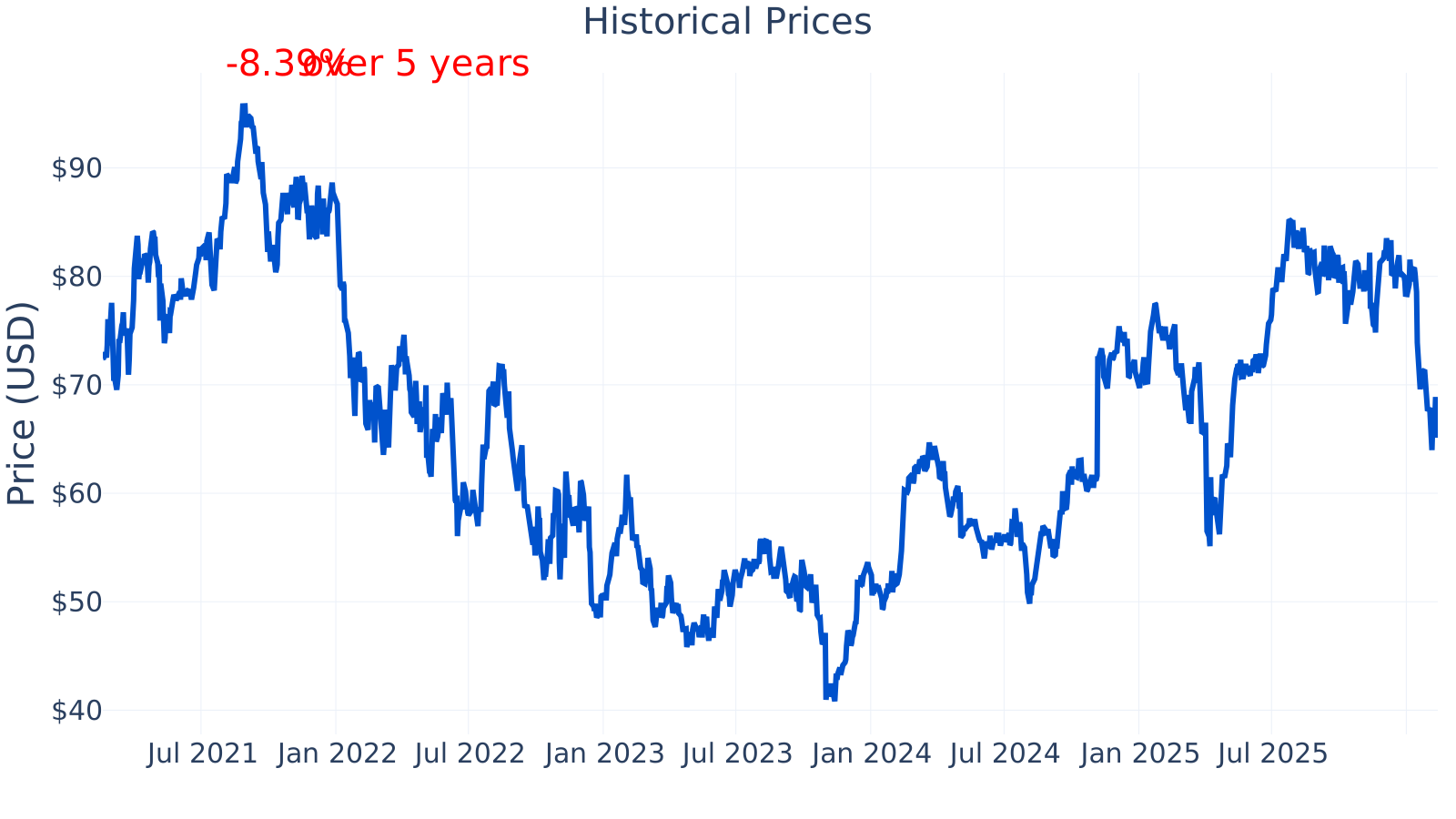
Trimble’s market capitalization is about $15.8B, placing it among mid-to-large publicly traded technology companies. The stock’s beta of ~1.58 indicates it has historically moved more than the broader market, which can matter for investors focused on smoother long-term price behavior.
Profitability and growth are mixed in the latest snapshot: profit margin is ~11.8% versus an industry median of ~12.5%, while year-over-year revenue growth is about -1.4% compared with an industry median of ~7.45%. Leverage appears lower than typical peers, with debt-to-equity around 23.9% versus an industry median near 49.7%. The trailing twelve-month free cash flow is ~$133M, which is positive but notably lower than some prior periods shown later in the article.
Growth (medium)
Trimble operates in markets that are tied to long-running themes: digitizing construction workflows, automating field operations, applying data and software to physical assets, and improving productivity in industries that have historically relied on manual processes. These areas can benefit from multi-year adoption cycles as customers standardize on integrated platforms (software + devices + services) across fleets, jobsites, and teams.
Trimble’s strategy of pairing field hardware with subscription-style software and services can support long-term expansion if customers keep renewing, add users, or adopt additional modules. Another potential long-term catalyst is increased demand for better measurement, mapping, and data-driven project controls as infrastructure ages, labor remains constrained in skilled trades, and owners ask for more accountability on cost and schedule.
The revenue growth pattern shown is uneven. After stronger growth earlier in the period, several quarters show declines, followed by improvement more recently (ending with a positive year-over-year reading in the latest quarter shown). For long-term observers, this type of pattern often raises two practical questions: whether end markets are temporarily soft, and whether the company is in the middle of a product mix or business transition that changes reported revenue timing.
Free cash flow over the trailing twelve months has fluctuated meaningfully across the period shown (hundreds of millions in earlier years versus a much lower recent level in the latest metric snapshot). For a business that sells both equipment and software, cash generation can move around with working capital needs, investment levels, and profitability. A sustained recovery in free cash flow typically matters because it can support reinvestment, debt reduction, or other corporate priorities without relying as much on outside financing.
Risks (medium)
This article is for informational purposes only and does not constitute financial advice. Some content is AI-generated. See Disclaimer


